
01 / Company
HVAC Components Built Around Real Systems
YONGFAN supplies HVAC system components, auxiliary equipment and control solutions for commercial buildings, industrial facilities and infrastructure projects.
Our work sits between the main HVAC equipment and the completed system—moving and distributing air, filtering particles and gases, regulating water flow, exchanging heat, maintaining hydronic pressure and controlling terminal equipment.
One coordinated component platform
Air · Water · Control

AirsideMove, filter and distribute air
HydronicsStabilise and transfer energy
ControlsTranslate demand into operation
Project SupportSelection through delivery
02 / System View
The Performance of an HVAC System Depends on What Connects It
A chiller, boiler or air-handling unit may be at the centre of a system, but its performance depends on dozens of supporting components around it.
YONGFAN looks at where each component sits, what operates before and after it, and which parameters determine whether it will perform correctly after installation.
Engineering Focus
Rather than treating each component as an isolated product, YONGFAN starts with its duty inside the complete air, water or control system.
03 / What We Supply
Air, Water and Control — One Product Platform
YONGFAN’s portfolio is organised around the three sides of an HVAC system that most often require coordinated component selection.
PLATFORM / A
Airside Equipment
Equipment for moving, filtering, distributing and controlling air throughout HVAC and industrial ventilation systems.
- Primary, medium and HEPA/ULPA filtration
- Activated-carbon and molecular filtration
- FFUs and cleanroom terminal equipment
- Axial, mixed-flow, centrifugal, roof and tunnel fans
- Ventilation, purification and smoke-exhaust fan boxes
- Dampers, VAV terminals, plenums and silencers
From general building ventilation to cleanrooms, infrastructure and hazardous industrial environments.
PLATFORM / W
Hydronic & Heat-Exchange Equipment
Equipment for stabilising, distributing, treating and transferring energy through HVAC water systems.
- Plate, tubular and storage heat exchangers
- Packaged heat-exchange units
- Pressure stabilising and expansion equipment
- Water make-up and VFD supply systems
- Water distributors, collectors and condensate recovery
- Physical water-treatment systems
Selected around flow, pressure, temperature, water quality and the complete hydronic circuit.
PLATFORM / C
Controls & Valves
Components that translate terminal and system demand into actual control of air and water.
- Fan-coil thermostats
- Thermal and damper actuators
- Motorised HVAC valves
- Balancing and hydraulic control valves
- General HVAC and plumbing valves
- Sensors, controllers and supporting components
Connecting terminal demand with the mechanical air and water systems that serve it.

04 / Specialist Portfolio
Molecular Contaminants Require a Different Selection Logic
In petrochemical plants, refineries, wastewater facilities, process industries and certain data-centre environments, contaminants can pass through ordinary particulate filters. Even low concentrations may contribute to corrosion of connectors, contacts and instrumentation in sensitive electronic environments.
H₂SSO₂Cl₂NOxNH₃VOC
Corrosion Control
PSA, PSA-PG, DBS and CA systems support fresh-air treatment or indoor recirculation for control rooms, server rooms and sensitive electrical equipment.
Exhaust Treatment
WGP systems treat contaminated industrial exhaust where the objective is to remove toxic, corrosive or odorous gases before discharge.
The distinction between protecting an indoor environment and treating an outgoing process stream is central to correct gas-phase filtration selection.
Explore the selection approach05 / Who We Work With
Technical Products Require Technical Communication
YONGFAN primarily supports professional buyers and project teams rather than retail consumers.
HVAC Contractors
Equipment schedules, substitutions, project-specific configurations, submittal information and coordinated supply for installation projects.
System Integrators
Components that work together mechanically and electrically across airside, hydronic and control systems.
Consulting & Engineering Teams
Technical data, operating limits and configuration support when specifications become actual equipment.
Distributors & OEM Partners
Standard and customised equipment, private-label options and non-standard product configurations.
Industrial End Users
Replacement, retrofit and specialist equipment where reliability, maintainability and process conditions matter.
06 / From Requirement to Equipment
We Prefer to Start With the Duty Point
Many component problems begin when selection starts with a model number rather than the operating requirement. YONGFAN begins with the information that actually determines performance.
Ventilation Equipment
Airflow + Static Pressure + Temperature + Noise + Installation
A fan delivering the right airflow at free discharge may not deliver it once connected to the real duct system.
Air Filtration
Airflow + Stage + Efficiency + Allowable Resistance + Cleanliness
Higher filtration efficiency is not automatically better when it creates unnecessary pressure loss or is used at the wrong stage.
Chemical Filtration
Airflow + Target Gas + Concentration + Mode + Air Quality
Media and equipment configuration depend on the contaminant profile and whether the duty is room protection or exhaust treatment.
Hydronic Equipment
Flow + Head + Pressure + Temperature + Water Volume + Quality
The same nominal pipe diameter can serve very different system conditions.
Heat Exchange
Load + Primary Temp + Secondary Temp + Flow + Medium + Pressure
Selection is based on thermal duty rather than simply the connection size.
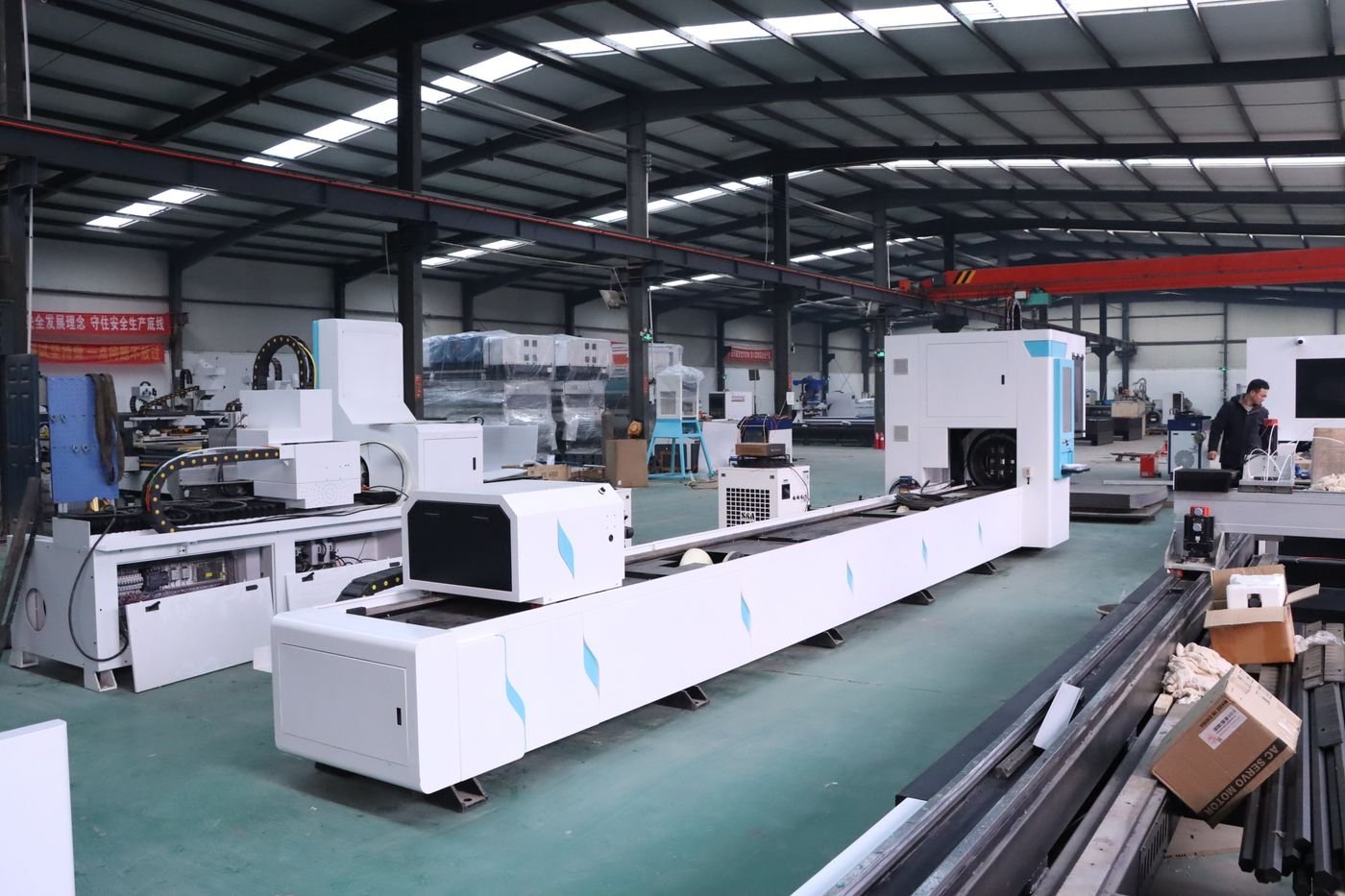
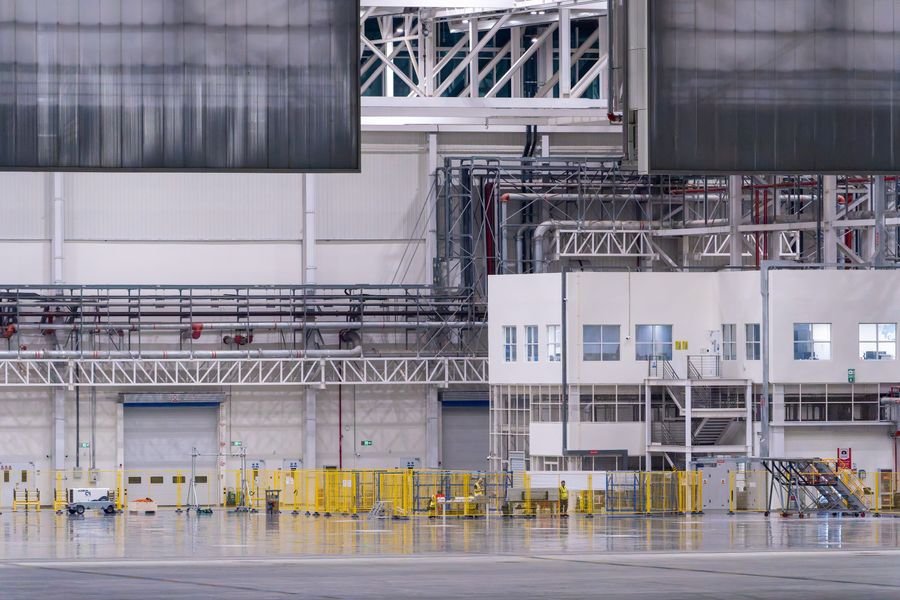
Representative industrial manufacturing environments · Stock imagery
07 / Manufacturing
Different Components Require Different Controls
YONGFAN’s portfolio spans several types of HVAC equipment, so there is no single production process that can guarantee quality across the entire range. Control is built around the characteristics that matter for each product family.
Air Filtration
Media preparation, pleat geometry, dimensions, sealing, resistance and efficiency verification.
Fans & Air Movement
Impeller geometry, blade angle, rotating balance, casing accuracy and motor matching.
Sheet-Metal Components
Casing dimensions, joints, actuator interfaces, blade movement and leakage.
Hydronics & Heat Exchange
Pressure-containing parts, heat-transfer surfaces, welding, connections and assembly.
Controls & Valves
Valve-body accuracy, actuator interface, electrical characteristics and control response.
08 / Quality
Control the Process Before You Test the Product
Final inspection is necessary, but it cannot compensate for inconsistent materials or uncontrolled production.
Incoming Material Verification
Check key materials, components and dimensions before they enter production.
In-Process Control
Monitor dimensions, assembly, sealing, rotating parts and other critical production characteristics.
Performance Verification
Check relevant parameters such as airflow, pressure, filtration resistance, balance or functional operation.
Final Inspection
Confirm configuration, appearance, dimensions, wiring, labels and order requirements before packing.
Traceability
Identify products by model, specification and order information for documentation and after-sales communication.
Quality requirements vary by product and market. Applicable standards and certificates are confirmed according to the specific equipment and project.
09 / Engineering & R&D
Engineering Beyond Standard Models
The goal is not to customise for its own sake. It is to reduce unnecessary site modification and supply equipment that fits the intended system from the beginning.
Project Configuration / OEM
When the Catalogue Is Close—but Not Quite Right
A filter bank may need to fit an existing housing. A fan may require a different motor or corrosion-resistant construction. A VAV terminal may need a specific actuator or outlet arrangement. A valve may need to match an existing footprint or control interface.
- Non-standard dimensions
- Alternative materials
- Motor and electrical options
- Filtration grades and media
- Controls and actuators
- Connection arrangements
- Project assemblies
- OEM branding and packaging
Application-Led Development
Improve the Product by Understanding the Application
Engineering work connects product development with the way pressure, airflow, temperature, contamination, installation and operating mode change the required configuration.
- VAV terminals
- Ventilation and smoke fans
- Chemical filtration
- Heat exchangers
- Hydronic equipment
- Water treatment
- Control valves
- Actuators
10 / Beyond the Factory
Supply Does Not End at Shipment
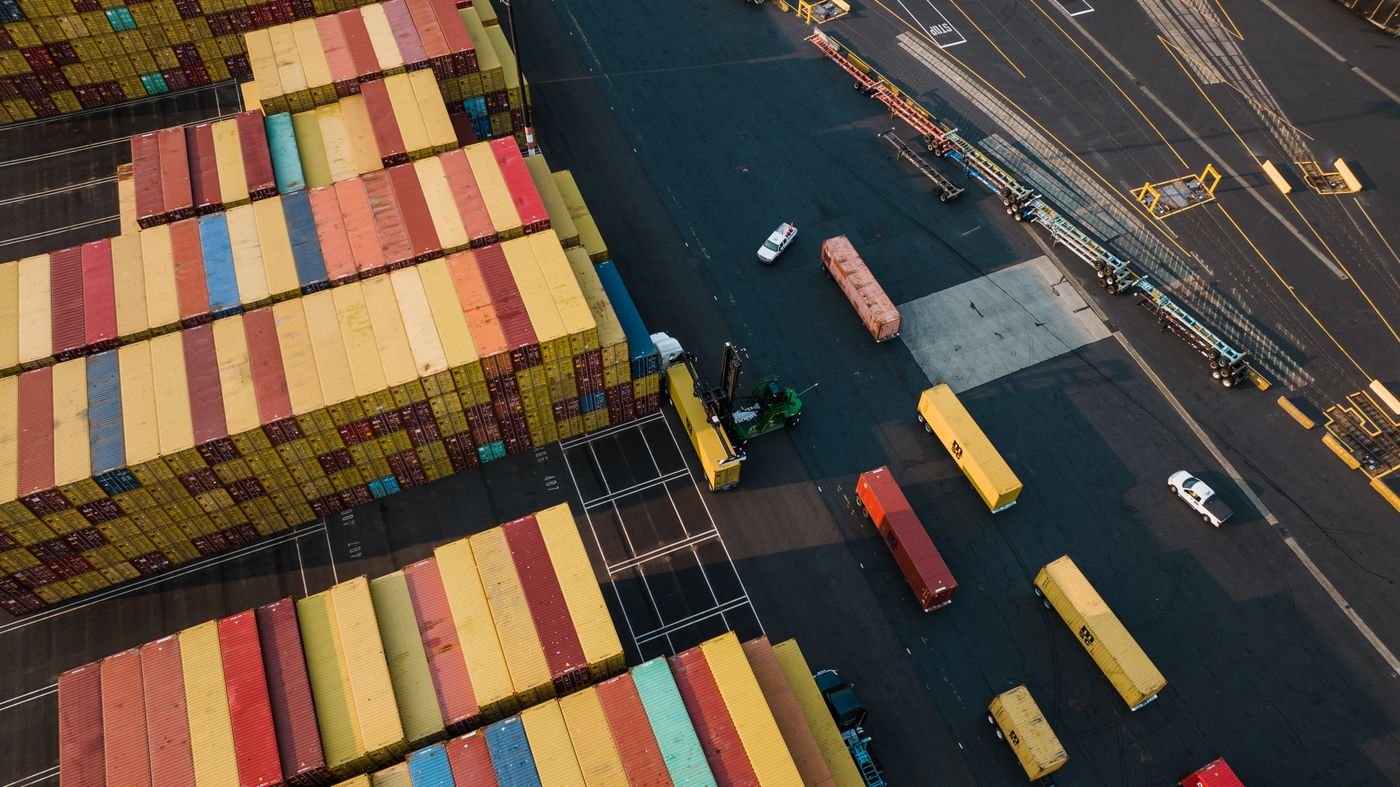
An export HVAC project often involves more work around the equipment than the equipment itself. YONGFAN supports the commercial and technical information required to move an order from selection to site delivery.
11 / Professional HVAC Markets
Commercial, Industrial and Infrastructure Applications
Each environment creates a different combination of airflow, pressure, contamination, safety, material and maintenance requirements.

Commercial Buildings
Ventilation, VAV distribution, heat exchange, hydronic balancing and terminal controls.
Hospitals & Healthcare
Filtration, air movement, hydronic equipment and controlled terminal systems.
Data Centers & Control Rooms
Ventilation, filtration and specialist corrosion control for sensitive electronics.
Cleanrooms & Electronics
Multi-stage filtration, HEPA/ULPA equipment, FFUs and controlled air distribution.
Industrial Facilities
Process ventilation, explosion-proof equipment, water systems and heat exchange.
Petrochemical & Chemical
Hazardous-area ventilation and gas-phase corrosion-control systems.
Tunnels & Underground Infrastructure
High-capacity ventilation, jet fans and fire smoke-control equipment.
YONGFAN at a Glance
Supporting contractors, engineering companies, system integrators and equipment partners with a growing component portfolio and technical support.
10+Years of Operations
300+Clients Served
200+Employees
4Offices in China
12 / Explore YONGFAN
Continue Into the Company Capabilities
Use these areas to explore how product, engineering, manufacturing, quality and international coordination connect.
01
About YONGFAN
How the HVAC component and system-support business is structured.
Learn more 02Why YONGFAN
The engineering, product and service principles behind the approach.
Learn more 03Manufacturing
How different product families are produced, assembled and inspected.
Learn more 04Engineering & R&D
Application-led product configuration and technical development.
Learn more 05Quality & Compliance
How materials, processes, testing and documentation are controlled.
Learn more 06OEM & Customization
Non-standard configurations for OEM and distribution partners.
Learn more 07Global Supply & Logistics
International order support from confirmation through delivery.
Learn more 08News & Insights
Company updates, technical developments and industry information.
View context13 / Talk to YONGFAN
Start With the Requirement. We’ll Help Define the Equipment.
If you know the model, send the specification. If you do not, send what you know—airflow, pressure, temperature, filtration grade, gas concentration, water conditions, equipment schedule or project drawings.