YONGFAN HVAC - Premium Header
Engineered HVAC & Industrial Air Systems
YONGFAN HVACYOFAN HVAC Home
Mixed-Flow Fans | In-Line Aerodynamic Pressure | YONGFAN
Axial + Radial Velocity Vectors · In-Line Packaging

Mixed-Flow Fans: In-Line Form with Extended Pressure Capability

Mixed-flow fans solve the “not enough pressure, not enough space” dilemma. They combine the compact, straight-through layout of an axial fan with higher aerodynamic pressure capability.

Compare YONGFAN SWF (general, dual-speed & high-pressure), CDZ external-motor duct fans, HL3-2A underground exhaust, and PYHL-14A car-park jet-induction fans across airflow (1,430 to 144,260 m³/h), pressure (97 to 1,314 Pa ΔPt), and emergency smoke rating (280 °C / 30 min).

3 Core RoutesSWF · CDZ · HL3-2A / PYHL
Airflow Spectrum1,430 – 144,260 m³/h
Total Pressure97 – 1,314 Pa ΔPt
Acoustic Advantage2 – 3 dB(A) lower than centrifugal
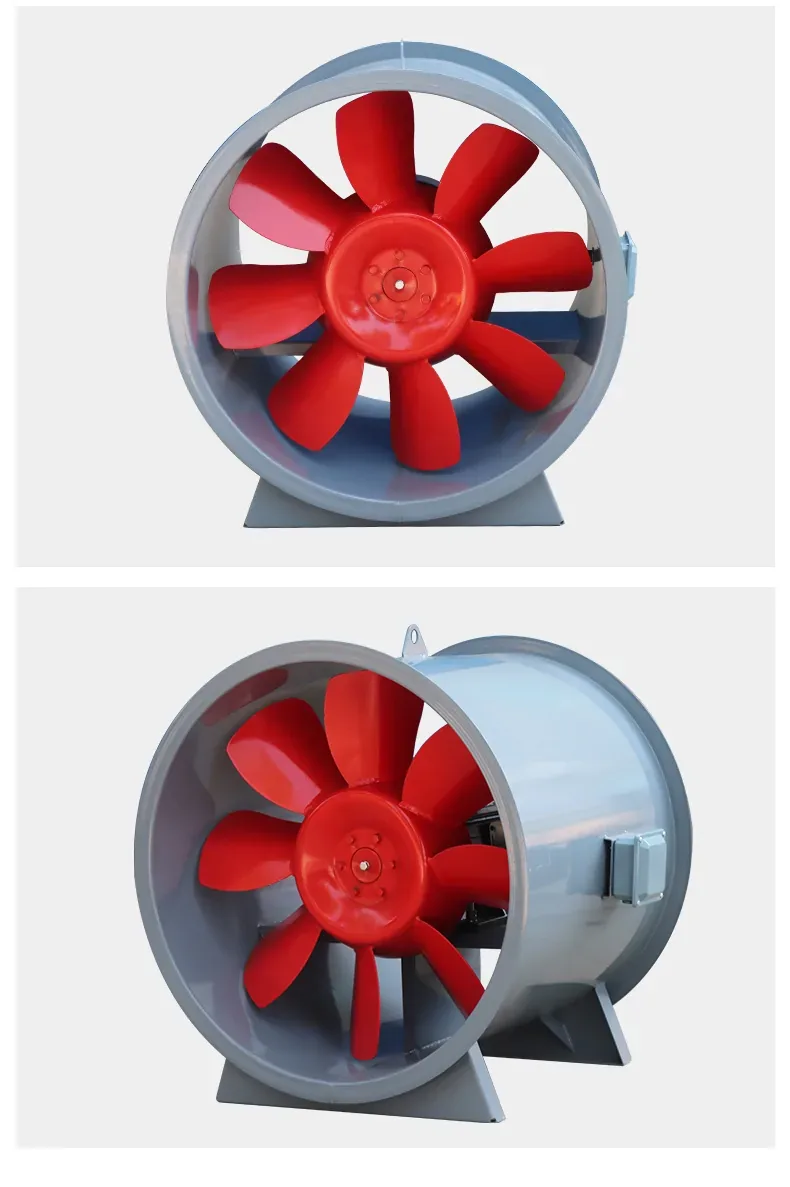
YONGFAN mixed-flow ventilation fan
Mixed-Flow Propulsion Axial + Radial Velocity Vectors · Overcoming High Duct Loss in Tight Plant Rooms
01 / Aerodynamic Positioning

Mixed-Flow Fans Solve the “Not Enough Pressure, Not Enough Space” Problem

A ventilation system reaches a point where an axial fan cannot overcome system resistance, but a centrifugal scroll fan does not fit the ceiling or plant room.

A mixed-flow impeller moves air both axially and radially. The diagonal blade passage accelerates air outward and forward simultaneously, imparting static pressure rise while maintaining a straight-through tube body.

This gives mechanical engineers an intermediate operating envelope: higher static head than a low-pressure axial fan, without requiring 90° duct transitions, bulky scroll housings, or heavy structural floor mountings.

YONGFAN manufactures three primary mixed-flow engineering routes: the broad SWF Series (I, II, III), the CDZ Series with external motor isolation, and the HL3-2A / PYHL-14A ducted and induction car-park systems.

YONGFAN mixed-flow fan product set

Straight-Through Duct Line

Eliminates the 90° elbow loss and space requirements of centrifugal fans, fitting directly into straight duct runs.

In-Line Cylindrical Body · Space Saving

Higher Static Pressure

Develops up to 1,314 Pa total pressure, overcoming resistance from multi-stage filters, silencers, and long distribution ducts.

Diagonal Velocity · Up to 1,314 Pa

Acoustic Quality

Published supplier data indicates SWF runs 2 to 3 dB(A) quieter than an equivalent duty centrifugal scroll fan.

Acoustic Comfort · Lower Sound Power
02 / Equipment Breakdown

Three Mixed-Flow Engineering Routes for Every Duty Point

Detailed technical specifications, aerodynamic boundaries, and application targets across SWF, CDZ, and HL3-2A / PYHL-14A series.
Route 01 · Broadest Mixed-Flow SWF-I / II / III · 125 – 1,314 Pa

SWF Series Mixed-Flow Tube Fan

The flagship YONGFAN mixed-flow family. Published performance spans 1,430 to 144,260 m³/h airflow and 125 to 1,314 Pa total pressure, with impeller diameters from Ø300 to Ø1500 mm and motor ratings from 0.25 to 37 kW.

Divided into three functional subseries:
SWF-I: Single-speed general building ventilation and plant-room exhaust.
SWF-II: Dual-speed motor configuration for low-speed daily ventilation and high-speed emergency smoke exhaust (280 °C / 30 min).
SWF-III: High-pressure blading reaching the upper aerodynamic limit of 1,314 Pa.

SWF-I Single-Speed1,430 – 144,260 m³/h · Continuous HVAC supply & exhaust
SWF-II Dual-SpeedDual-winding motor · Daily ventilation + 280 °C smoke
SWF-III High PressureReinforced diagonal blades · Up to 1,314 Pa total pressure
Acoustic Benchmark2 – 3 dB(A) quieter than comparable centrifugal fan
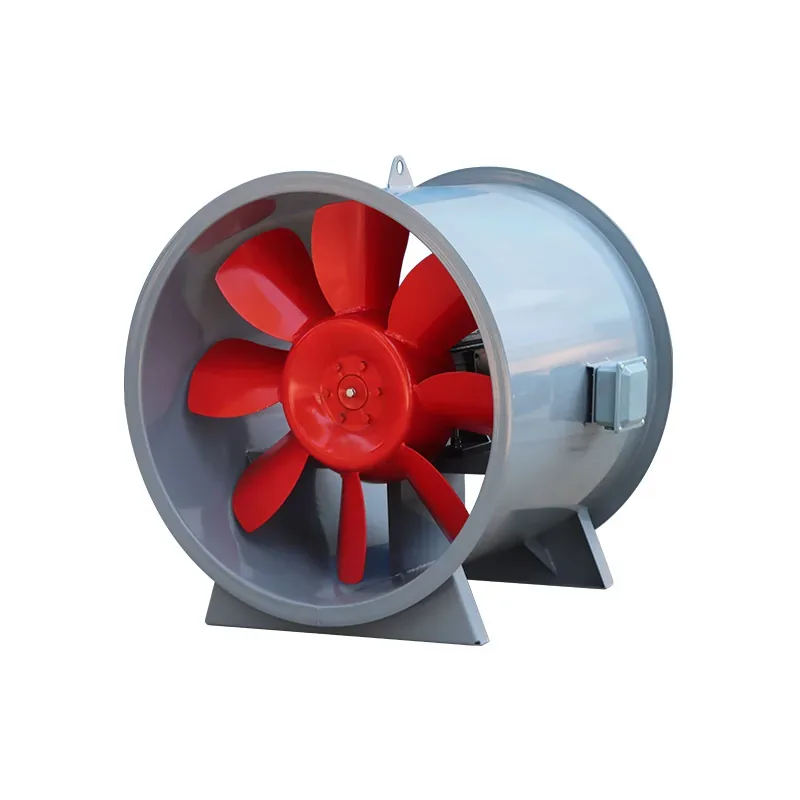
YONGFAN mixed-flow ventilation fan
SWF Series Airflow up to 144,260 m³/h · Dual-Speed Smoke Exhaust · 1,314 Pa

Route 02 · Motor Isolated 2,176 – 33,158 m³/h · 97 – 701 Pa

CDZ Series Mixed-Flow Duct Fan

Engineered for installations where mixed-flow in-line geometry is required, but the handled airstream contains moisture, heat, or mild contaminants that make motor-in-stream undesirable.

The motor is mounted externally on top of the duct housing and isolated from the main air path. Published range covers 2,176 to 33,158 m³/h and 97 to 701 Pa total pressure with impeller diameters from Ø355 to Ø800 mm. Uses a verified 5-point performance curve selection method.

Isolated MotorMotor positioned outside the handled airstream for long life
Performance Range2,176 – 33,158 m³/h · 97 – 701 Pa ΔPt
Impeller SizesØ355, Ø400, Ø450, Ø500, Ø630, Ø710, Ø800 mm
5-Point CurvePoints 2 – 4 recommended for peak aerodynamic efficiency
YONGFAN mixed-flow fan product set
CDZ Series External Motor Isolation · Protected from Moisture & Fumes
Route 03 · Underground & Car Parks Ducted vs Ductless Induction · Fire Rated

HL3-2A & PYHL-14A Car Park Exhaust Systems

Combined source products addressing two distinct underground car-park and large-space ventilation strategies:

HL3-2A Mixed-Flow Exhaust Fan: Dedicated ducted mixed-flow fan (sizes 2.5A to 4A) designed for ducted basement extract networks where high airflow and moderate static head are required.

PYHL-14A Jet-Induction Fan: Ceiling-suspended jet-induction fan (sizes 2.5A to 4A) for ductless car-park ventilation. Uses momentum transfer to induce surrounding air toward main exhaust shafts, reducing or eliminating large duct networks. Fire-tested for 280 °C / 30 min.

HL3-2A DuctedSizes 2.5A–4A · Ducted underground and plant exhaust
PYHL-14A InductionSizes 2.5A–4A · Ductless car-park momentum transfer
Fire Rating280 °C / 30 min certified smoke-control operation
System ChoiceChoose ducted (HL3-2A) or ductless induction (PYHL-14A)
Underground car park jet induction fan installation
Car Park Aerodynamics Ducted HL3-2A vs Ductless Jet-Induction PYHL-14A · 280 °C / 30 min
03 / Selection Matrix

Mixed-Flow Fan Routing & Comparison Table

Cross-reference all YONGFAN mixed-flow families by system problem solved, published aerodynamic boundary, and first confirmation input.
Product Family What Problem It Solves Published YONGFAN Boundary First Input to Confirm Action
Broadest in-line mixed-flow duty; general, dual-speed & high-pressure variants
1,430 – 144,260 m³/h · 125 – 1,314 Pa ΔPt · Ø300–Ø1500 mm
Confirm whether single-speed (I), dual-speed (II) or high-pressure (III) is required Configure SWF
In-line mixed-flow geometry with motor isolated outside the handled airstream
2,176 – 33,158 m³/h · 97 – 701 Pa ΔPt · Ø355–Ø800 mm
Verify if airstream temperature, moisture or fumes require external motor isolation Configure CDZ
Ducted underground and large-space exhaust systems
Sizes 2.5A – 4A · Ducted mixed-flow wheel
Confirm duct layout and total static pressure calculation Configure HL3-2A
Ductless car-park ventilation and smoke movement via momentum induction
Sizes 2.5A – 4A · 280 °C / 30 min fire rated
Car-park layout, ceiling height, induction throw distance, and smoke control code Configure PYHL
04 / Tradeoff Analysis

Core Engineering Decisions in Mixed-Flow Selection

Three critical engineering choices: SWF vs CDZ, Mixed-Flow vs Axial, and Mixed-Flow vs Centrifugal.
Decision 01 / Contamination & Motor Duty

SWF or CDZ: Choose by Duty and Airstream Condition

SWF covers a wider airflow (up to 144,260 m³/h) and pressure range (up to 1,314 Pa) with the motor housed in the hub inside the airstream.

If the air contains moisture, process vapors, or elevated temperature, CDZ keeps the motor completely outside the air tunnel. CDZ is limited to 33,158 m³/h and 701 Pa, but provides significantly longer motor service life in challenging air conditions.

Motor isolation and contaminated exhaust flow
Decision 02 / Pressure Threshold

Mixed-Flow vs. Axial: Use Pressure as the Trigger

An axial fan works well in straight low-resistance ductwork. However, as duct runs lengthen and multi-stage filters or sound attenuators are added, system resistance rises.

When calculated resistance pushes an axial fan toward unstable stall regions or high blade tip speeds, switching to SWF mixed-flow achieves the required static pressure with stable aerodynamics and lower sound power.

Aerodynamic pressure curve calculation
Decision 03 / Space vs High Static Head

Mixed-Flow vs. Centrifugal: Space vs. Static Head

Do not assume mixed-flow is always better simply because it is more compact. SWF reaches 1,314 Pa total pressure. If the duct network involves extensive branches and high static loss exceeding 1,500–3,000 Pa, a 4-72 centrifugal fan remains necessary.

Mixed-flow is the optimal choice when the pressure falls within 100 to 1,300 Pa and straight in-line duct routing saves ceiling space.

Centrifugal vs mixed flow plant room comparison
05 / Procurement Protocol

What Project Data Is Required for Mixed-Flow Sizing?

Essential parameters to confirm before finalizing mixed-flow fan selection, avoiding under-pressure stall or motor overload.
Engineering Submittal Checklist

10 Key Inputs for Mixed-Flow Fan Selection

Submit your duct layout, calculated pressure drops, and electrical specifications to receive certified fan performance curves and 3D submittal packages.

1. Required Airflow (m³/h / CFM)
2. Calculated Total Pressure (Pa ΔPt)
3. Single-Speed vs Dual-Speed (SWF-I / II)
4. In-Stream vs Isolated Motor (SWF vs CDZ)
5. Operating Air Temperature (°C)
6. Fire Smoke Duty (280 °C / 30 min)
7. Maximum Sound Power Target (dB(A))
8. Power Supply (220V / 380V / 50Hz)
9. Horizontal vs Vertical In-Duct Mount
10. Duct Diameter & Matching Flanges
06 / Quality Assurance

YONGFAN Mixed-Flow Fan Manufacturing & Performance Testing

Strict production protocols ensure diagonal blade aerodynamic balance, high efficiency, and certified thermal survival.
Precision Forming

Diagonal Blade Forming

Mixed-flow impellers are die-pressed and precision-welded to achieve exact 3D aerodynamic curvature and high static pressure conversion.

ISO 1940

Dynamic Rotor Balancing

Every wheel is dynamically balanced to G2.5 standards, ensuring vibration velocities remain well below ISO limits during full-speed operation.

Fire Certified

280 °C / 30 min Fire Testing

Smoke-exhaust SWF-II and PYHL-14A variants undergo rigorous full-temperature furnace tests to verify structural and electrical integrity.

Acoustic & Aero

Full Run-Testing & Submittals

Airflow, total pressure, motor current, and acoustic octave spectrum are 100% verified prior to dispatch with certified submittal sheets.

Bespoke Project Engineering: Complete fan curves, BIM Revit families, acoustic calculations, and mounting vibration isolator schedules supplied. Standard Lead Times: 2 to 4 weeks depending on diameter, dual-speed winding, and fire-rating specifications.
07 / Engineering Knowledge

Mixed-Flow Fans Frequently Asked Questions

Direct engineering answers covering mixed-flow aerodynamics, SWF subseries differences, motor isolation, and car-park exhaust.

What is the main advantage of a mixed-flow fan?

A mixed-flow fan provides higher static pressure than an axial fan while maintaining a compact, straight-through in-line cylindrical body that avoids the 90° turns of a centrifugal fan.

Which YONGFAN mixed-flow fan has the widest airflow range?

SWF Series covers the widest range, spanning 1,430 to 144,260 m³/h and 125 to 1,314 Pa total pressure with impellers from Ø300 to Ø1500 mm.

What is the difference between SWF-I, SWF-II and SWF-III?

SWF-I is single-speed for general ventilation; SWF-II is dual-speed for daily ventilation plus 280 °C / 30 min smoke exhaust; SWF-III features high-pressure blading reaching up to 1,314 Pa.

When should I choose CDZ instead of SWF?

Choose CDZ when the handled air contains moisture, oil mist, or mild chemical fumes. CDZ mounts the drive motor outside the air tunnel, isolating it from contamination.

Is HL3-2A a mixed-flow fan?

Yes. HL3-2A is a ducted mixed-flow fan (sizes 2.5A to 4A) used for ducted underground car-park, basement, and large-space exhaust systems.

Is PYHL-14A also a mixed-flow duct fan?

PYHL-14A uses mixed-flow blading, but it is configured as a ceiling-suspended jet-induction fan for ductless car-park ventilation via momentum transfer, rather than a ducted fan.

Which product should I choose for an underground car park?

If the design uses ducted exhaust, choose HL3-2A or SWF-II. If the design uses a ductless induction system with main extract shafts, choose PYHL-14A.

Can SWF replace a centrifugal fan?

Yes, provided the required total pressure is ≤ 1,300 Pa. SWF saves significant plant-room space and operates 2 to 3 dB(A) quieter than equivalent centrifugal scroll fans.

08 / Engineering Selection Handoff

Select the Right Mixed-Flow Fan for Your Duct Network

Provide your design airflow, calculated system resistance, acoustic targets, and space constraints — our application engineers will confirm the optimal mixed-flow model and provide complete technical submittals.

Airflow (m³/h / CFM) Total Pressure (Pa ΔPt) SWF-I · SWF-II · SWF-III CDZ External Motor Dual-Speed Smoke (280 °C / 30 min) Sound Power (dB(A))
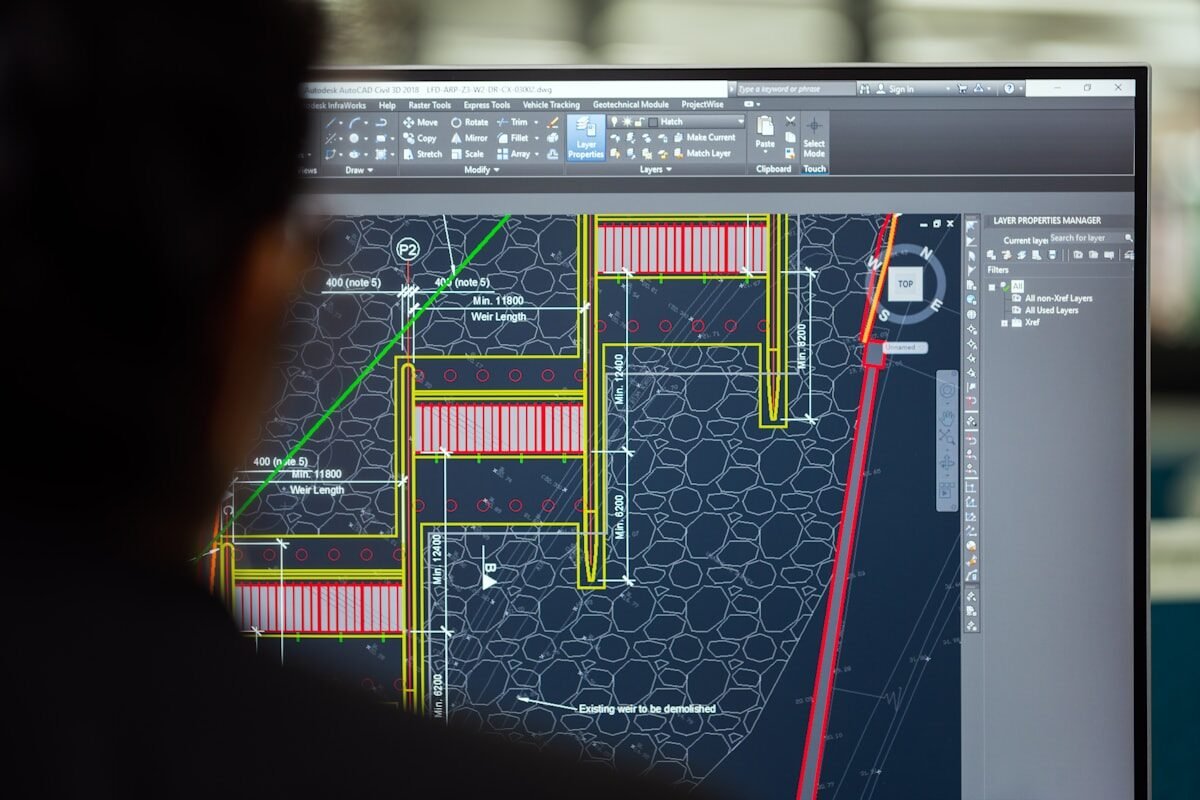
YONGFAN HVAC engineers reviewing mixed-flow fan drawings
Direct Application Engineering Support
Fan curve verification, system resistance matching & Revit submittals.