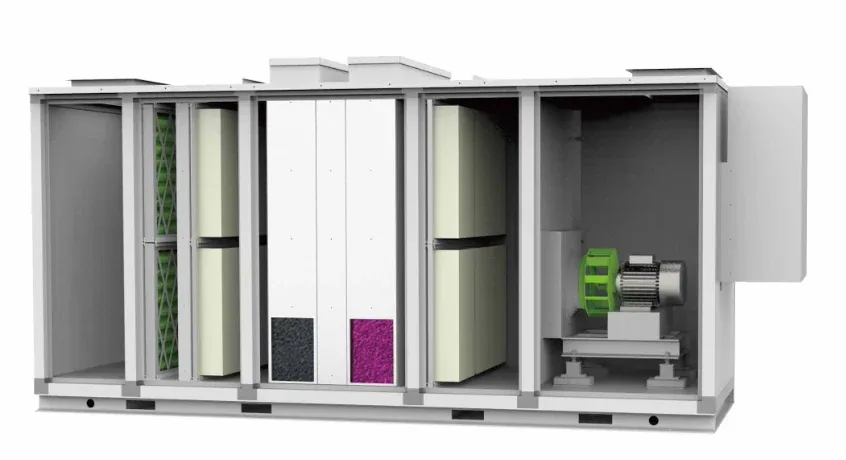
PSA Chemical Filtration Unit for Fresh-Air Intake
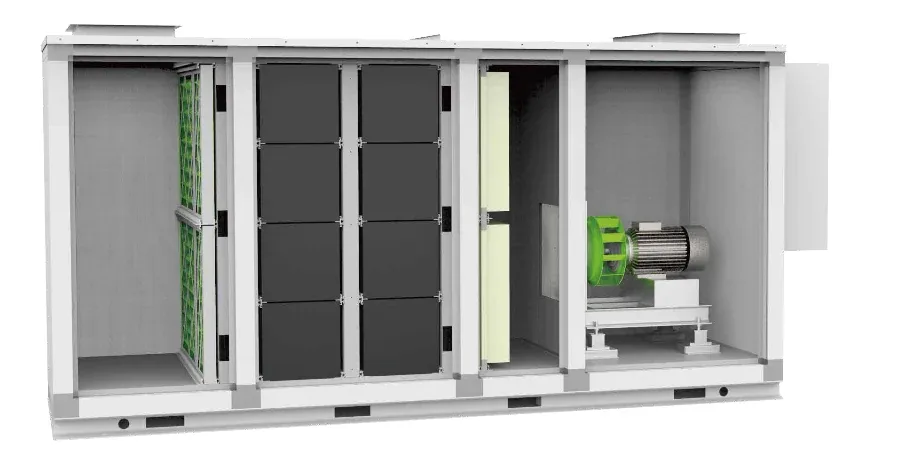
Cleans incoming outdoor ventilation air for central control rooms, DCS rack rooms, and substation switchgear spaces in petrochemical, refining, and chemical plants.
Chemical filtration systems remove molecular contaminants that particulate filters cannot capture; selecting the wrong unit can leave electronics exposed or send untreated gases to exhaust.
Compare YONGFAN PSA Fresh-Air Filtration (850–34,000 m³/h), PSA-PG High-Airflow Filtration (1,700–68,000 m³/h per unit), DBS & CA Recirculation Scrubbers (850–6,800 m³/h), and WGP Exhaust Gas Treatment Units (up to 100,000+ m³/h with ≥99% H2S/SO2 removal).
Gaseous molecules pass unobstructed through HEPA fibers because filtration mechanisms must change from physical particle interception to adsorption, chemisorption, or multi-stage chemical reaction.
Airflow roles must be kept distinct: PSA / PSA-PG treats outdoor fresh-air intake; DBS / CA polishes recirculated indoor room air; and WGP cleans outgoing toxic, corrosive, or odorous exhaust streams before stack release.
Chemical beds do not show exhaustion through pressure drop changes alone. Service life planning depends on gas concentration, residence time, and coupon reactivity monitoring.
ISO 10121-1 and ISO 10121-2 establish laboratory test methods for gas-phase air-cleaning media and devices. Environmental corrosion severity for electronics rooms is benchmarked against ANSI/ISA-71.04 Class G1 (mild, <300 Å/30 days copper reactivity).
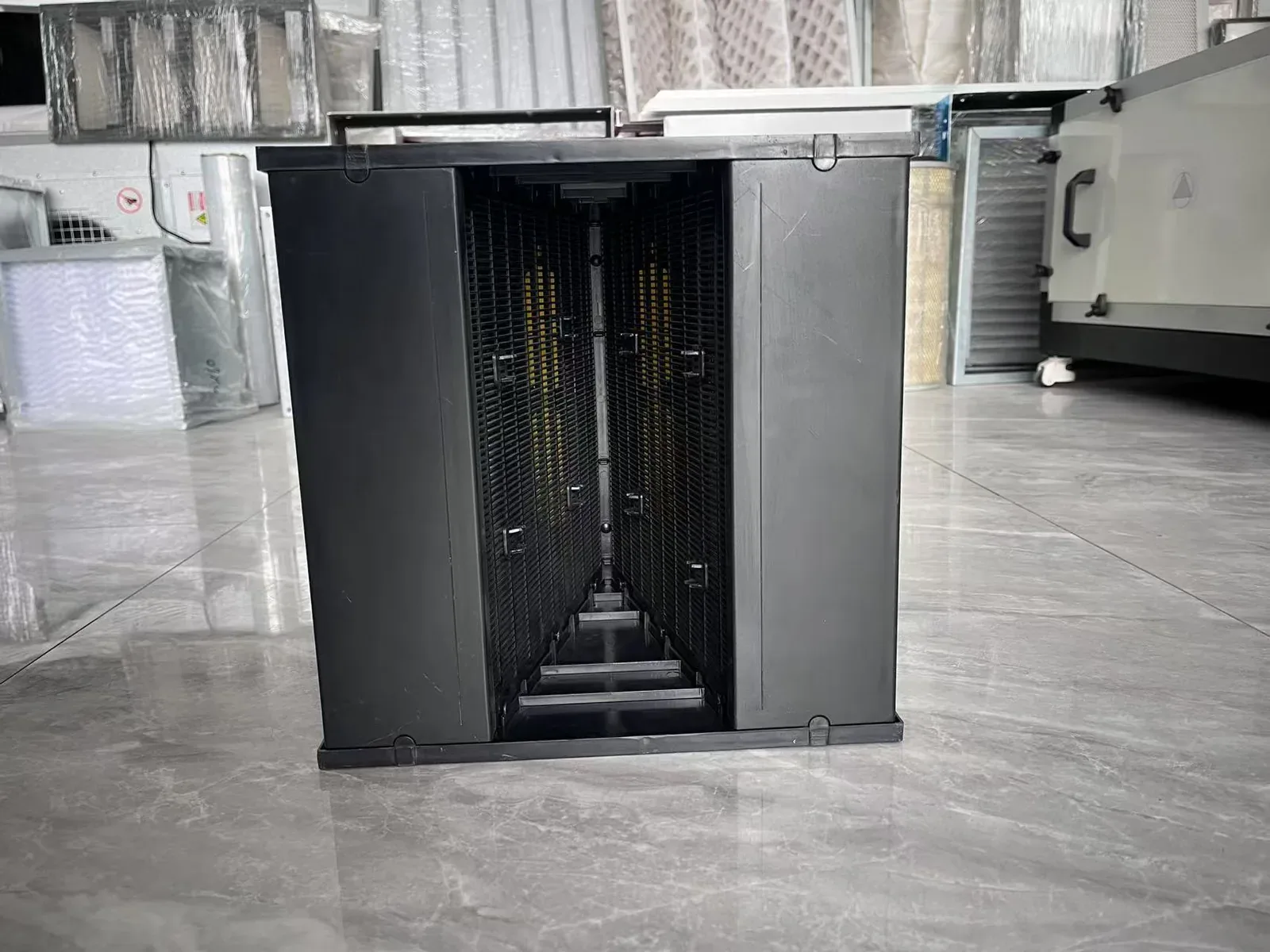
Virgin activated carbon physically adsorbs VOCs; impregnated chemical media irreversibly neutralizes acid gases (H2S, SO2, Cl2).
Maintains control room environment severity below 300 Å copper corrosion to ensure DCS, PLC, and server warranty compliance.
Fresh-air pressurization (PSA/PSA-PG), indoor room recirculation (DBS/CA), and process stack exhaust (WGP) have dedicated designs.
Cleans incoming outdoor ventilation air for central control rooms, DCS rack rooms, and substation switchgear spaces in petrochemical, refining, and chemical plants.
Delivers twice the airflow capacity per unit footprint of standard PSA units, utilizing a robust G4 pre-filter + 2 PCB chemical media stages + F8 final filter train with 2,000 Pa casing pressure rating and toxic gas interlocks.
Dedicated in-room air scrubbers designed for server rooms, data centers, archive vaults, and control rooms where indoor gas contaminants and personnel ingress require continuous internal polishing.
High-capacity industrial exhaust scrubbing units designed to remove toxic, corrosive, and odorous chemical gases before stack discharge. Features deep-bed virgin activated carbon combined with chemical reaction stages.
| Product Family | What It Solves | Documented Airflow Boundary | First Input to Confirm | Action |
|---|---|---|---|---|
| Corrosion-controlled outdoor air for control rooms and protected electronics | PSA: 850–34,000 m³/h |
Fresh-air quantity and outdoor gas analysis | Configure PSA | |
| Higher-volume control-room intake with fewer units | PSA-PG: 1,700–68,000 m³/h per unit |
Required fresh-air volume and room pressurization | Configure PSA-PG | |
| Indoor/cabinet gas-phase corrosion control | CA: 850–6,800 m³/h; DBS sized by room duty |
Room volume, infiltration and target environment | Configure Recirc | |
| Treatment of toxic, corrosive or odorous exhaust before discharge | WGP: Several thousand to 100,000+ m³/h |
Exhaust airflow and full gas composition | Configure WGP |
Submitting your target gas species, peak/average concentrations (ppm/ppb), airflow, room volume, temperature, and humidity allows our chemical engineers to calculate media mass and bed residence times.
Gas purification efficiency tested in accordance with GB/T 34012; whole unit performance evaluated to GB/T 14294-2008.
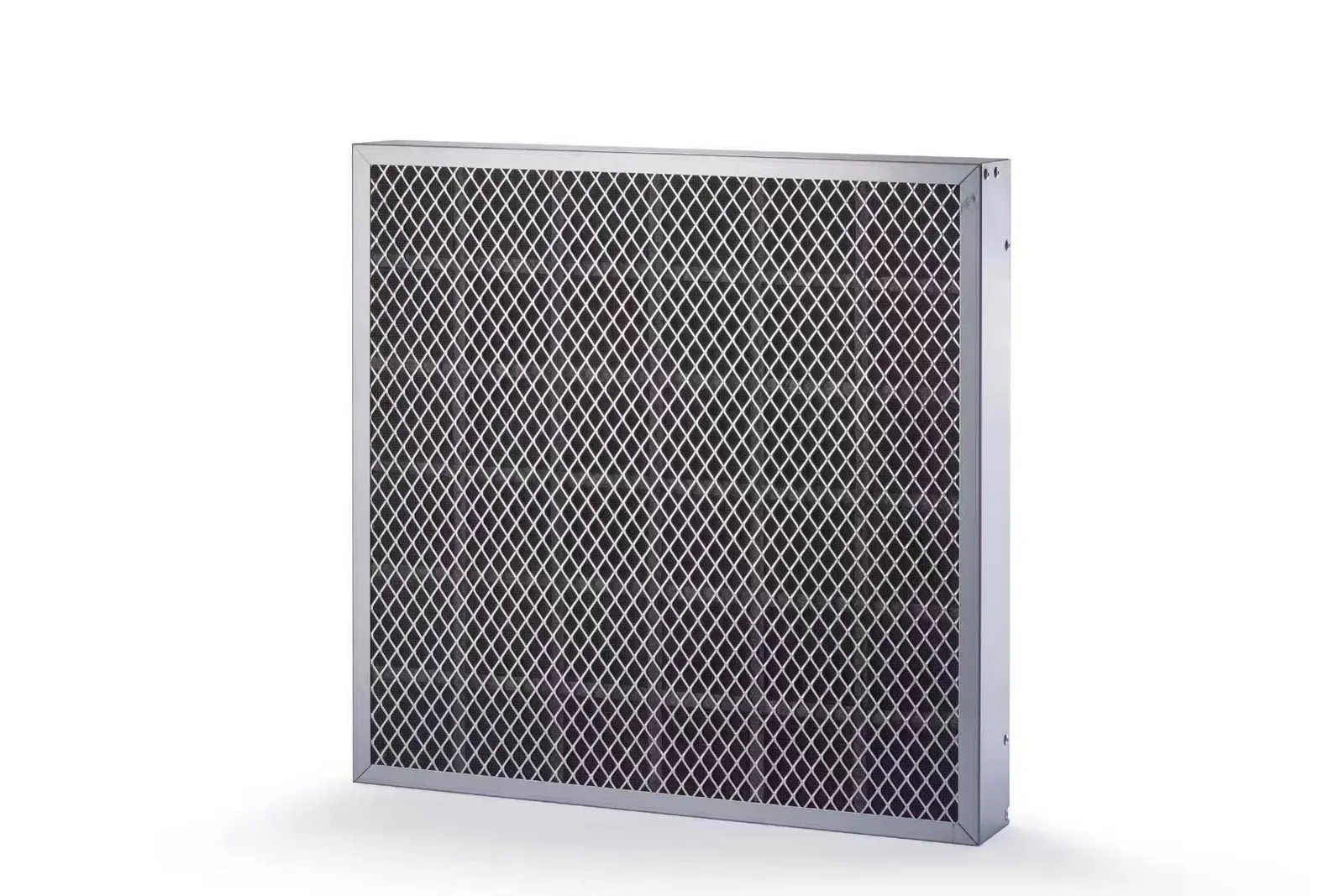
Virgin coal/coconut activated carbon checked for iodine number (≥1,000 mg/g), ball-pan hardness (≥95%), and CTC adsorption (≥60%).
Chemical media tested to UL 900 / UL/SGS fire safety standards with accompanying Safety Data Sheets (SDS).
Control rooms require positive pressure (+25 to +50 Pa) to prevent fugitive outdoor gas ingress through door gaps and cable penetrations.
Always maintain G4/F8 particulate pre-filters to prevent atmospheric dust blinding chemical pores and reducing gas adsorption capacity.
Monitor media life via periodic laboratory residual-capacity testing or copper reactivity coupons rather than relying on pressure gauges alone.
Start with Fresh-Air Chemical Filtration using PSA, or High-Airflow Chemical Filtration using PSA-PG when the outdoor-air demand is larger (up to 68,000 m³/h).
Review Recirculation Chemical Filtration. DBS and CA are the YONGFAN indoor protection routes; CA has a documented range of 850–6,800 m³/h.
Choose PSA-PG when the same corrosion-control duty requires substantially more airflow per unit. The documented PSA-PG range reaches 68,000 m³/h versus 34,000 m³/h for PSA.
Use Exhaust Gas Treatment with WGP. Where odor must first be captured from open tanks, pair with the supplier’s OGP collection/enclosure covers.
No. HEPA filters capture particles. PSA, PSA-PG, DBS, CA and WGP use gas-phase adsorption and chemisorption media to capture airborne molecular gases.
The supplier positions PSA, PSA-PG, DBS and CA around the protected-room ANSI/ISA-71.04 Class G1 target (<300 Å Cu / month).
No. WGP combines virgin activated carbon (iodine ≥1,000 mg/g) with chemically impregnated media so physical adsorption and chemisorption handle mixed complex gas streams.
Not reliably. Sizing requires gas species, concentration, relative humidity, air temperature, velocity, contact time, and target media replacement interval.
Connect gas analysis, airflow, environmental target, and duct pressure into one confirmed equipment schedule. Send your gas analysis data to our chemical filtration engineers.