
YONGFAN HVAC - Premium Header
Engineered HVAC & Industrial Air Systems
YONGFAN HVACYOFAN HVAC Home
HVAC Pre-Filters | YONGFAN
Air Filtration · Primary Stage (G1–G4 / ISO Coarse)

HVAC Pre-Filters: Match Airflow, Depth & Clean Resistance

Choosing the wrong pre-filter raises fan resistance, shortens downstream filter life, or forces maintenance crews to replace filters far more often than the system requires.

Compare YONGFAN CG, CCB, CY, CNL and CJS primary filter families across rated airflow (800–3,200 m³/h), initial static pressure (≤10 Pa to 45 Pa), frame depths (10 mm, 25 mm, 45 mm), and disposable vs washable architectures.

5 Families CG · CCB · CY · CNL · CJS
Initial ΔP ≤10 Pa – 45 Pa
Depth Range 10 mm · 25 mm · 45 mm
Service Mode Disposable · Washable Mesh
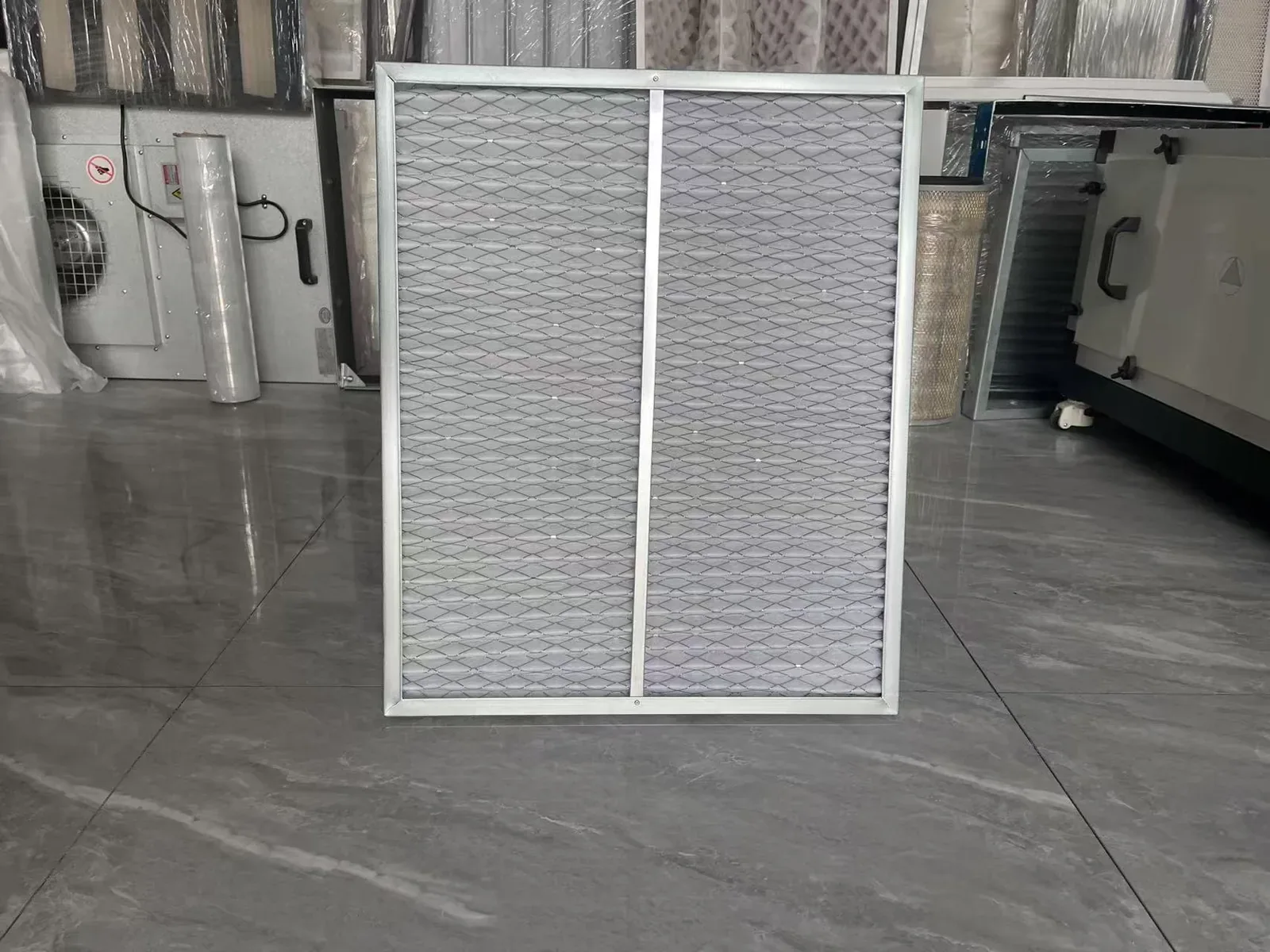
YONGFAN G4 pleated HVAC pre-filter with galvanized frame
Primary Stage Engineering Balancing Particulate Capture, Fan Energy & Rack Geometry
01 / Operating Cost & Root Cause Analysis

HVAC Pre-Filter Failures That Raise Operating Cost

A common failure appears first at the differential-pressure gauge: the AHU runs for several weeks, supply airflow starts to fall, and the primary filter is heavily loaded long before its expected service interval.

Insufficient Media Area & High Face Velocity

The filter has too little effective media area for the design airflow, or a shallow disposable element is used where high dust concentrations require washable coarse media.

Impact: Rapid ΔP spikes & premature filter blinding

Overly Open Mesh & Downstream Fouling

A very open mesh produces negligible resistance, but allows coarse dust to pass straight through. Cooling coils foul, secondary medium filters blind rapidly, and maintenance moves deeper into the AHU.

Impact: Coil cleaning expense & secondary filter waste

Rack Depth Mismatch & Air Bypass

A 45 mm panel cannot fit a 10 mm track without clearance. Forcing, bending, or compressing the frame creates gaps. Air takes the lower-resistance bypass path rather than passing through media.

Impact: Zero filtration efficiency via bypass gaps

Improper Washing & Damaged Mesh

Reusable nylon/metal mesh filters require consistent washing procedures. Harsh handling, mesh deformation, or returning wet media creates variable resistance and compromised retention.

Impact: Unpredictable clean resistance & media tear

The Correct Pre-Filter Balances Four Engineering Constraints

ISO 16890 measures efficiency and resistance under standard lab conditions, but service lifetime is dictated by how these four factors interact on site.

01 Contaminant Particle Profile
02 Allowable Fan Pressure Loss
03 Usable Rack & Track Depth
04 Site Servicing & Washing Plan
02 / Technical Parameters

Pre-Filter Efficiency, Pressure Drop and Depth

Primary filters look simple, but the published numbers describe distinct engineering functions. A filter can remove more material and still be a poor choice if its pressure drop consumes too much fan static head.
Parameter 01 / Retention

Filtration Efficiency (G1–G4)

Describes how much test contaminant is retained. YONGFAN documents CG in G1–G4 grades with gravimetric efficiency up to 50%, while CCB and CY are listed as G1 products (40%–50%). Compare these figures on the same test basis rather than converting casually into ISO ePM classes.

Parameter 02 / Fan Load

Initial Clean Resistance (ΔP)

Tells you how much static pressure the clean filter adds at rated airflow. A bank of filters operates for thousands of hours — an extra 20 Pa clean penalty becomes a continuous annual fan-power cost. CJS operates at ≤10 Pa, while deep G4 panels operate up to 45 Pa.

Parameter 03 / Geometry

Depth & Rated Airflow Sizing

Depth controls physical track fit and usable media area. CCB and CNL use a 10 mm profile; CY uses 25 mm; CG and CJS use 45 mm. Standard models cover 800 to 3,200 m³/h. Comparing pressure loss without checking rated face velocity yields misleading conclusions.

Published Initial Resistance Comparison by Family

These numbers reflect different media construction, frame depth, and filtration duties — not a ranking of product quality.

Clean Filter Baseline @ Rated Flow
CJS Metal Mesh
≤10 Pa
45 mm · Washable Metal · Coarse Duty
CNL Nylon Mesh
≤15 Pa
10 mm · Washable Nylon · Alkali Resistant
CY Cardboard
24 Pa
25 mm · Disposable Cardboard · G1 (50%)
CCB Ultra-Thin
25 Pa
10 mm · Disposable Ultra-Thin · G1 (40%)
CG Panel
25–45 Pa
45 mm · Disposable Panel · G1–G4 Multi-Grade
1. Required Stage Primary coarse protection
2. Pressure Allowance Initial ≤10–45 Pa, Final limit
3. Geometry & Track Face size (W×H) & Depth (10/25/45 mm)
4. Service Strategy Disposable panel vs Washable mesh
03 / Product Lineup

Choose the Pre-Filter Family by the Maintenance Problem

Each YONGFAN primary filter family resolves a specific combination of rack geometry, filtration grade flexibility, disposal convenience, and washability.
Family 01 · CG Series Conventional 45 mm Depth

CG Primary Panel Air Filter

The CG family is the general-purpose panel route when the filter rack accepts conventional 45 mm depth and the project needs more grade flexibility than a fixed G1 product. YONGFAN publishes CG in G1–G4 options with initial resistance of 25–45 Pa across six standard face sizes (800 to 3,200 m³/h).

CG is appropriate ahead of medium- or high-efficiency filtration in central air conditioning systems. It is the logical choice when the schedule assumes standard 45 mm panels without routine washing requirements.

Filtration Grades
G1, G2, G3, G4 (Gravimetric ≤50%)
Initial Clean Resistance
25 – 45 Pa
Standard Depth
45 mm
Frame Materials
Galvanized steel, Aluminum alloy, Custom
Engineering Boundary: Do not select CG simply because G4 is higher than G1. Higher particle removal increases resistance and dust loading rate. Downstream filter, fan allowance, and replacement intervals must be evaluated together.
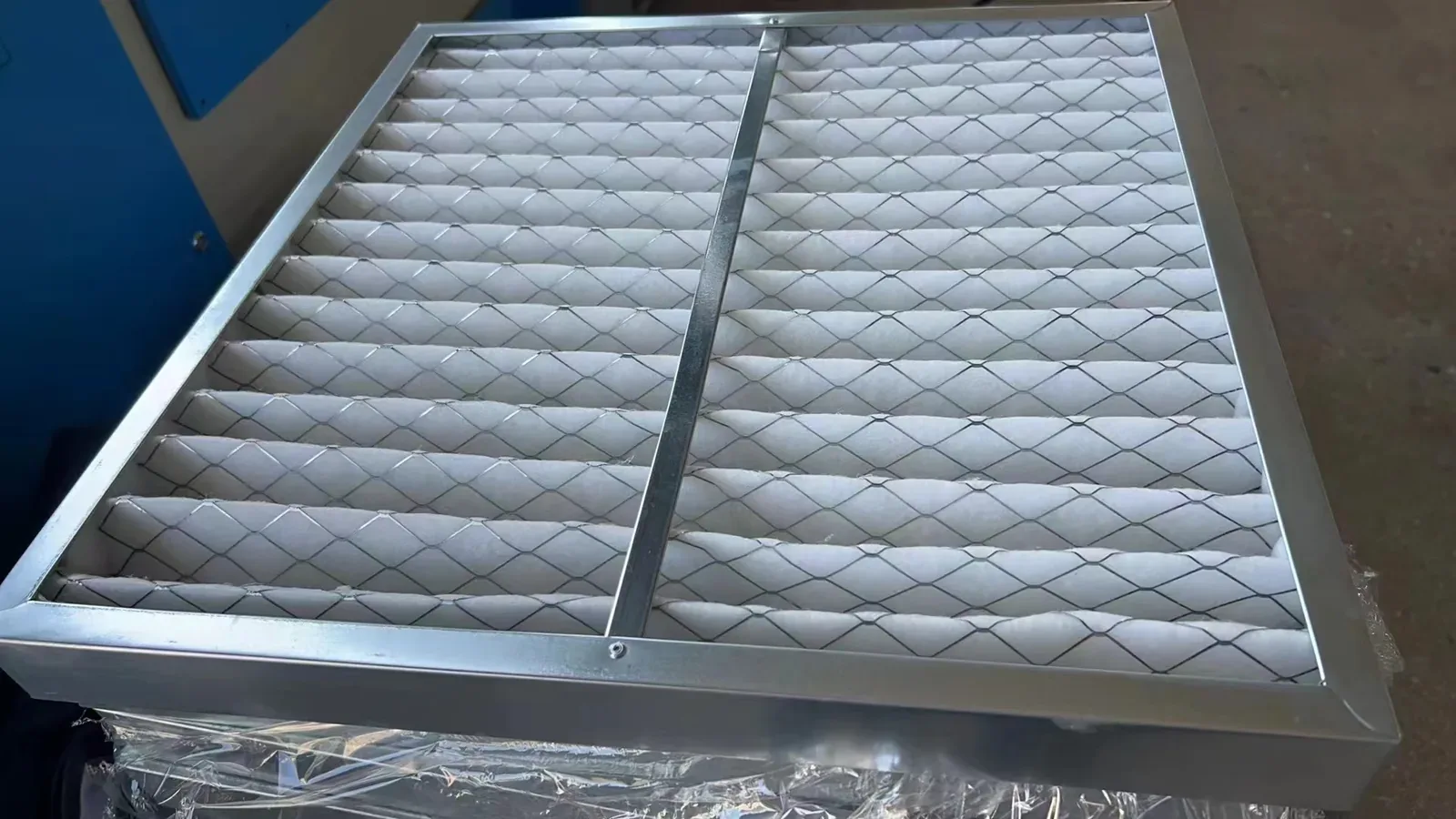
CG Standard Model Ratings
CG-8 295 × 295 × 45 mm 800 m³/h
CG-12 495 × 295 × 45 mm 1,200 m³/h
CG-16 595 × 295 × 45 mm 1,600 m³/h
CG-20 495 × 495 × 45 mm 2,000 m³/h
CG-24 595 × 495 × 45 mm 2,400 m³/h
CG-32 595 × 595 × 45 mm 3,200 m³/h

*Non-standard W × H × D dimensions produced on request.

Family 02 · CCB Series 10 mm Ultra-Thin Profile

CCB Primary Ultra-Thin Air Filter

The CCB family solves a geometry problem first. Its published thickness is only 10 mm (compared with 25 mm for CY and 45 mm for CG). YONGFAN lists CCB as a G1 primary filter with 40% gravimetric efficiency and 25 Pa initial resistance across six standard model sizes from 295×295 mm (800 m³/h) to 595×595 mm (3,200 m³/h).

CCB is ideal in shallow return-air grilles, compact fan coil units, tight retrofit racks, and packaged equipment where full-depth panels interfere with access or adjacent coils.

Filtration Grade
G1 (Gravimetric 40%)
Initial Clean Resistance
25 Pa
Frame Depth
10 mm
Primary Benefit
Fits 10 mm tracks without modifying track
Engineering Boundary: CCB should be selected because available depth is strictly restricted, not because 10 mm is inherently better. A thinner filter provides less physical depth for media arrangement, so maintenance plans must anticipate dust loading.
CCB Standard Model Ratings
CCB-8 295 × 295 × 10 mm 800 m³/h
CCB-12 495 × 295 × 10 mm 1,200 m³/h
CCB-16 595 × 295 × 10 mm 1,600 m³/h
CCB-20 495 × 495 × 10 mm 2,000 m³/h
CCB-24 595 × 495 × 10 mm 2,400 m³/h
CCB-32 595 × 595 × 10 mm 3,200 m³/h

*Ultra-thin replacement for compact fan coil units & grilles.

Family 03 · CY Series 25 mm Cardboard Frame

CY Primary Cardboard-Frame Filter

The CY family occupies the intermediate 25 mm depth between CCB (10 mm) and CG (45 mm). YONGFAN publishes CY with a beverage-board moisture-resistant cardboard frame, 24 Pa initial resistance, and 50% gravimetric efficiency at G1 classification.

Standard models cover CY-8Z (295×295×25 mm, 800 m³/h) to CY-32Z (595×595×25 mm, 3,200 m³/h). Imperial-equivalent nominal dimensions are published in product datasheets, simplifying replacement in imported AHU racks and incinerable disposal streams.

Filtration Grade
G1 (Gravimetric 50%)
Initial Clean Resistance
24 Pa
Frame Construction
25 mm Cardboard (Eco-disposable)
Nominal Standards
Metric & Imperial nominal sizes
Engineering Boundary: Cardboard construction is designed for dry HVAC service. Where the filter bank experiences condensate carryover, washdown, or continuous saturated air, metal-framed CG, CCB, or CJS should be specified instead.
CY Standard Model Ratings
CY-8Z 295 × 295 × 25 mm 800 m³/h
CY-12Z 495 × 295 × 25 mm 1,200 m³/h
CY-16Z 595 × 295 × 25 mm 1,600 m³/h
CY-20Z 495 × 495 × 25 mm 2,000 m³/h
CY-24Z 595 × 495 × 25 mm 2,400 m³/h
CY-32Z 595 × 595 × 25 mm 3,200 m³/h

*Complete element disposal; imperial sizes available.

Family 04 · CNL Series Washable 10 mm Nylon Mesh

CNL Primary Nylon-Mesh Air Filter

The CNL family changes the maintenance model. Instead of disposing of the filter element at each maintenance cycle, the polyamide nylon mesh is washable and reusable. YONGFAN publishes an initial clean resistance of ≤15 Pa with a compact 10 mm profile.

CNL is suitable for central and household air conditioning systems, providing acid- and alkali-resistant general-purpose service. It is a maintenance-driven choice for facilities prepared to wash and reinstall coarse filter elements repeatedly.

Media Type
Washable Polyamide Nylon Mesh
Initial Clean Resistance
≤15 Pa
Depth
10 mm
Chemical Tolerance
Acid and alkali resistant mesh
Engineering Boundary: Washability does not remove the need for pressure monitoring. Reusable mesh must be cleaned before particulate buildup chokes airflow. Maintenance staff must follow proper washing so mesh is not torn or distorted.
CNL Standard Model Ratings
CNL-16 595 × 295 × 10 mm 1,600 m³/h
CNL-22 490 × 490 × 10 mm 2,200 m³/h
CNL-32 595 × 595 × 10 mm 3,200 m³/h

*Reusability and shallow depth where disposable frames are impractical.

Family 05 · CJS Series Lowest Published Resistance (≤10 Pa)

CJS Primary Metal-Mesh Air Filter

The CJS family uses multi-layered expanded aluminum or stainless metal mesh for coarse primary filtration. Its primary engineering distinction is having the lowest published clean resistance among all YONGFAN primary families at ≤10 Pa in a 45 mm frame.

CJS captures large dust particles, lint, and airborne debris with virtually zero fan penalty. It is robust, washable, and suited for central ventilation systems, harsh industrial intake screening, and environments requiring rigid metal construction.

Media Material
Multi-layer Expanded Metal Mesh
Initial Clean Resistance
≤10 Pa (Lowest in range)
Frame Depth
45 mm
Durability
High structural rigidity, washable & reusable
Engineering Boundary: Neither CJS nor CNL should be treated as substitutes for medium-efficiency bag or compact filters. Their role is coarse screening to intercept bulky contaminants before finer stages.
CJS Standard Model Ratings
CJS-16 595 × 295 × 45 mm 1,600 m³/h
CJS-22 490 × 490 × 45 mm 2,200 m³/h
CJS-32 595 × 595 × 45 mm 3,200 m³/h

*Rigid metal construction for heavy coarse dust & washable duty.

04 / Selection Matrix

Pre-Filter Family Routing Table

Cross-reference all five YONGFAN HVAC pre-filter families by primary engineering purpose, published parameter boundaries, and key project input needed to confirm selection.
Product Family What It Solves Range Boundary (YONGFAN Data) First Input to Confirm Specification Action
Conventional primary filtration with multiple G-grade options
800–3,200 m³/h · 25–45 Pa · 45 mm
Required primary filtration grade (G1, G2, G3, G4) Configure CG
Very shallow primary filtration for tight tracks & grilles
800–3,200 m³/h · 25 Pa · G1 (40%) · 10 mm
Available rack depth (≤10 mm track constraint) Configure CCB
Disposable 25 mm primary filtration with metric/imperial sizes
800–3,200 m³/h · 24 Pa · G1 (50%) · 25 mm
Disposable cardboard format and dry moisture condition Configure CY
Washable nylon coarse filtration in shallow 10 mm profile
1,600–3,200 m³/h · ≤15 Pa · 10 mm
Site cleaning method & acid/alkali environment Configure CNL
Washable metal coarse filtration with lowest clean resistance
1,600–3,200 m³/h · ≤10 Pa · 45 mm
Reusable metal construction preference & 45 mm rack Configure CJS
*The airflow limits above describe published standard catalog models, not the only sizes YONGFAN manufactures. Non-standard dimensions and specialized frame materials can be produced. Efficiency figures use classification designations printed in source technical files; compare against the same test basis before treating grades as equivalent.
05 / Procurement Protocol

Specify Airflow, Rack Size & Maintenance Method Before Quoting

A pre-filter enquiry should start with the physical filter bank opening rather than nominal catalog dimensions. Confirm these four core criteria to receive accurate technical selection and pricing.
STEP 01

Physical Track Opening

Provide actual opening width, height, and usable track depth (W × H × D) in millimeters. For retrofit replacement, include existing frame drawings.

STEP 02

Airflow per Filter Bank

State airflow per individual cell or total system CFM/CMH along with number of cells in the bank to avoid overloading standard 800–3,200 m³/h ratings.

STEP 03

Filtration Grade Spec

State required classification exactly as written in engineering specs (G1–G4 or ISO 16890 Coarse). Do not silently translate without confirmation.

STEP 04

Maintenance Protocol

Confirm whether the site requires disposable quick-replace panels (CG/CCB/CY) or washable reusable elements (CNL/CJS) with washing facilities.

Engineering Handoff

Required Parameters for Pre-Filter Quotes

Send the data you have available. YONGFAN application engineers will verify face velocity, clean resistance, and dimensional compatibility.

Opening Dimensions: W × H × D (mm)
System Airflow (m³/h or CFM)
Target Grade: G1, G2, G3, G4 / Coarse
Max Allowable Clean ΔP (Pa)
Frame Material: GI / Alum / Cardboard
Service Strategy: Disposable vs Washable
06 / Manufacturing Consistency

YONGFAN Filter Production and Consistency Controls

YONGFAN identifies CG, CCB, CY, CNL and CJS as products designed and manufactured within its dedicated air-filtration operation, ensuring traceable media quality, dimensional precision, and verified testing standards.
Automated Assembly

Pleating & Hot-Melt Lines

In-house pleating, ultrasonic bonding, and hot-melt bonding ensure consistent pleat spacing, uniform air velocity distribution, and structural integrity under airflow load.

Material Verification

Incoming Media & Frame QA

Synthetic media rolls, nylon cloth, expanded metal, and beverage-board framing are checked for grammage, thickness, and tensile strength before entering assembly.

Testing Standards

ISO 16890 & GB/T 14295

Initial resistance and gravimetric arrestance are verified using calibrated test rigs, ensuring published ≤10 Pa to 45 Pa ratings accurately match supplied hardware.

Traceability

Model & Batch Labelling

Finished units are labelled with model code, rated airflow, filtration grade, and outer dimensions for repeat procurement without field guesswork.

7–15 Days Fast Dispatch: Standard catalog model sizes are held in inventory for rapid export and domestic shipment. Bespoke Dimensions: Custom W × H × D sizes, header flanges, and specialized frames configured on order.
07 / Engineering Knowledge

HVAC Pre-Filter Frequently Asked Questions

Direct engineering answers to common selection, sizing, and replacement questions encountered during pre-filter procurement and maintenance.

Which YONGFAN pre-filter fits a standard 45 mm filter rack?

The first families to compare are CG and CJS, since both use a published 45 mm depth. CG is the conventional panel family with G1–G4 options, while CJS is a washable metal-mesh filter for coarse reusable filtration.

Which YONGFAN pre-filter is the thinnest?

CCB and CNL both use a 10 mm published depth. CCB is a disposable-style G1 ultra-thin primary filter, while CNL uses washable nylon mesh — maintenance strategy separates the two even though installation depth is identical.

Which YONGFAN pre-filter can be washed and reused?

Both CNL and CJS are documented as washable and reusable. CNL uses nylon mesh with initial resistance of ≤15 Pa (10 mm), while CJS uses metal mesh with initial resistance of ≤10 Pa (45 mm).

How do CG and CY primary filters differ?

CG uses a 45 mm frame and offers G1–G4 grades in the supplied data. CY uses a 25 mm cardboard frame and is published as G1 (50% arrestance), so CY suits disposable shallow-panel requirements while CG gives broader grade flexibility.

Which YONGFAN pre-filter has the lowest published resistance?

Among all five families, CJS has the lowest stated clean resistance at ≤10 Pa. CNL follows at ≤15 Pa, while CY (24 Pa), CCB (25 Pa), and CG (25–45 Pa) publish higher values. Lowest ΔP does not automatically make CJS correct if higher particle capture or shallow tracks are required.

Can a CNL or CJS replace a disposable CG filter?

Only after verifying filtration objectives and track geometry. CNL, CJS, and CG are all primary-stage products, but their depth (10 mm vs 45 mm), media type, and published efficiency differ, so dimensional fit alone is not sufficient to approve substitution.

Which YONGFAN pre-filter should protect a medium filter?

A CG panel filter is the broadest conventional choice when the specification calls for a defined G1–G4 primary stage ahead of medium-efficiency filters. CCB or CY can serve shallow disposable installations, while CNL and CJS are alternatives when the maintenance plan favors washable coarse filters.

08 / Application Boundaries

Pre-Filters Are Not Final Filtration

Primary filters are designed to intercept coarse dust and protect downstream components. Understanding their functional limitations prevents costly misapplication.
Boundary 01 / Medium Duty

Not Intermediate Filters

Pre-filters are not substitutes for YONGFAN’s ZF5(6), ZF7(8), ZF9, ZZH, ZDZ, or ZYG medium-efficiency bag and compact filter families where finer intermediate particulate capture is required.

Boundary 02 / Sterile Duty

Not HEPA/ULPA Media

If the project is governed by ISO cleanroom limits, sterile pharmaceutical suites, or infection-control wards, selection must move to H13–U17 terminal filters rather than pushing expectations on primary panels.

Boundary 03 / Molecular Gas

Do Not Remove Odors or VOCs

Pre-filters do not capture molecular gases simply because media looks dense. Odors, H2S, SO2, and corrosive gases require dedicated activated carbon or chemisorption scrubbers.

Boundary 04 / O&M Strategy

Washable ≠ Maintenance-Free

CNL and CJS must be routinely removed, washed, and dried. If site staffing cannot support consistent cleaning routines, disposable CG or CCB filters provide more predictable long-term pressure stability.

09 / Engineering Handoff

Select the Right HVAC Pre-Filter for Your System

You do not need to know the final part number. Send your track opening dimensions, target system airflow, and preferred maintenance approach — our application engineers will confirm the appropriate family and model code.

Rack W × H × D (mm) System Airflow (m³/h) Grade: G1, G2, G3, G4 Clean ΔP Limit (≤10–45 Pa) Disposable vs Washable Frame: GI / Aluminum / Cardboard
YONGFAN 46 mm G4 panel pre-filter
Direct Application Engineering Support
Duty-matched filter schedules, CAD drawings & custom sizing confirmation.