YONGFAN HVAC - Premium Header
Engineered HVAC & Industrial Air Systems
YONGFAN HVACYOFAN HVAC Home
Fresh-Air Chemical Filtration Units | PSA Series | YONGFAN
Corrosion Control · ISA S71.04 Class G1 · 850–34,000 m³/h

Fresh-Air Chemical Filtration: Protect Control Rooms from Corrosive Gas

Fresh-air intakes fitted with standard particle filters still admit molecular gases (H₂S, SO₂, Cl₂, NOx), rapidly corroding copper/silver circuitry in mission-critical DCS, PLC, and server racks.

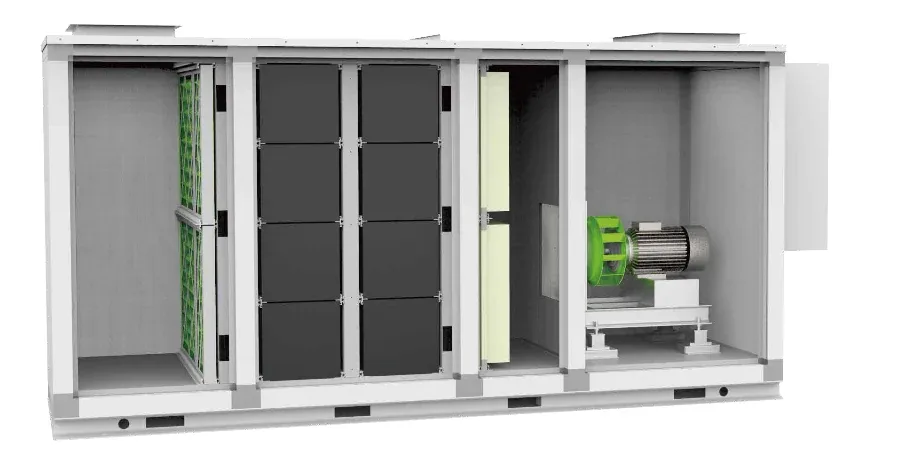
YONGFAN PSA series integrates G4 particulate pre-filtration, dual-bed gas-phase chemisorption (PK12-PCB / PK12-CPB), F8 post-filtration, and 2,000 Pa structural casings with <1% leakage at 1,000 Pa.
23 Models 850 – 34,000 m³/h
Target Gases H₂S · SO₂ · Cl₂ · NOx · VOC
Casing Integrity <1% Leak @ 1,000 Pa
Media Standard ISO 10121 · 1-Yr Life
YONGFAN PSA fresh-air chemical filtration unit
Mission-Critical Electronics Protection Gas-Phase Molecular Chemisorption for Petrochemical & CCR Intakes
01 / Risk Analysis

Why Control-Room Corrosion Persists Behind Clean Particle Filters

Hydrogen sulfide and sulfur dioxide pass straight through G4/F8 filters as molecular vapors. Copper contacts blacken, connector resistance surges, and microcircuit failures disable plant operations.
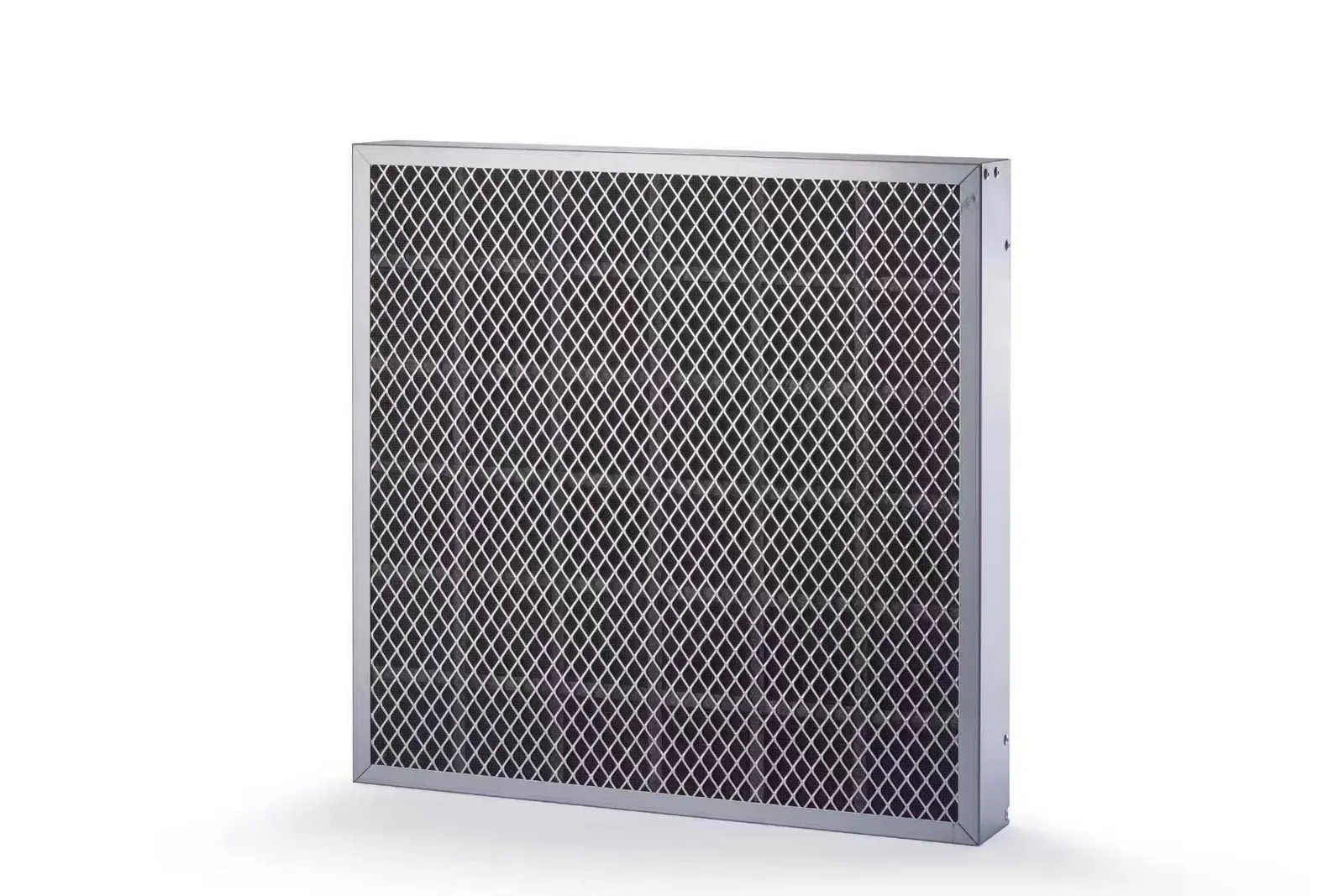
YONGFAN impregnated honeycomb chemical filter
Molecular Gas Penetration

Why Particle Traps Cannot Stop Corrosion

Molecular gases require chemisorption and catalytic bonding, not mechanical straining. Without gas-phase media, outdoor air directly poisons indoor control electronics.

Particulate vs Molecular Confusion

Selecting F8/H13 filters expecting corrosive gas removal. Particles are captured, but H₂S and Cl₂ gases pass unhindered into server racks.

Impact: Electronic connector creep & silver corrosion

Sizing from Room Volume vs Fresh Air

Sizing the chemical unit from total room recirculation flow rather than outdoor pressurization make-up oversizes the unit and drains media needlessly.

Impact: Excessive CAPEX & inflated replacement cost

Media Chemistry Mismatch

Using standard activated carbon on acidic SO₂ or NOx without chemical impregnation leads to rapid breakthrough and zero capture of target species.

Impact: Breakthrough within weeks of commissioning

Casing Leakage & Intake Bypass

Poorly sealed AHU panels leak raw outdoor gas around chemical beds under negative pressure, defeating the chemical stage entirely.

Impact: Untreated air bypasses filtration train

Five Engineering Pillars of PSA Fresh-Air Protection

Targeting ISA S71.04 Class G1 mild environmental levels for 24/7 electronic reliability.

01 Outdoor Air & Overpressure Flow
02 Site Contaminant Gas Profile
03 Two-Stage Media Bed Selection
04 2,000 Pa Casing & <1% Leakage
02 / Filtration Train & Chemistry

G4 + Two-Stage Chemical Media + F8 Engineering Path

The PSA airflow train protects chemical beds from dust fouling with upstream G4 pre-filters, performs molecular chemisorption in dual beds, and captures any media dusting with downstream F8 filters.
Stage 01 / Pre-Filtration

G4 Pleated Pre-Filter

Arrestance 90–95% (MERV 7). Initial resistance 37 Pa, final limit 174 Pa. Protects chemical media granules from coarse dust and airborne debris accumulation.

Stage 02 & 03 / Chemisorption

Dual Chemical Stages (2 × 324 Pa)

Two sequential gas-phase beds engineered with KOH (PK12-PCB) or KMnO₄ (PK12-CPB) media. Delivers 99.5% single-pass removal for target acidic and oxidizing gases.

Stage 04 / Post-Filtration

F8 Secondary Panel Filter

Arrestance 99% (MERV 13). Initial resistance 75 Pa, final limit 300 Pa. Ensures zero media dust migrates downstream into precision control rooms.

YONGFAN Chemical Media Formulations & Removal Capacities

Tested per ISO 10121-1 gas-phase media standards.

1-Year Standard Service Life
PK12-PCB (KOH ≥8%)
Alkaline Chemisorbent
Capacity: >20% H₂S, >10% SO₂, >10% Cl₂ by weight. Targets acid gases & VOCs.
PK12-CPB (KMnO₄ 4–8%)
Permanganate Oxidant
Capacity: ≥9.5% NOx, ≥10% toluene by weight. Targets NOx, SO₂, Cl₂, formaldehyde.
SP / Triple Blend
Multi-Media Formulation
Engineered for complex refineries with H₂S, SO₂, NOx, VOCs, O₃, and organic acids.
03 / Standard Configurations

PSA Model Series: 850 to 34,000 m³/h Sizing Matrix

All published units operate on 380 V / 50 Hz with 250 Pa external static pressure (ESP) and IP55 / Class F direct-drive or belt-drive fans.
Model Airflow (m³/h) Motor Power (kW) Available ESP (Pa) Dimensions (D × H × W mm) Unit Weight (kg)
PSA-102 850 0.75 250 2500 × 830 × 670 365
PSA-202 1,700 1.5 250 2500 × 830 × 670 371
PSA-302 2,550 2.2 250 2800 × 1130 × 670 441
PSA-402 3,400 2.2 250 2800 × 1430 × 670 490
PSA-502 4,250 3.0 250 2800 × 1730 × 670 591
PSA-304 5,100 4.0 250 2800 × 1130 × 1270 726
PSA-404 6,800 5.5 250 3000 × 1430 × 1270 835
PSA-604 10,200 7.5 250 3000 × 2030 × 1270 1,011
PSA-506 12,750 7.5 250 3000 × 1730 × 1870 1,580
PSA-606 15,300 11.0 250 3000 × 2030 × 1870 1,724
PSA-608 20,400 15.0 250 3200 × 2030 × 2470 2,251
PSA-808 27,200 15.0 250 3200 × 2630 × 2470 2,580
PSA-810 34,000 22.0 250 3200 × 2670 × 3110 3,153

*Top inlet/outlet adds 600 mm depth. Heating/cooling coils add approx 800 mm. Dual fans add 500 mm. Higher airflow up to 68,000 m³/h is covered by PSA-PG Series.

04 / System Architecture

Petrochemical Intake Protection & Safety Interlocks

PSA integrates into blast-resistant wall openings downstream of blast valves and motorized airtight isolation dampers, linking with toxic gas alarms and DCS/PLC networks.
1
Blast Wall & Airtight Isolation Outdoor air passes blast valve, fire damper, and motorized airtight damper
2
Gas Alarm Emergency Interlock Combustible/toxic sensor triggers immediate damper closure & unit shutdown
3
4-Stage PSA Chemical Purification G4 pre-filter → Dual chemisorption beds → F8 post-filter
4
Class G1 Air to Precision HVAC Pure positive-pressure air feeds indoor constant temp & humidity AHUs

Custom Modular Add-On Sections

The PSA cabinet can be configured with functional sections tailored to local environmental challenges:

Sand-Removal Inertial Section
Electric / Water Heating Coils
Chilled-Water Cooling Coils
Electrode / Steam Humidifier
304 / 316L Stainless Casing
Ex-Proof Motor (ATEX / IECEx)
05 / Procurement Protocol

Information Required for Accurate PSA Sizing

A fresh-air chemical filtration enquiry requires outdoor air volume, contaminant gas species, room pressurization target, and plant safety interfaces.
STEP 01

Fresh-Air Flow (m³/h)

Specify outdoor ventilation and positive-pressure make-up volume needed for the space.

STEP 02

Gas Species & Levels

List normal/peak concentrations of H₂S, SO₂, Cl₂, NOx, NH₃, and VOCs around intake.

STEP 03

Corrosion Standard

Target ISA S71.04 Class G1 mild severity level or client-specific silver/copper reactivity.

STEP 04

Control & Interlocks

Confirm DCS/PLC communication, toxic gas sensor inputs, and motorized damper signals.

Engineering Handoff

Submit Project Parameters for PSA Sizing

Send available airside data. YONGFAN engineers will calculate media loading, contact time, and provide GA drawing submittals.

Fresh Air Volume (m³/h / CFM)
Target Gases: H₂S, SO₂, Cl₂, NOx
External Static Pressure (250 Pa)
Plant-Room Access Dimensions
Gas Detector / DCS Interlock
Optional Heater / Coil Sections
06 / Quality Verification

In-House Casing Fabrication & Leak-Test Controls

Every PSA casing is pressure and leak tested in-house against 2,000 Pa structural and <1% leakage benchmarks, verifying airtight performance before shipment.
Air Leakage QA

<1% @ 1,000 Pa Testing

Housings feature double-skin cold-rolled steel with 30 mm PU insulation, verified for zero bypass around chemical modules.

Aerodynamic QA

Fan Bench Testing

Each fan and motor assembly is bench-verified for airflow, static pressure, current draw, and vibration limits per GB/T 14294.

Media QA

Impregnation Analysis

Chemical media batches undergo chemical assay for active KOH / KMnO₄ content, moisture, and bulk density before filling.

Standards

GB/T 50779 & ISO 9001

Designed around petrochemical blast-resistant building ventilation guidelines and international ISO quality standards.

Custom Engineered Dispatch: Drawings approved within 3–5 working days; fabrication scheduled to project delivery milestones. Trade & Logistics: EXW, FOB, CIF, and DDP export delivery available with seaworthy packing.
07 / Engineering Knowledge

Fresh-Air Chemical Filtration FAQ

Direct engineering answers regarding PSA capacity, target contaminants, casing leakage, and control room protection.

What airflow range does the PSA series cover?

The standard PSA family covers 850 to 34,000 m³/h across 13 primary and 23 total configurations. For higher airflow up to 68,000 m³/h, select PSA-PG.

Which model handles 6,800 m³/h?

The PSA-404 is rated at 6,800 m³/h, 5.5 kW, and 250 Pa available external static pressure.

What gases does the standard PSA target?

H₂S, SO₂, Cl₂, NOx, and VOCs using potassium hydroxide (PK12-PCB) or potassium permanganate (PK12-CPB) chemisorption media.

Does PSA include particulate filtration?

Yes. The train includes a G4 pre-filter (MERV 7) and an F8 secondary filter (MERV 13) alongside the two gas-phase beds.

What is the casing leakage specification?

Double-skin insulated casing documented at <1% leakage at 1,000 Pa with a 2,000 Pa structural pressure rating.

How long does the chemical media last?

Standard service life is documented as 1 year under typical industrial challenge levels; actual life depends on site gas loading.

08 / Boundary Clarification

PSA Application Boundaries & Routing

PSA is specifically engineered for positive-pressure fresh air intake. Review adjacent equipment when duties differ.
Boundary 01 / Exhaust Scrubbing

Not an Exhaust Scrubber

PSA is for incoming fresh air. For contaminated industrial process exhaust discharge, select WGP Series.

Boundary 02 / In-Room Polishing

Not a Standalone Recirculator

For indoor server room recirculation without outdoor air, review CA or DBS Units.

Boundary 03 / High Airflow

Above 34,000 m³/h

When high-volume CCRs need 34,000 to 68,000 m³/h per unit, specify PSA-PG High-Airflow.

Boundary 04 / Blast Walls

Intake Valves Required

PSA does not replace blast isolation valves or fire dampers at the blast-wall boundary; it mounts downstream in the treated air path.

09 / Engineering Handoff

Select the Right PSA Fresh-Air Chemical Unit

Send your required fresh-air airflow, site gas analysis, and plant-room interface constraints. YONGFAN engineers will provide duty-matched schedules and GA drawing submittals.

Fresh Air CFM / CMH Gas Species (H₂S, SO₂, NOx) ISA S71.04 Class G1 Target Casing <1% Leakage Toxic Gas Interlock DCS / PLC Status Output
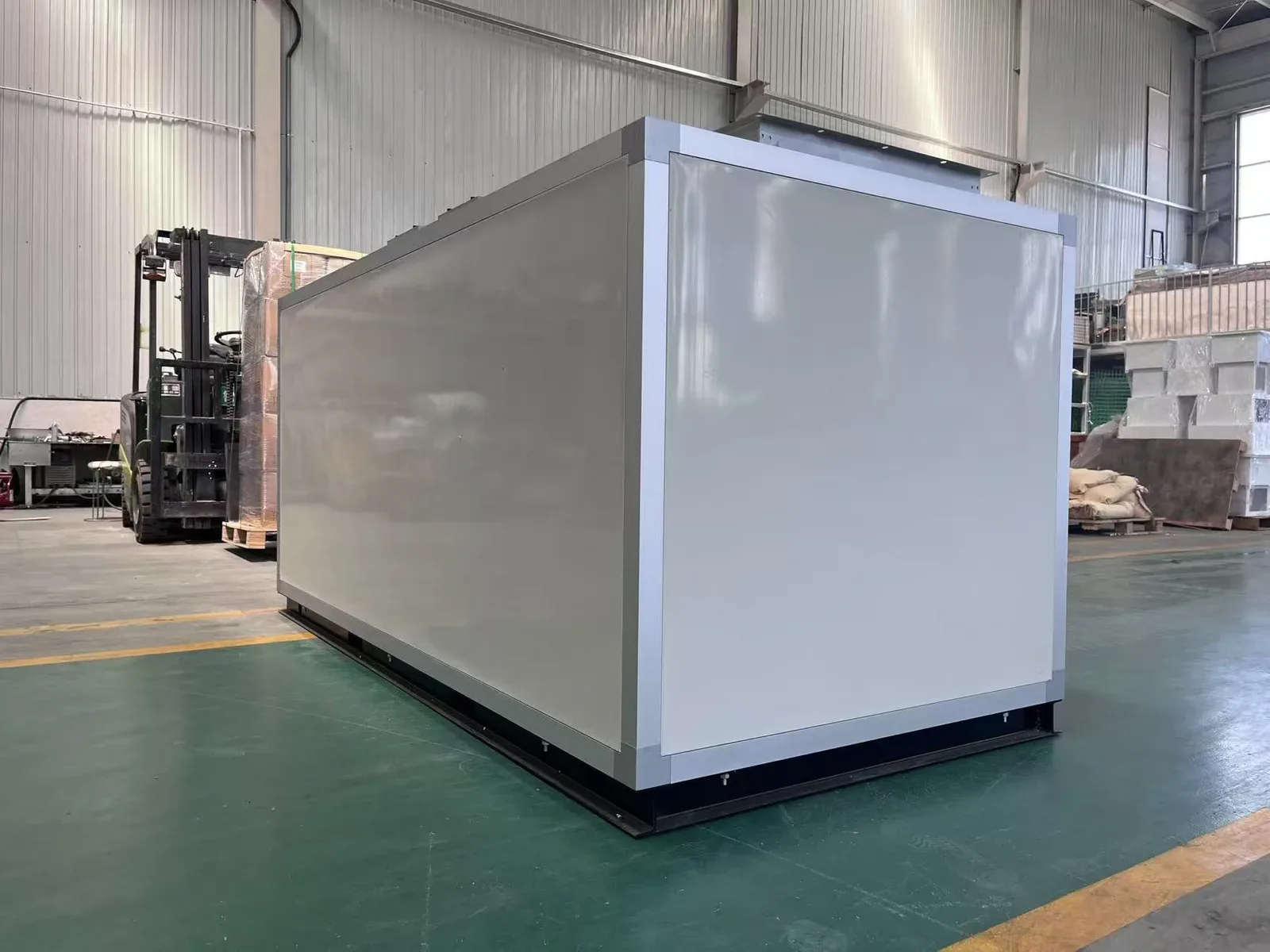
YONGFAN deep-bed fresh-air chemical filtration system
Direct Application Engineering Support
Gas loading analysis, media life calculations & verified GA submittals.