YONGFAN HVAC - Premium Header
Engineered HVAC & Industrial Air Systems
YONGFAN HVACYOFAN HVAC Home
HVAC Standards & Regulations | YONGFAN
Technical Frameworks & Compliance Verification

HVAC Standards & Regulations: Frameworks, Codes & Verification Scope

Standards define how HVAC components are classified, tested or documented. Regulations determine what a project is legally required to use in a particular market.

Understand the compliance chain across air filtration (ISO 16890, ISO 29463, EN 1822), fan aerodynamics (ISO 5801, ISO 13350, ISO 3744), cleanrooms (ISO 14644), hazardous areas (GB 3836, IEC 60079-0:2026), fire/smoke (GB 50016, 280 °C/30 min), pressure vessels (GB 150/151), and chemical filtration (ANSI/ISA-71.04).

Filter Class ISO 16890 · ISO 29463 · EN 1822
Fan Aerodynamics ISO 5801 · ISO 13350 · ISO 3744
Explosion & Fire GB 3836 · IEC 60079 · 280°C/30min
Vessels & Gas GB 150/151 · ISA 71.04 · ISO 10121
Engineering laboratory airflow and compliance verification test facility
Standard vs Regulation vs Certificate Project Requirement → Applicable Code → Configuration → Test Scope → Approval
01 / Regulatory Architecture

Start with the Project Requirement, Not a Standards List

A long list of ISO, EN, GB, IEC, NFPA or AMCA acronyms does not prove that one product complies with all of them. Technical clarity begins by distinguishing technical standards from market regulations and product certificates.
Engineers inspecting industrial HVAC equipment compliance documentation on site
The Compliance Sequence

Verify Scope Before Tender Approval

A standard provides the technical test method; a regulation determines legal jurisdiction; a certificate proves what has actually been verified for that exact model configuration.

1. Technical Standard

Defines how performance is measured, terminology, classifications, test apparatus, and acceptance criteria (e.g. ISO 16890, ISO 5801, IEC 60079).

Role: Technical measurement framework

2. Regulation / Code Requirement

Enforced by law or local Authority Having Jurisdiction (AHJ). Governs fire safety, electrical safety, energy efficiency, or pressure vessel operation.

Role: Mandatory statutory legal requirement

3. Certificate / Test Document

Documented third-party or factory evidence tied to a specific model, rating, and test scope. A brochure reference is not a certificate.

Role: Verified product-level proof of compliance

4. Authority Approval

Project sign-off achieved when product configuration, certification scheme, and destination market requirements align seamlessly.

Role: Final site commissioning sign-off
The Verified Compliance Chain
Project Requirement → Applicable Standard/Regulation → Selected Configuration → Test Certificate → Approval

Never assume a standard cited in product documentation automatically equals global certification across all markets and options.

02 / Air Filtration & Cleanrooms

Particulate Classification & Cleanroom Verification

ISO 16890, ISO 29463, EN 1822 and ISO 14644 govern different parts of the air treatment chain. Understand why filter class and room class are separate engineering problems.
Framework 01 · ISO 16890 Series ePM1 · ePM2.5 · ePM10 · Coarse

General Ventilation Filters — ISO 16890 vs Legacy G/F Grades

ISO 16890-1:2016 establishes the global particulate-matter efficiency classification framework (ePM1, ePM2.5, ePM10, and ISO Coarse). Updated parts cover fractional efficiency, resistance, dust-loading behavior, and electrostatic conditioning.

YONGFAN’s primary (CG, CCB, CNL, CJS) and medium (ZF5/6, ZF7/8, ZF9, ZZH, ZDZ, ZYG) source files also reference legacy EN 779 G1–G4 and F5–F9 classifications. Do not publish automatic conversions (e.g. G4 ≠ fixed ISO Coarse; F7 ≠ fixed ePM1). When an ISO 16890 specification is required, request the model-specific test report.

Standard Reference
ISO 16890-1:2016 (ePM classification)
Legacy Source Data
G1–G4 (CG, CCB, CY, CNL, CJS) · F5–F9 (ZF, ZZH, ZDZ, ZYG)
Test Parameters
Fractional efficiency, initial ΔP, dust loading, IPA discharge
Engineering Rule
No direct mathematical conversion without test data
Air filter laboratory testing rig for ISO 16890 efficiency and resistance
ISO 16890 Fractional Efficiency Test Bench
Key Verification Principle:

Legacy G/F grades reflect single-size particle testing; ISO 16890 reflects ambient particulate-matter spectrums. Keep test results attached to their exact standard basis.

Framework 02 · ISO 29463 & ISO 14644 MPPS Efficiency · Cleanroom Classification

HEPA / ULPA (ISO 29463 / EN 1822) & Cleanroom Environment (ISO 14644)

ISO 29463-1:2024 and EN 1822 govern high-efficiency filter classification based on the Most Penetrating Particle Size (MPPS). Current YONGFAN GCDZ documentation publishes efficiency ≥99.99% at MPPS with initial resistance ≤160 Pa.

99.99% at MPPS is not the same statement as 99.99% at 0.3 µm. Furthermore, ISO 14644-1 classifies the room environment, while ISO 14644-3 governs test methods. Installing a HEPA filter does not automatically create an ISO-classified cleanroom — airflow velocity, air changes, terminal quantity, leakage, pressure cascade, and process load dictate final room performance.

HEPA Standards
ISO 29463-1:2024 · EN 1822 · GB/T 13554
Cleanroom Standards
ISO 14644-1 (Cleanliness) · ISO 14644-3 (Test Methods)
YONGFAN Products
GCDZ (HEPA/ULPA) · GFK · GCFK (150mm) · FFU
Factory Verification
100% individual scan testing for pinhole leaks & frame seal
Cleanroom technician verifying laminar airflow and terminal HEPA filter installation
Cleanroom ISO 14644 In-Situ Validation
Filter vs Room Distinction:

The factory certificate verifies individual filter MPPS integrity; site validation verifies the complete cleanroom operating state.

03 / Aerodynamics & Life Safety

Fan Aerodynamics, Acoustics, Ex & Fire Protection

ISO 5801, ISO 13350, ISO 3744, GB 3836, IEC 60079 and fire smoke-control codes govern fan performance and life-safety integrity.
Framework 03 · ISO 5801 & ISO 13350 Aerodynamic Curves · Jet Thrust

Fan Aerodynamics (ISO 5801) & Tunnel Jet Thrust (ISO 13350 / GB/T 13351)

ISO 5801:2017 (incl. Amd 1:2025) is the international standard for fan performance testing using standardized airways. YONGFAN ventilation documents (DTF, DTXF, SWF, CDZ, T35-11, 4-72, SJG, DWT) publish aerodynamic curves. Always confirm pressure basis: some publish static pressure (Ps), others total pressure (Pt).

For tunnel jet fans (SDS / SDS-R), performance is defined by longitudinal thrust (N). YONGFAN source data references GB/T 13351. International projects referencing ISO 13350:2015 should verify the exact test method. Tunnel compliance also involves emergency reversal, high-temperature smoke extraction, and acoustic silencer sizing.

Duct Fan Aerodynamics
ISO 5801:2017 + Amd 1:2025 (Standardized Airways)
Jet Fan Thrust
ISO 13350:2015 · GB/T 13351 (SDS / SDS-R Series)
Sound Power Testing
ISO 3744 (Laboratory sound power measurement)
Engineering Note
Laboratory curves do not include duct system effect losses
Tunnel jet fan test chamber verifying static thrust and aerodynamic velocity profile
Tunnel Jet Fan Thrust Verification
Sound Power vs Installed Noise:

ISO 3744 defines equipment sound power. Installed sound pressure (dBA) depends on duct breakout, room acoustics, silencers, and wall absorption.

Framework 04 · GB 3836 & IEC 60079 / Fire Codes Ex d IIC T6 Gb · 280 °C / 30 Min

Explosion-Protection (GB 3836 / IEC 60079) & Fire Smoke-Control (GB 50016)

Hazardous-area equipment is highly marking-specific. YONGFAN documents GB 3836 compliance with markings including ExdbIIBT4, ExdbIICT4, and ExdIIBT4 for fans. For dampers, BFHF/BFD holds certificate CE21.1729 with marking Ex d IIC T6 Gb (IP65). IEC 60079-0:2026 defines international requirements — do not claim ATEX or IECEx equivalence without project-specific certificates.

Gas vs Dust: Ex d IIC T6 Gb is a gas marking; combustible dust requires separate dust certification.
Fire Smoke Duty: YONGFAN DTF fire-rated configurations document 280 °C / 30-minute smoke-exhaust duty under Chinese building fire codes (GB 50016, GB 50067, GB 50038). Dampers are function-specific: FHF (70 °C closing), PFHF (higher-temp closing), PYF (NC smoke exhaust opening), and BFHF (explosion-proof).

Ex Frameworks
GB 3836 · IEC 60079-0:2026 (Ex d IIC T6 Gb, CE21.1729)
Fire Smoke Codes
GB 50016 · GB 50067 · GB 50038 (280 °C / 30 min)
Damper Logic
FHF (70°C NO) · PFHF (280°C) · PYF (NC Fire Open) · BFHF (Ex)
Jurisdiction Rule
ATEX / IECEx / UL fire ratings confirmed per exact project scope
Explosion-proof electrical actuators and flameproof motor installation in petrochemical facility
Ex d IIC T6 Gb Flameproof Verification
Life-Safety Boundary:

A standard ventilation fan cannot be substituted into emergency smoke or classified gas zones. Sizing requires the exact certified build.

04 / Molecular, Pressure & Hydronics

Chemical Filtration, Pressure Equipment & Control Valves

ANSI/ISA-71.04, ISO 10121, GB 150/151 pressure codes, and EN/API valve testing standards define media, pressure boundary, and hydraulic integrity.
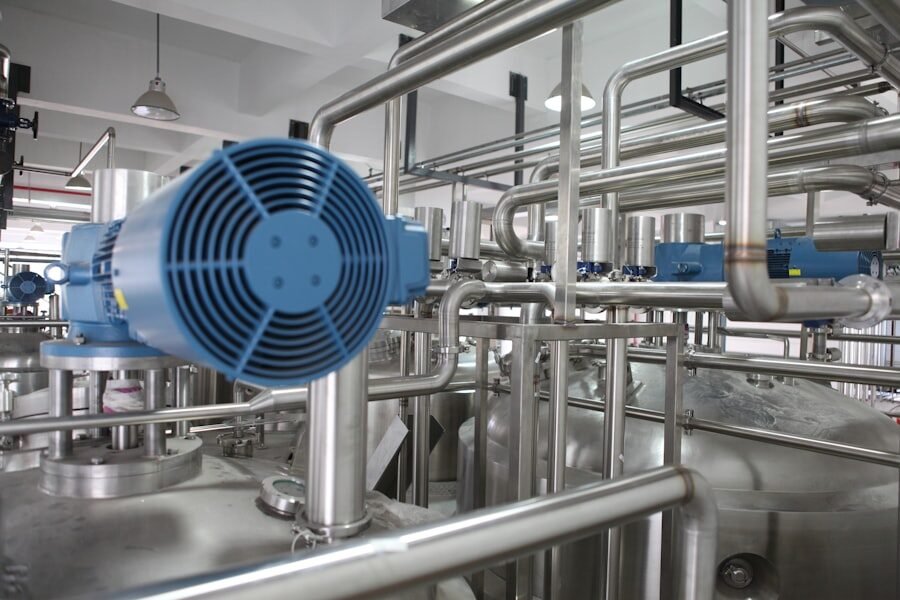
Industrial pressure vessel and heat exchanger hydrostatic testing setup
Pressure & Gas Standards

Hydrostatic 1.25× & ISA G1 Targets

Pressure vessels undergo 1.25× design pressure hydrostatic verification; chemical filtration units target ISA 71.04 Class G1 electronic room protection.

ISA-71.04-2013 (Class G1)

An environmental corrosion-severity target for server/control rooms (<300 Å/30 days copper corrosion), not a simple 99.5% filter grade.

Scope: Protected electronic environment

ISO 10121 (Gas-Phase Media)

Laboratory test methods for assessing gas-phase air-cleaning media (HT canisters, V-Type carbon, HTD) against specific challenge gases and residence times.

Scope: Media breakthrough & capacity test

GB 150 / GB 151 (Pressure Vessels)

Governs storage and shell/tube heat exchanger design, welding, and 1.25× design pressure hydrostatic testing. Confirm ASME/PED requirements separately.

Scope: Pressure vessel boundary integrity

GB/T 13927 / EN 12266-1 / API 598

Hydrostatic shell and seat leakage testing for 100X–900X hydraulic control valves, EDV dynamic balancing valves, and KYQ motorized valves.

Scope: Valve body & seat tightness proof
05 / Routing Matrix

Standards Frameworks by Product Family

This matrix identifies technical standards, testing frameworks, and regulatory scopes across YONGFAN’s eleven product families.
Product Family Applicable Standards & Frameworks Governing Scope & Purpose Action
General Ventilation Filters
Primary · Medium
ISO 16890, GB/T 14295, legacy EN 779 terminology Particle-filter classification, fractional efficiency, resistance, dust-holding capacity Filters
HEPA / ULPA Filters
Terminal Final
ISO 29463-1:2024, EN 1822, GB/T 13554 High-efficiency particulate classification and MPPS oil-thread / scan testing HEPA
Cleanroom Terminals
GFK · GCFK · FFU
ISO 14644-1, ISO 14644-3, ISO 29463 Airborne particle cleanliness classes, in-situ leakage scans, laminar flow uniformity Terminals
General Ventilation Fans
DTF · SWF · 4-72
ISO 5801:2017 (+Amd 1:2025), ISO 3744 Standardized airway aerodynamic performance curves and acoustic sound power testing Fans
Tunnel Jet Fans
SDS · SDS-R
ISO 13350:2015, GB/T 13351 Jet fan aerodynamic thrust measurement (N), jet velocity, and dynamic reversal Tunnel
Explosion-Protected Equipment
Ex d IIC T6 Gb
GB 3836 series, IEC 60079-0:2026 Hazardous-area flameproof construction, surface temperature class, certificate CE21.1729 Ex Gear
Fire & Smoke Equipment
280°C / 30 Min
GB 50016, GB 50067, GB 50038 Emergency smoke extraction high-temperature ratings, thermal fuse closure (FHF/PFHF/PYF) Dampers
Chemical Filtration
PSA · DBS · WGP
ANSI/ISA-71.04-2013, UL 900, GB/T 14294 Corrosion-severity environmental targets (Class G1) and gas-phase contaminant removal Chemical
Gas-Phase Filter Media
HT · V-Carbon
ISO 10121 series Laboratory test methods for gas-phase air-cleaning media and devices Carbon
Pressure Equipment & Storage HX
U-Tube · Floating Coil
GB 150, GB 151, NB/T 47004 Pressure vessel boundary, tube bundle design, 1.25× hydrostatic pressure testing Pressure HX
Hydraulic Control Valves
100X–900X Series
GB/T 12244–12246, GB/T 13927, EN 12266-1, API 598 Valve body shell pressure, seat tightness, and pilot functional verification Valves

*This table is a routing guide. It is not a declaration that every YONGFAN product is certified under every listed framework. Specific certificates must be verified by model and order configuration.

06 / Global Jurisdictions

Regulations Vary by Destination Market

An HVAC component accepted in one market may require different documentation, directives, or test certifications in another jurisdiction.
REGION 01

European Union (EU)

Projects may require CE Marking (Machinery Directive, LVD, EMC), ATEX Directive (2014/34/EU) for Ex equipment, PED (2014/68/EU) for pressure vessels, and EN standards.

REGION 02

North America (US / CA)

Projects frequently specify UL/cUL safety listings, AMCA certified ratings for fans/louvers, AHRI standards, ASME Section VIII for pressure vessels, and NFPA codes.

REGION 03

China & GB Framework

Mandatory GB building and fire safety codes (GB 50016), GB 3836 Ex standards, GB 150/151 pressure vessel codes, and GB/T performance standards.

REGION 04

International / Middle East

Tenders often combine ISO performance test standards, IECEx hazardous-area schemes, British Standards (BS), and custom consultant engineering specifications.

07 / Verification Protocol

How to Request Standards & Compliance Information

Provide your project criteria upfront to ensure technical evaluation matches governing statutory regulations and consultant submittal expectations.
Engineering Handoff

10 Inputs for Standards & Compliance Review

Send your tender specification or schedule. YONGFAN compliance engineers will check the offered model configuration against applicable testing and approval documentation.

1. Product Family & Proposed Model
2. Destination Country & Local Jurisdiction
3. Governing Building or Fire Code
4. Required Standard & Edition Year
5. Fire Rating (Temperature & Duration)
6. Hazardous Zone, Gas Group & Temp Class
7. Filter Efficiency Class & Test Standard
8. Cleanroom Class / Room Validation Criteria
9. Pressure Vessel Code (GB 150, ASME, PED)
10. Specific Test Report or Certificate Format
08 / Technical Q&A

Standards & Regulations Frequently Asked Questions

Direct engineering answers regarding EN 779 conversions, cleanroom ISO classes, explosion-proof schemes, and pressure equipment codes.

Does listing a standard mean every YONGFAN product is certified to it?

No. A standard can be referenced for design, classification, or testing method without representing a universal product certificate across all model variants.

Is EN 779 the same as ISO 16890?

No. Some YONGFAN source files use legacy G/F terminology. Do not directly convert those grades to ISO 16890 ePM classes without the model’s actual ISO 16890 test data.

Does a HEPA filter automatically create an ISO-class cleanroom?

No. ISO 14644 class is verified at the room and system level. Air change rates, laminar airflow velocity, terminal seals, room pressure cascades, and process loads dictate compliance.

Which fan standard applies to ordinary duct fans?

ISO 5801:2017 (+Amd 1:2025) is the primary international performance test standard. Tunnel jet fans use a separate thrust-based framework such as ISO 13350.

Does GB 3836 mean ATEX or IECEx?

No. GB 3836 is the Chinese national standard for explosive atmospheres. ATEX or IECEx certification must be backed by the corresponding scheme certificate for that exact build.

Is ISA G1 a filter efficiency?

No. ANSI/ISA-71.04 Class G1 is an environmental corrosion-severity target (<300 Å/30 days) used to protect sensitive electronics in industrial environments.

Does GB 150 mean a YONGFAN vessel is ASME certified?

No. GB 150 is the Chinese pressure vessel standard. ASME Section VIII or European PED approvals must be confirmed separately if the project specification requires them.

What should I provide for an international tender?

Provide destination country, governing authority/code, required standard edition, exact product model/options, and required certificate or test report format.

09 / Technical Boundaries

Match the Standard to the Product and the Market

Maintaining rigorous engineering boundaries separates technical performance from legal compliance and third-party certification evidence.
Boundary 01 / No Blanket Claims

Configuration Specific

A certificate or test report for one configuration (e.g. fire-rated fan) does not transfer to standard ventilation or explosion-proof variants.

Boundary 02 / Test vs Certificate

Evidence Scope

A factory inspection report or standard reference in a catalog is not a third-party certificate. Always verify the issuing body and covered scope.

Boundary 03 / System Level Duty

Room vs Component

Component testing in laboratory airways (ISO 5801, ISO 29463) verifies the part; site commissioning (ISO 14644, system effect) verifies the building.

Boundary 04 / Jurisdiction Sign-Off

AHJ Responsibility

YONGFAN supplies compliant equipment and verified test records; final site approval remains with the project specification and local statutory authority.

10 / Compliance Consultation

Discuss a Standards or Compliance Requirement

Send your project specifications, required standards, and destination market details — YONGFAN technical compliance engineers will confirm documentation scope and applicable product test records.

ISO 16890 / ISO 29463 Filtration ISO 5801 Fan Aerodynamics GB 3836 / IEC 60079 Hazardous Area 280°C / 30 Min Smoke Control ANSI/ISA-71.04 Class G1 Gas GB 150 / 151 Pressure Vessels
Engineers reviewing international HVAC standards and compliance submittals
YONGFAN Technical Standards Support
Verification against ISO, EN, GB, IEC, and project-specific engineering specifications.