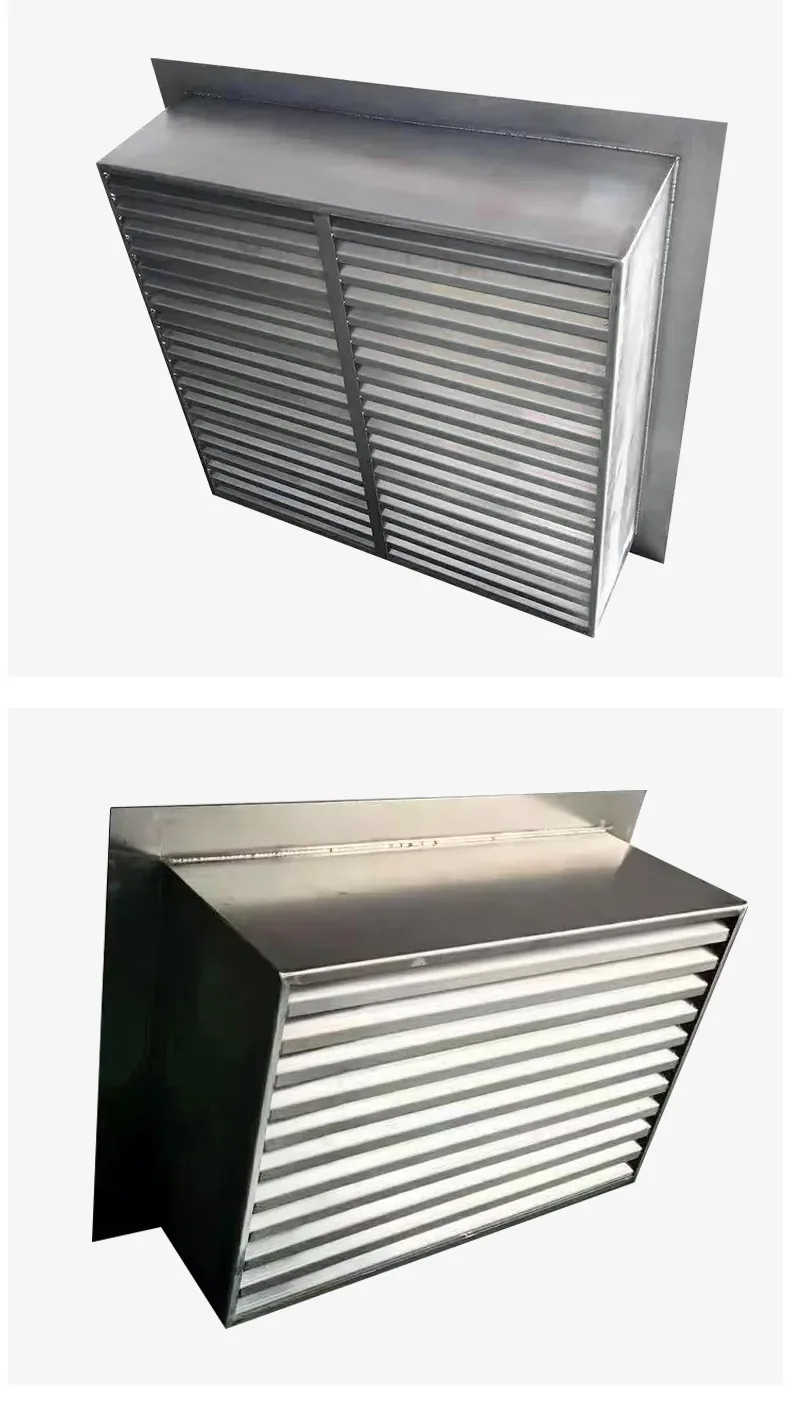
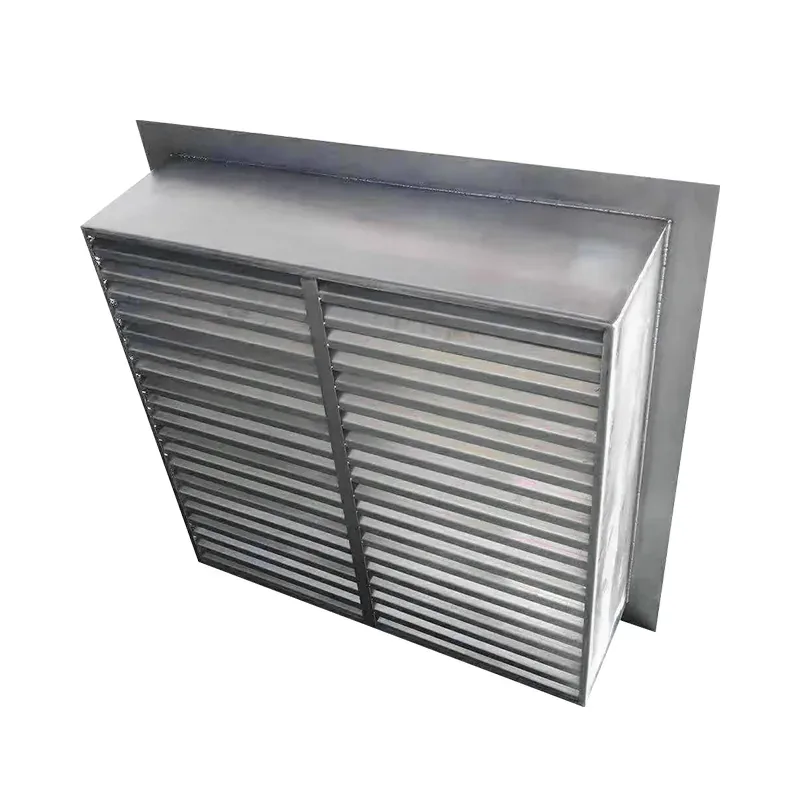
BFHF Explosion-Proof Fire Damper
Constructed from cold-rolled steel or hot-dip galvanized sheet. Remains normally open during routine ventilation and closes automatically when duct-air temperature reaches 70 °C.
Explosion-proof dampers must match the classified atmosphere and the airflow-control function; the wrong Ex marking or damper type can invalidate an otherwise correct duct design.
Compare YONGFAN BFHF Explosion-Proof Fire Dampers (normally open, 70 °C thermal closure, DC 24V 0.7A actuator) and BFD Explosion-Proof Electric Control Dampers (remote and automatic airflow regulation, 220V 12W, ambient −20 °C to +40 °C). Both carry documented Ex d IIC T6 Gb marking and IP65 enclosure protection under certificate CE21.1729.
The first failure is specifying generic “explosion-proof” without defining the required gas group, temperature class or equipment protection level. YONGFAN’s current source documents Ex d IIC T6 Gb. That marking is specific and should not be shortened.
The second failure is choosing the correct Ex actuator but the wrong damper function: BFHF is an explosion-proof fire damper (normally open, closes thermally at 70 °C), whereas BFD is an electric control damper (used to regulate airflow through remote/automatic control). They are not interchangeable.
The third failure is treating the gas marking as proof for combustible dust. Ex d IIC T6 Gb is a Group II gas-atmosphere marking. Combustible-dust protection requires separate Group III certification under the IEC 60079 framework.
The fourth failure is ignoring ambient limits: BFD is documented for −20 °C to +40 °C.
Selection Sequence: hazard classification → damper function → complete Ex marking → actuator/electrical data → duct size and control sequence.
d: Flameproof enclosure (IEC 60079-1:2014); IIC: Hydrogen gas group; T6: 85 °C surface temp; Gb: Zone 1 protection level.
Normally open fire damper closing automatically on 70 °C fusible link melting with DC 24V solenoid trip and closed-signal feedback.
Motorized electric control damper for remote and automatic airflow regulation in classified gas areas (220V 12W, IP65).
Constructed from cold-rolled steel or hot-dip galvanized sheet. Remains normally open during routine ventilation and closes automatically when duct-air temperature reaches 70 °C.
Serves routine airflow regulation in classified ventilation systems. Uses an explosion-proof electric actuator for remote and automatic blade positioning with open-position and close-position feedback.
| Parameter | BFHF Explosion-Proof Fire Damper | BFD Explosion-Proof Electric Control Damper |
|---|---|---|
Product mark |
BFHF |
BFD-□ |
Main function |
Normally open fire isolation | Remote / automatic airflow control |
Thermal action |
Closes at 70 °C |
No 70 °C thermal action stated |
Actuator |
DL-φ5 | External DL-φ-1 / Internal DL-φ-4 |
Actuator protection |
IP65 |
IP65 |
Certificate |
CE21.1729 |
CE21.1729 |
Ex marking |
Ex d IIC T6 Gb |
Ex d IIC T6 Gb |
Electrical supply |
DC 24 V | 220 V |
Current / power |
0.7 A | 12 W |
Feedback |
Action / closed signal | Open-position / close-position |
Ambient range |
Not separately stated | −20 °C to +40 °C |
Materials |
Cold-rolled steel / hot-dip galvanized sheet | Cold-rolled steel / hot-dip galvanized sheet |
Use BFD for commanded airflow control inside classified ventilation networks; use BFHF where 70 °C fire-barrier isolation is required.
Solvent handling requires BFD for exhaust airflow balancing and BFHF for fire-boundary containment. Confirm chemical gas compatibility.
BFD for remotely controlled ventilation; BFHF for 70 °C fire isolation. Do not confuse with 280 °C smoke-exhaust dampers.
IIC gas atmospheres use Ex d IIC T6 Gb; combustible-dust coal handling requires dust-specific Ex certification.
Submitting your hazardous zone, gas group, required damper function (BFHF fire vs BFD control), actuator voltage, and opening dimensions enables our team to confirm certified configurations.
Flameproof enclosure protection for Group II gas atmospheres up to IIC (hydrogen) with T6 temperature classification.
Documented explosion-protection certificate CE21.1729 for both BFHF and BFD actuator series.
Dust-tight and water-jet resistant actuator enclosure for harsh industrial plant and process environments.
Do not use BFHF where smoke-exhaust requires a damper that remains open to 280 °C; that is a separate PFHF high-temperature function.
Do not treat documented gas Ex marking (Ex d IIC T6 Gb) as combustible-dust certification without a dust-specific Group III certificate.
Do not assume cold-rolled or galvanized steel is suitable for aggressive corrosive process gas without a dedicated material review.
Use BFHF. It is normally open and closes automatically when the duct-air temperature reaches 70 °C.
Use BFD when the project needs remote or automatic airflow regulation with an explosion-proof electric actuator.
The current supplier source lists Ex d IIC T6 Gb for both product families.
The source lists explosion-protection certificate CE21.1729 for both BFHF and BFD.
Both product families are listed with IP65 actuator protection.
The BFHF actuator is documented at DC 24 V and 0.7 A rated current.
The BFD source lists 220 V supply and 12 W rated power.
That is the documented ambient range for BFD. A project outside it should request a separately confirmed configuration.
No. Ex d IIC T6 Gb is the documented gas-atmosphere marking. A combustible-dust installation needs the appropriate dust classification and certificate.
Connect hazard classification, damper function, complete Ex marking, actuator data, and duct interface in one approved configuration. Send your hazardous-area schedules to our application engineers.