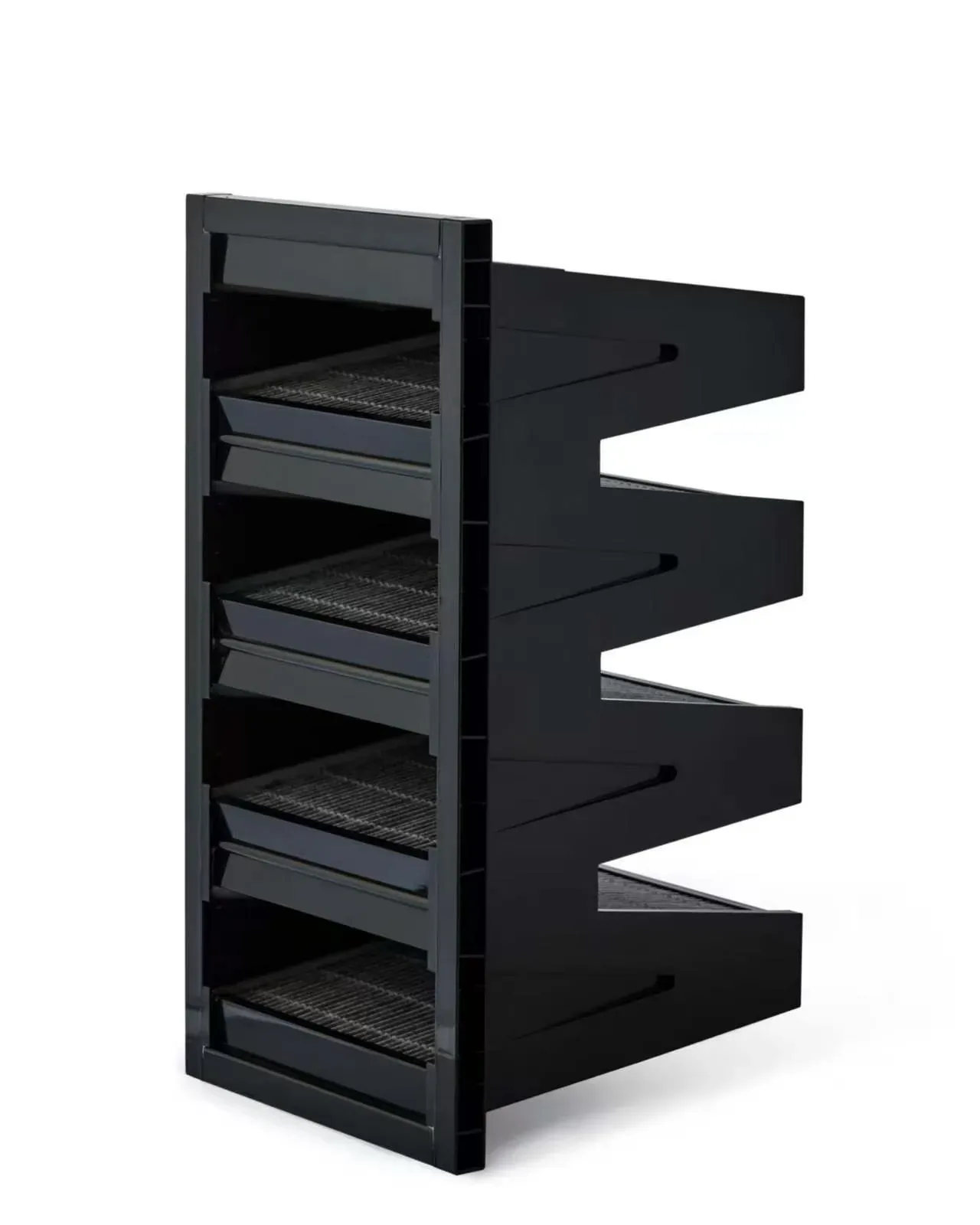
Large petrochemical CCRs require tens of thousands of m³/h of fresh air. Scaling airflow without expanding gas contact time causes severe chemical breakthrough.
YONGFAN PSA-PG delivers 2× the capacity of standard frames (1,700 to 68,000 m³/h per unit), dual sequential PCB beds (KOH ≥8%), reinforced 2,000 Pa structural casing, and <1% leakage at 1,000 Pa.
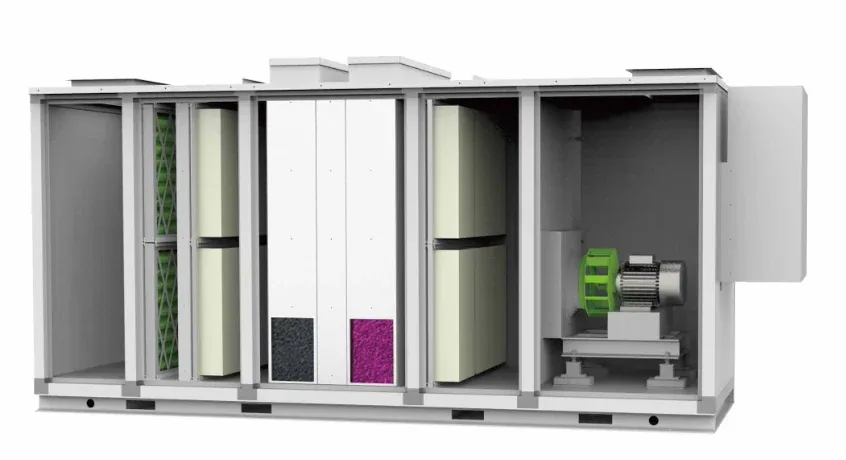
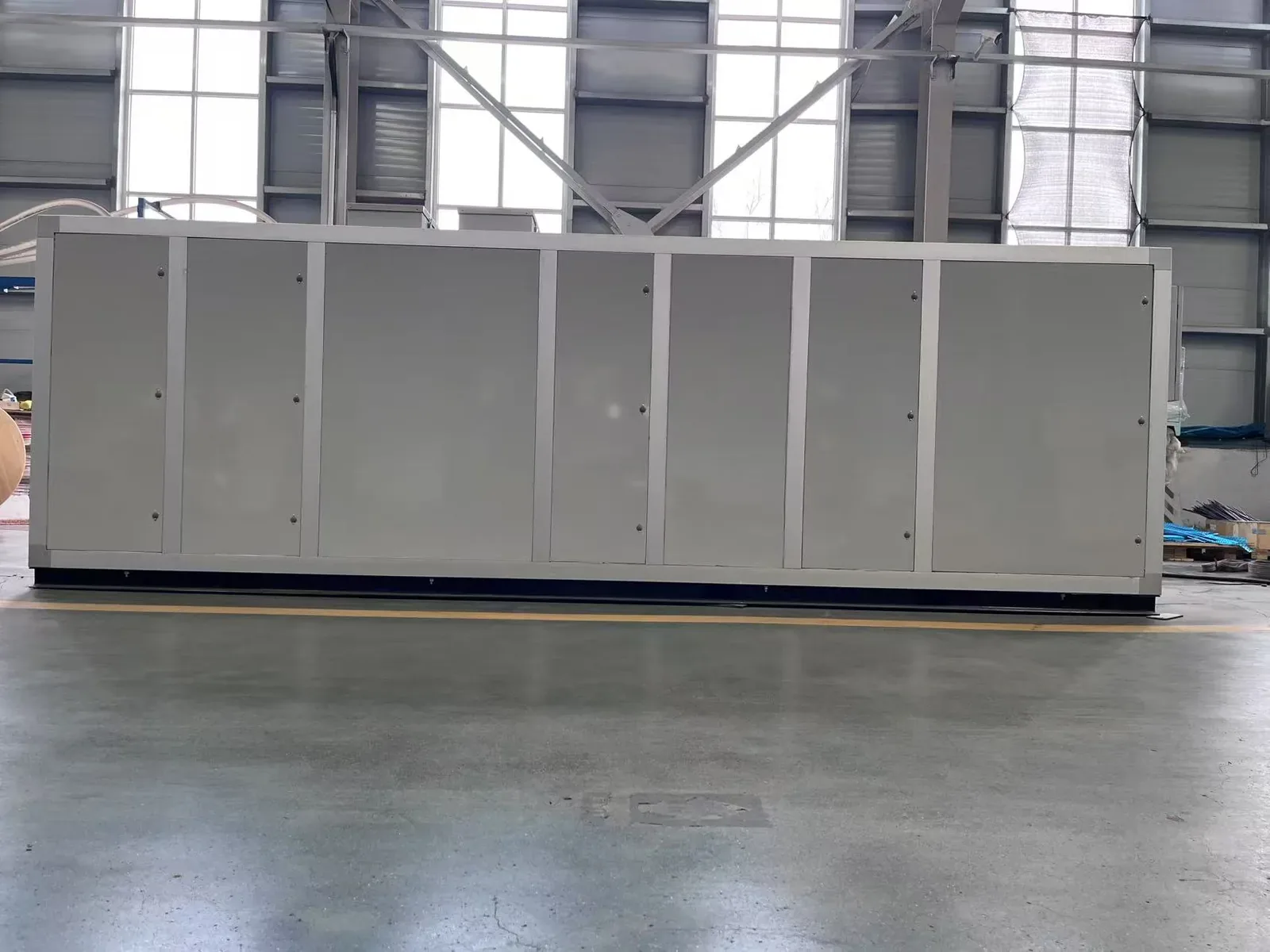
Increasing fan speed through undersized beds reduces gas residence time, causing rapid breakthrough even when chemical media is fresh.
Stacking 10 small units multiplies fan sets, electrical cabinets, dampers, and maintenance access points, creating massive service overhead.
At 60,000 m³/h, even 10 ppb of H₂S represents substantial daily contaminant mass. Shallow beds saturate rapidly without dual-stage depth.
Large casing spans flex under 2,000 Pa pressure, creating perimeter air bypass. PSA-PG reinforces internal framing to guarantee <1% leakage.
Initial resistance 37 Pa, final 174 Pa. Protects high-volume chemical media beds from particulate blinding and pressure buildup.
KOH ≥8% chemisorption media with >20% H₂S, >10% SO₂, >10% Cl₂ capacity by weight. Provides 99.5% gas removal efficiency.
Initial resistance 75 Pa, final 300 Pa. Eliminates any downstream media dust carryover into sensitive control electronics.
| Model | Airflow (m³/h) | Power (kW) | ESP (Pa) | Dimensions (D × H × W mm) | Weight (kg) |
|---|---|---|---|---|---|
| PSA-PG-102 | 1,700 | 0.75 | 250 | 2500 × 830 × 670 | 375 |
| PSA-PG-202 | 3,400 | 1.5 | 250 | 2500 × 830 × 670 | 391 |
| PSA-PG-302 | 5,100 | 4.0 | 250 | 2500 × 1130 × 670 | 481 |
| PSA-PG-402 | 6,800 | 4.0 | 250 | 2500 × 1430 × 670 | 530 |
| PSA-PG-502 | 8,500 | 5.5 | 250 | 2800 × 1730 × 670 | 656 |
| PSA-PG-204 | 6,800 | 4.0 | 250 | 2500 × 830 × 1270 | 640 |
| PSA-PG-304 | 10,200 | 5.5 | 250 | 2500 × 1130 × 1270 | 761 |
| PSA-PG-404 | 13,600 | 7.5 | 250 | 3000 × 1430 × 1270 | 860 |
| PSA-PG-504 | 17,000 | 11.0 | 250 | 3000 × 1730 × 1270 | 954 |
| PSA-PG-604 | 20,400 | 11.0 | 250 | 3000 × 2030 × 1270 | 1,021 |
| PSA-PG-306 | 15,300 | 11.0 | 250 | 3000 × 1130 × 1870 | 1,000 |
| PSA-PG-406 | 20,400 | 11.0 | 250 | 3000 × 1430 × 1870 | 1,100 |
| PSA-PG-506 | 25,500 | 15.0 | 250 | 3000 × 1730 × 1870 | 1,595 |
| PSA-PG-606 | 30,600 | 18.5 | 250 | 3000 × 2030 × 1870 | 1,749 |
| PSA-PG-408 | 27,200 | 18.5 | 250 | 3100 × 1430 × 2470 | 1,894 |
| PSA-PG-508 | 34,000 | 18.5 | 250 | 3200 × 1730 × 2470 | 2,096 |
| PSA-PG-608 | 40,800 | 18.5 | 250 | 3200 × 2030 × 2470 | 2,166 |
| PSA-PG-708 | 47,600 | 22.0 | 250 | 3200 × 2330 × 2470 | 2,430 |
| PSA-PG-808 | 54,400 | 30.0 | 250 | 3200 × 2630 × 2470 | 2,630 |
| PSA-PG-510 | 43,000 | 22.0 | 250 | 3200 × 1770 × 3110 | 2,509 |
| PSA-PG-610 | 51,000 | 30.0 | 250 | 3200 × 2070 × 3110 | 2,723 |
| PSA-PG-710 | 59,500 | 30.0 | 250 | 3200 × 2370 × 3110 | 2,971 |
| PSA-PG-810 | 68,000 | 37.0 | 250 | 3200 × 2670 × 3110 | 3,213 |
*Flexible aspect ratios available (e.g. PSA-PG-402 and PSA-PG-204 both deliver 6,800 m³/h in different H×W proportions to fit plant rooms).
Define total outdoor pressurization airflow (e.g. 20,000 to 68,000 m³/h).
Provide H₂S, SO₂, Cl₂, and VOC levels, noting baseline and upset release concentrations.
Decide whether a single high-flow unit or parallel PSA-PG units are needed for maintenance.
Verify door openings, crane lifting capacity, and side clearance for media module servicing.
YONGFAN application engineers will verify media contact time, fan power, and furnish dimensioned layout submittals.
Heavy-gauge double-skin cold-rolled steel (≥1 mm) with 30 mm PU insulation prevents panel deflection under high static head.
Each heavy-duty fan assembly is bench-verified for design airflow, static head, and dynamic vibration before sign-off.
Chemical module guides and side-opening access doors are checked for compression sealing to prevent perimeter gas bypass.
Third-party whole-unit performance reporting and ISO-certified manufacturing ensure reliable field operation.
PSA-PG provides roughly twice the airflow for a comparable frame class, extending single-unit capacity from 34,000 m³/h up to 68,000 m³/h.
The train is G4 pre-filter + PCB Stage 1 + PCB Stage 2 + F8 post-filter, providing dual-bed chemisorption depth.
YONGFAN documents up to 2 years for PCB media under typical operating conditions. Actual life depends on gas concentration and airflow.
PSA-PG-810 delivers 68,000 m³/h with a 37 kW motor, 250 Pa available ESP, and dimensions of 3200 × 2670 × 3110 mm (3,213 kg).
Yes. The control cabinet transmits operating status, differential pressure alarms, and integrates with toxic/combustible gas detector interlocks.
PSA-PG reduces fan sets and duct branches, but projects should still evaluate N+1 redundancy and plant room access.
PSA-PG treats incoming outdoor air. For contaminated industrial process exhaust discharge, select WGP Series.
For standard control rooms requiring under 34,000 m³/h, review the compact PSA Series.
For dedicated indoor room air cleaning without outdoor air intake, select CA or DBS Units.
Chemical filtration cannot maintain G1 environmental levels if building envelope leakage or door opening rates are uncontrolled.
Send your required fresh-air airflow (up to 68,000 m³/h), site gas analysis, and plant-room interface constraints. YONGFAN engineers will provide full selection calculations and layout drawings.