YONGFAN HVAC - Premium Header
Engineered HVAC & Industrial Air Systems
YONGFAN HVACYOFAN HVAC Home
Plate Heat Exchangers | BR Series | YONGFAN
Compact Thermal Transfer · BR Series · 4–900 m³/h

Plate Heat Exchangers: Matched to Temperature Approach & Fluid Chemistry

A plate heat exchanger must match temperature approach (down to 1 °C), pressure drop, fluid chemistry, and gasket boundaries; the wrong plate pack fouls, leaks, or misses duty.

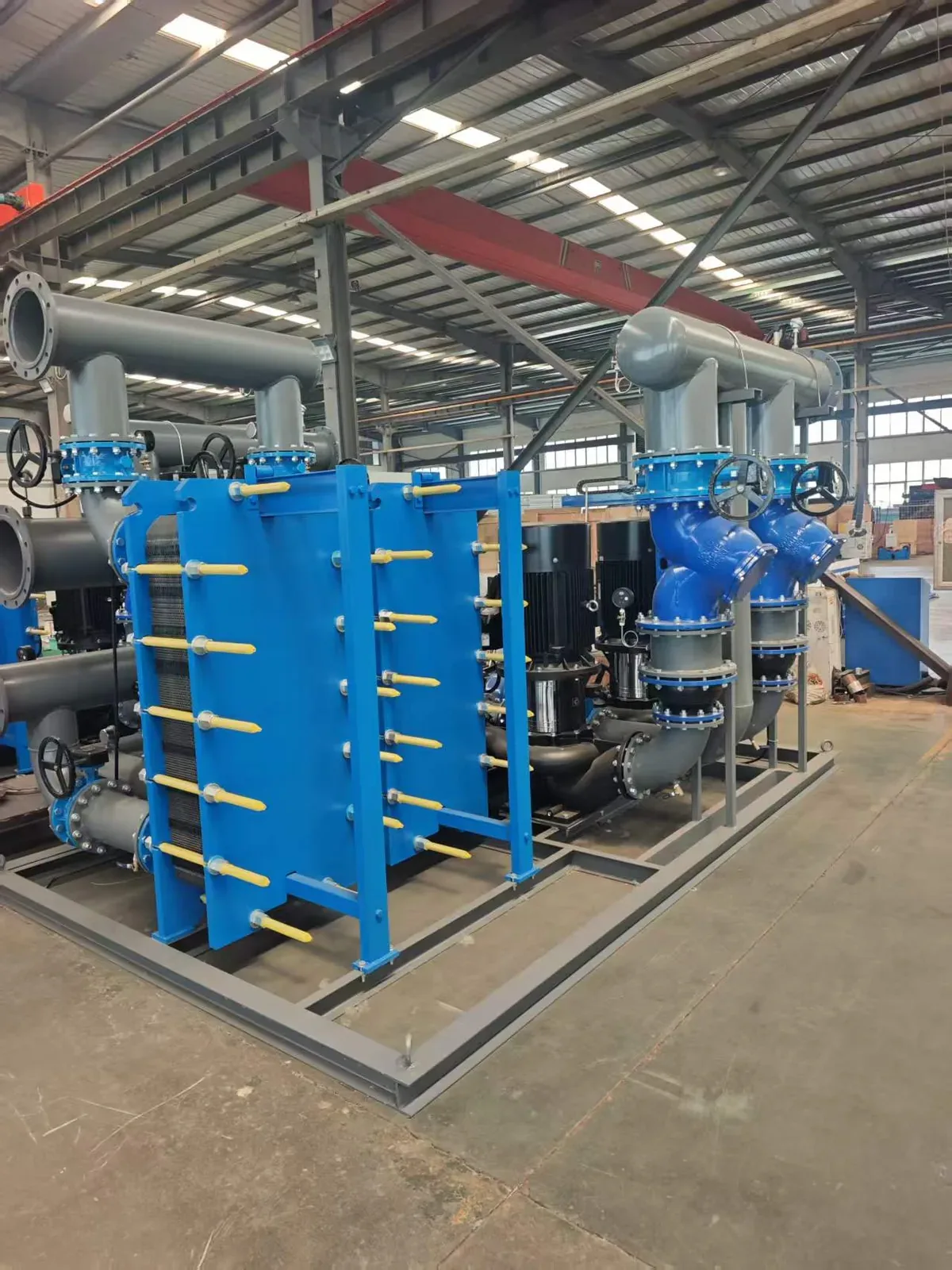
YONGFAN BR Series features 10 principal plate sizes (0.02 to 1.3 m²/plate, 0.2 to 500 m² assembly area), wide-gap BRb models for fiber/solids, and specialized metallurgy (Titanium TA1, Hastelloy, RS-2).
10 Plate Sizes 0.02 – 1.3 m² / plate
Heat Coeff. (K) 3,000–6,000 W/m²·K
Approach ΔT Down to 1 °C
Pressure Rating 1.0 / 1.6 / 2.5 MPa
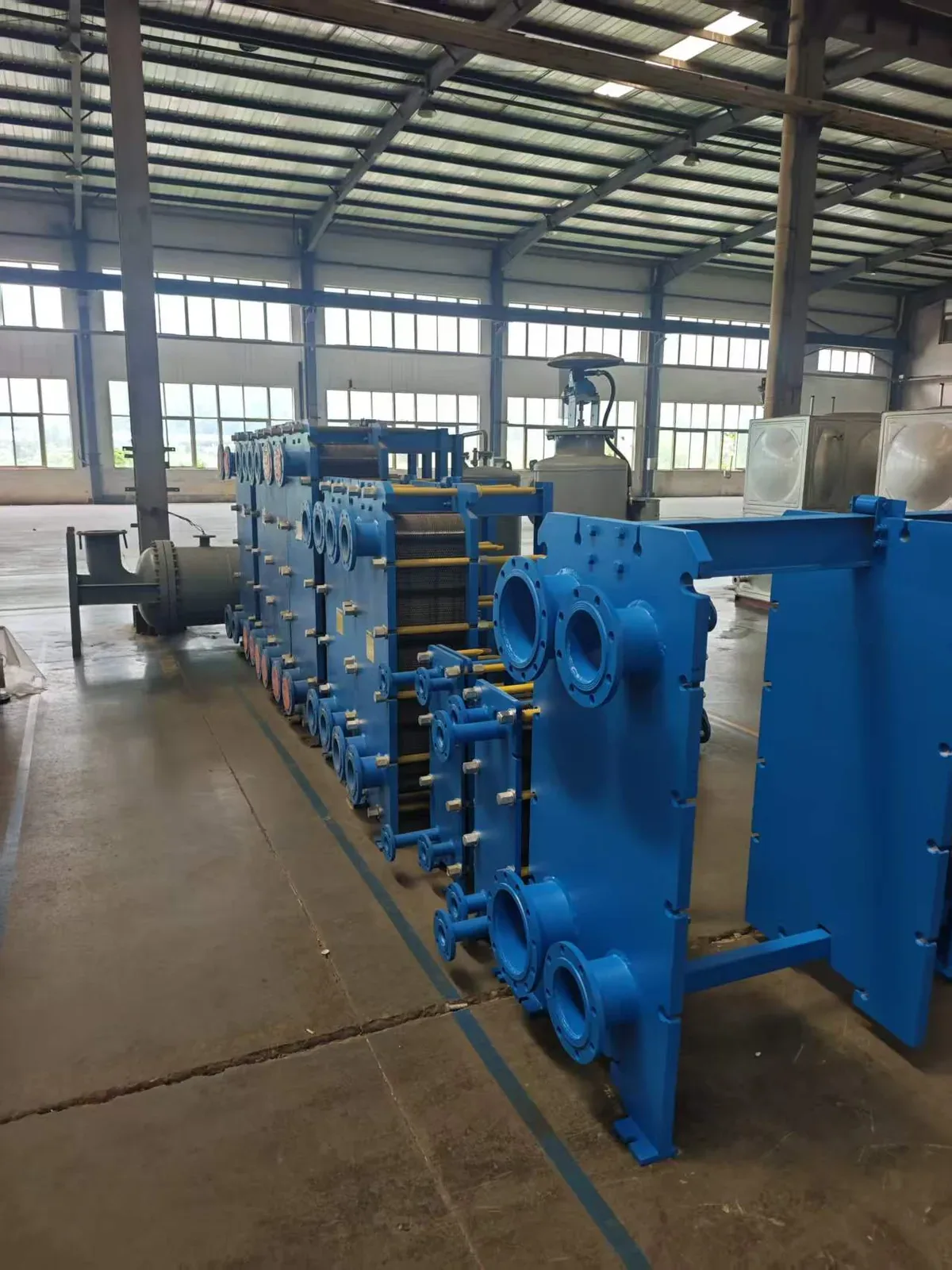
YONGFAN gasketed plate heat exchanger
High Efficiency Thermal Transfer Turbulent Chevron Corrugations · Full Counter-Flow · Expandable Clamped Frame
01 / Failure Analysis

Missed Duty Appears as a Temperature Problem First

A district-heating substation can show correct pump flow and still fail secondary supply temperature if the plate pack was sized from heat load alone without matching actual primary/secondary temperature programs.
YONGFAN flat-plate heat exchanger
Thermal Driving Force

Why Plate Count & Chevron Geometry Matter

Per ASHRAE Heat Transfer fundamentals, plate corrugation depth, angle, and channel velocity link heat transfer directly with hydraulic pressure drop.

Temperature Program Collapse

If primary supply temperature drops or the required approach tightens, the same plate count cannot achieve secondary target output without added surface area.

Impact: Secondary supply temperature falls short

Excessive Pump Head Loss

Aggressive chevron angles raise heat-transfer coefficients but multiply hydraulic resistance, starving circulating pumps of design flow.

Impact: Excessive pressure drop & flow reduction

Chloride / Acid Corrosion

Thin 0.5–0.8 mm stainless plates perforate rapidly under seawater or process acids. Titanium TA1 or Hastelloy must be matched to fluid chemistry.

Impact: Rapid plate perforation & cross-leakage

Fouling in Narrow Channels

Fibrous or particulate-laden media bridges narrow channels. YONGFAN BRb wide-gap free-flow plates are required to prevent clogging.

Impact: Channel blockage & high maintenance downtime

Five Parameters Required for Exact BR Selection

Full counter-flow arrangements support minimum approach temperatures down to 1 °C.

01 Four Terminal Temperatures
02 Flow Rates or MW Heat Load
03 Allowable Pressure Drop (kPa)
04 Pressure Class & Fluid Chemistry
02 / Model Portfolio

BR Series Model Table: 10 Principal Plate Sizes

Select the model class from flow rate and connection size before calculating plate count from heat load and allowable pressure drop.
Model Plate Area / Plate (m²) Assembly Area (m²) Max Flow (m³/h) Connection Size Corrugation Depth (mm)
BR0.02 0.02 0.2 – 1.0 4 DN15 2.5
BR0.06 0.06 1.2 – 5.0 10 DN25 3.4
BR0.12 0.12 3.0 – 12.0 30 DN40 / DN50 3.7
BR0.28 0.28 10.0 – 25.0 80 DN65 / DN80 3.6
BR0.37 0.37 15.0 – 50.0 150 DN100 3.6
BR0.55 0.55 30.0 – 100.0 250 DN150 3.5
BR0.7 0.70 50.0 – 150.0 350 DN150 3.5
BR0.9 0.90 80.0 – 250.0 550 DN200 2.9
BR1.2 1.20 100.0 – 300.0 600 DN200 2.9
BR1.3 1.30 130.0 – 500.0 900 DN250 3.7

*Wide-gap free-flow models (BRb0.5, BRb0.7, BRb0.9) available for media containing fibers or suspended solids. Unequal 2:1 channel area ratio option available for asymmetrical HVAC flow duties.

03 / Material Selection

Plate Metallurgy & Gasket Compatibility Matrix

Plate and gasket materials must be checked independently against fluid chemistry, operating temperature, and chemical treatment additives.

Plate Metallurgy Options

SUS304 / 316 / 316L / 321 / 310S / 317L Closed-loop HVAC heating/cooling, clean water, low-chloride fluid systems.
Titanium TA1 Seawater, high-chloride brine solutions, pool heating, marine duty.
Hastelloy Alloys Oxidizing acids, mixed chemical process acids, high-temperature chemical reactions.
Acid-Resistant Steel RS-2 Strong inorganic acids including concentrated sulfuric and nitric acid duties.

Gasket Elastomer Ranges

EPDM (E): -50 to 150 °C Water, steam, organic acids, alkalis, carbonates. Standard HVAC gasket.
NBR (N): -20 to 110 °C Water, mineral oil, lubrication systems, hydraulic fluids, water-oil media.
Fluororubber (F): 0 to 180 °C Solvents, acids, alkalis, aromatic hydrocarbons, aggressive industrial chemicals.
Food/Pharma (S) & Silicone (Q): -65 to 230 °C Sanitary dairy/pharma applications, alcohols, high-temperature oils. Double-seal zone prevents cross-leakage.
04 / Procurement Protocol

Information Required for Accurate BR Sizing

Do not compare PHE quotes by model name alone. Provide the four design temperatures, load, allowable pressure drop, and fluid composition.
STEP 01

4 Design Temperatures

Primary inlet/outlet (°C) and secondary inlet/outlet (°C).

STEP 02

Thermal Duty or Flows

Total heat load (kW / MW) or mass flow rates on both circuits.

STEP 03

Pressure & ΔP Limits

Design pressure (1.0/1.6/2.5 MPa) and allowable pressure loss (kPa).

STEP 04

Fluid Chemistry

Fluid type, chloride content, viscosity, solids, and pH.

Engineering Handoff

Submit Project Parameters for BR Plate Sizing

YONGFAN engineers will calculate plate count, channel velocity, pressure loss, and provide complete GA drawings.

Primary & Secondary 4 Temperatures
Thermal Load (kW / MW) / Flow (m³/h)
Allowable ΔP (kPa) on Both Sides
Pressure Class: 1.0 / 1.6 / 2.5 MPa
Plate Material: 316L / TA1 / Hastelloy
Gasket: EPDM / NBR / Fluororubber
05 / Manufacturing Quality

Plate Alignment & Pressure Integrity Checks

Manufactured to GB150 and GB151 pressure standards with five-point suspension alignment and 1.25× hydrostatic testing.
Pressing QA

Extended Pressing Precision

Plates are pressed with precision tooling to ensure uniform corrugation depth, consistent wall thickness, and precise contact points.

Alignment QA

5-Point Suspension Fit

Five-point positioning maintains perfect plate pack alignment under heavy clamping loads without gasket displacement.

Pressure QA

1.25× Hydrostatic Test

Every assembled unit receives hydrostatic pressure testing at 1.25× design pressure along with single-side leak tests.

Serviceability

Spare Plate & Gasket Stock

Replacement plates and pre-molded clip/glue gaskets are stocked for quick dispatch and easy field expansion.

Expandable Design: Clamping frames can be sized with spare tie-rod length to allow future plate additions as load grows. Trade Terms: EXW, FOB, CIF, and DDP export delivery supported worldwide.
06 / Engineering Knowledge

Plate Heat Exchangers FAQ

Direct engineering answers regarding BR models, seawater metallurgy, expandability, and approach temperatures.

What is the largest documented BR plate exchanger model?

BR1.3, with 1.3 m² per plate, 130–500 m² assembly area, maximum flow of 900 m³/h, and DN250 connections.

Can a plate exchanger be expanded later?

Yes. YONGFAN’s gasketed clamped-frame design allows plates to be added or removed within the available frame clamping capacity.

Which plate material should I use for seawater?

Titanium TA1 is documented for high-chloride solutions such as seawater. Confirm chloride levels and operating temperature.

Which gasket is appropriate for heating water?

EPDM is the standard route for water systems (-50 to 150 °C). Check water treatment chemicals before final selection.

Can the exchanger handle fibers or suspended particles?

Review the BRb0.5, BRb0.7, and BRb0.9 wide-gap free-flow models, specifically designed for media with particulates.

How close can the two outlet temperatures approach?

Down to approximately 1 °C in full counter-flow configuration, depending on duty, allowable pressure drop, and plate area.

07 / Application Boundaries

BR Plate Exchanger Engineering Boundaries

Understanding when plate exchangers excel versus packaged skids or tube exchangers.
Boundary 01 / Packaged Station

Not a Complete Skid

A bare BR frame does not include pumps or make-up. For full pre-piped skids, select Packaged Units (ZS/ZW).

Boundary 02 / Hard Water DHW

Fouling Limits

Hard domestic water scaling in narrow channels is better served by Floating-Coil Storage Exchangers.

Boundary 03 / Particulate Media

Wide-Gap Required

Do not use standard narrow chevron plates for fibrous media without upgrading to the BRb wide-gap series.

Boundary 04 / Operating Limits

≤150 °C Continuous

While design limit is 170 °C, long-term continuous operation is recommended at ≤150 °C to preserve gasket life.

08 / Engineering Handoff

Select the Right BR Plate Heat Exchanger

Send your four design temperatures, thermal load, allowable pressure drop, and fluid chemistry. YONGFAN application engineers will verify plate area, model size, and provide dimensioned submittal drawings.


Flow: 4–900 m³/h Area: 0.2–500 m² 1.0 / 1.6 / 2.5 MPa Classes Approach Down to 1 °C SUS316L / Titanium TA1 / Hastelloy EPDM / NBR / Fluororubber
YONGFAN application engineers reviewing plate heat exchanger calculations
Direct Application Engineering Support
Thermal LMTD calculations, pressure drop sizing & verified GA drawings.