

YONGFAN HVAC - Premium Header
Engineered HVAC & Industrial Air Systems
YONGFAN HVACYOFAN HVAC Home
Petrochemical & Chemical HVAC Systems | YONGFAN
Hazardous & Corrosive Process Environments

Petrochemical & Chemical: Hazard Classification & Corrosion Protection

Petrochemical HVAC equipment must match hazardous-area classification, corrosive gases, fire duty and process-fluid chemistry before airflow, pressure or heat-transfer capacity is optimized.

Compare YONGFAN explosion-proof ventilation fans (BT35-11 / DTF Ex), gas-phase chemical filtration units (PSA / PSA-PG / DBS / CA), WGP exhaust scrubbers, fire/smoke dampers, titanium heat exchangers, and physical water treatment.

Explosion Proof ExdbIIBT4 · ExdbIICT4
Corrosion Protection ISA 71.04 Class G1
Smoke Duty 280°C / 30 min (DTF/HTFC)
Metallurgy Titanium TA1 · Hastelloy
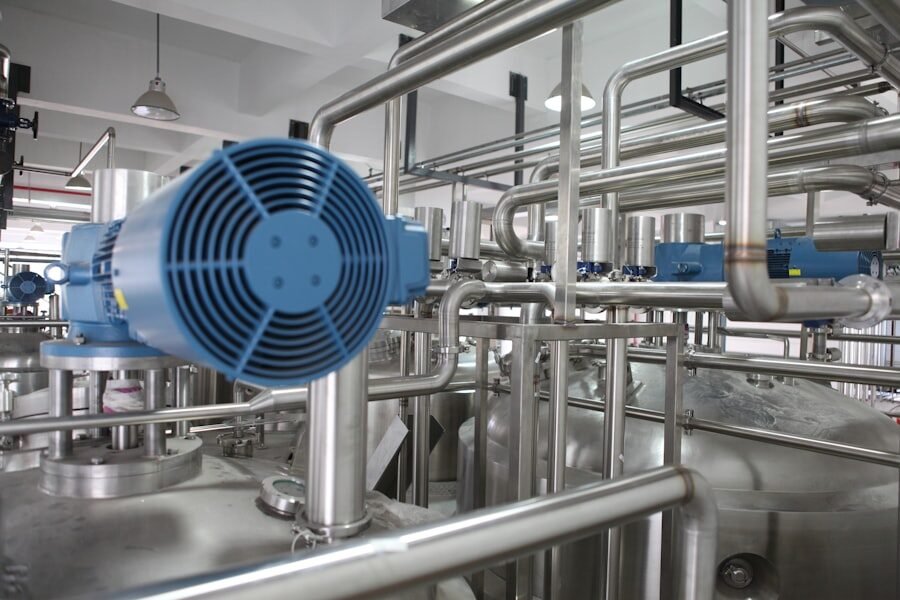
Petrochemical refinery process units and heavy industrial ventilation systems
Hazardous Area Protection GB 3836 Ex Ratings, ISA 71.04 G1 Shielding & Corrosive Fluid Metallurgy
01 / Operating Realities

Correct Airflow Is Not Enough in a Process Environment

In petrochemical facilities, equipment failures stem from treating classified hazardous locations and corrosive molecular atmospheres like ordinary commercial HVAC.
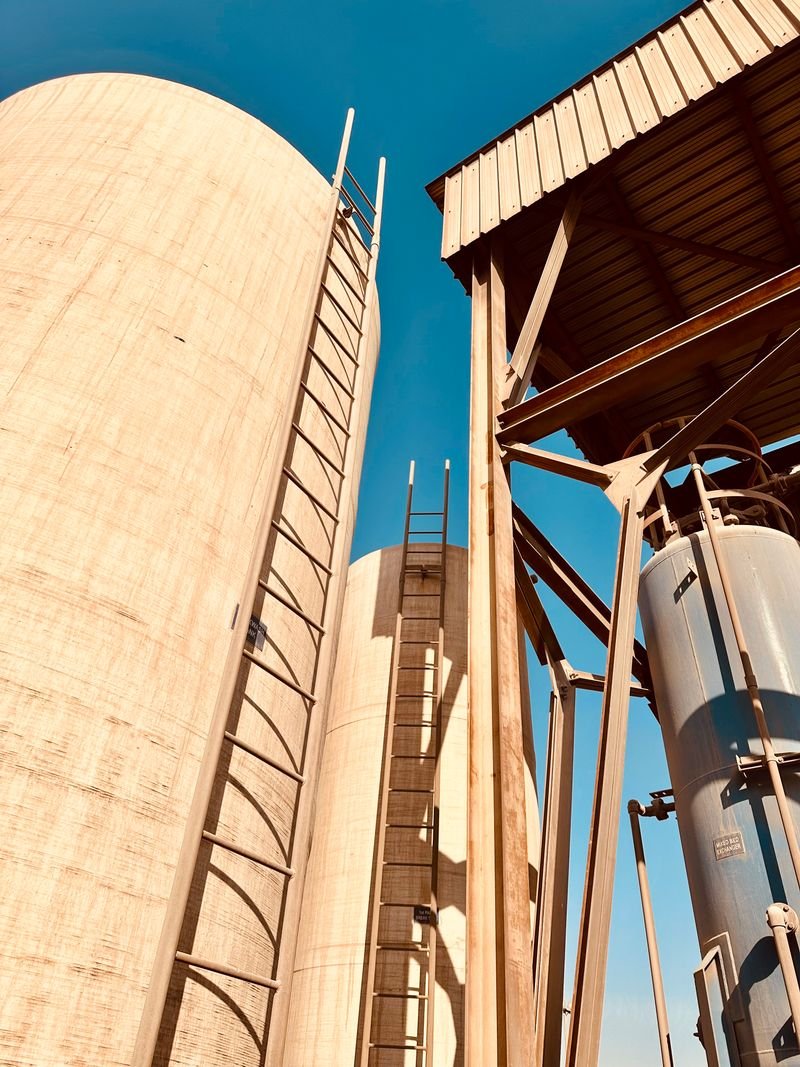
Chemical manufacturing plant with storage tanks and process piping
Severe Duty Boundary

Duty Classification Precedes Model Sizing

Per OSHA 1910.307 and GB 3836, hazardous location classification must govern electrical and mechanical construction before aerodynamic flow is fixed.

Standard Motors in Zone 1 Areas

Ventilation airflow is correct, but the installed fan uses a standard commercial motor in a classified solvent area, presenting an active ignition source.

Impact: Non-compliance & explosion hazard

Molecular Acid Gas Attack on DCS

Control rooms maintain positive pressure, yet H2S and SO2 destroy silver/copper contacts because fresh air removes dust but lacks gas-phase media.

Impact: Severe electronic corrosion & uncommanded shutdowns

Stainless Plate Chloride Pitting

A heat exchanger hits thermal duty during commissioning, then leaks within months because chloride-bearing process water pitted the 304/316 stainless plates.

Impact: Cross-contamination & emergency plant shutdown

Emergency Smoke Rating Omission

Normal ventilation fans move adequate air daily but lack the verified 280°C / 30 min high-temperature smoke rating required during an emergency fire scenario.

Impact: Premature fan motor seizure during fire evacuation

The First Procurement Decision Is Duty Classification

Separate aerodynamic sizing from environmental safety constraints across all process air and water systems.

01 Normal vs. Zone 1/2 Hazardous Ventilation
02 Control Room Positive Pressure vs. Exhaust
03 280°C / 30 min Fire & Smoke Mode
04 Process Metallurgy (316L / Titanium / Hastelloy)
02 / Equipment Lineup

Petrochemical & Chemical Component Architectures

Engineered equipment families configured for hazardous area ventilation, gas-phase corrosion protection, high-temperature smoke extraction, and aggressive fluid heat exchange.
Architecture 01 · BT35-11 / T35-11 Motor-Out-of-Airstream · Zone 1/2 Ex

Bifurcated Axial Fans for Corrosive & Solvent Air

The BT35-11 is the explosion-proof version of the T35 platform. Its bifurcated architecture houses the motor in an isolated central bypass tunnel completely removed from the aggressive process airstream, protecting electrical windings from hot, humid, or solvent-laden fumes.

Features non-sparking impellers (Ø280–Ø1050 mm), five factory-set blade angles (15° to 35°), airflow ratings from 552 to 58,343 m³/h, static pressures of 32–420 Pa, standard airstream temperatures up to 80°C, and GB 3836 explosion-proof motor configurations.

Hazard Rating
GB 3836 Zone 1 & Zone 2 Gas/Solvent Ex
Motor Isolation
Bifurcated bypass tunnel isolated from airstream
Capacity Scope
552 – 58,343 m³/h · 32 – 420 Pa
Temperature Limit
Standard continuous airstream up to 80°C
Combustible Dust Boundary: Gas/vapor Ex markings (GB 3836) must not be assumed suitable for combustible dust without specific dust-certified configurations.
Industrial bifurcated axial fan with motor outside airstream
BT35-11 Bifurcated Explosion-Proof Fan
Key Applications:
  • Solvent & paint exhaust ventilation
  • Hot chemical process fumes up to 80°C
  • Moisture-laden and corrosive exhaust ducts
  • Chemical storage room continuous purge
Architecture 02 · DTF Series ExdbIIBT4 / IICT4 · 280°C / 30 min Fire

DTF Axial Tube Exhaust Fans (Process & Smoke Duty)

The DTF series provides high-capacity, high-pressure in-line axial ventilation for petrochemical duct networks. Available with certified ExdbIIBT4 and ExdbIICT4 explosion-proof motors, and dual-purpose high-temperature emergency configurations.

Published across Ø350–Ø1600 mm impeller diameters, 1,886 to 114,829 m³/h airflow, 115 to 2,266 Pa total pressure, and 0.5–45 kW motor power on standard 380V/50Hz supply. Relevant fire builds are documented for 280°C / 30 min smoke extraction.

Capacity Range
1,886 – 114,829 m³/h · 115 – 2,266 Pa
Ex Classifications
ExdbIIBT4 · ExdbIICT4 under GB 3836
Emergency Smoke Rating
Certified 280°C / 30 min fire smoke exhaust
Impeller Diameters
Ø350 mm to Ø1600 mm (0.5 to 45 kW)
Configuration Note: The Ex build and fire-rated build are specific ordered configurations. Do not assume an ordinary DTF carries both certifications unless verified on submittals.
DTF industrial axial tube fan in refinery duct system
DTF High-Pressure Axial Tube Fan
Key Capabilities:
  • Direct in-line cylindrical duct installation
  • Static pressure up to 2,266 Pa for long duct runs
  • Dual-speed motor options for day/smoke duty
  • Compatible with BFHF/BFD explosion-proof valves
Architecture 03 · PSA / PSA-PG / DBS ISA 71.04 G1 · <1% Leakage @ 1,000 Pa

Control Room Corrosion Protection (Treated Fresh Air)

Control rooms in refineries and chemical plants require continuous molecular filtration to remove H2S, SO2, Cl2, and NOx before air reaches DCS racks and electrical instrumentation.

PSA (850–34,000 m³/h) and PSA-PG (1,700–68,000 m³/h) combine G4 particulate pre-filtration, deep chemical-media beds (PCB / CPB), and F8 final filters. Double-skin casing rated for 2,000 Pa with <1% leakage at 1,000 Pa, DCS status output, gas-detector interlocks, and optional copper/silver corrosion monitors. DBS provides localized positive-pressure or recirculation protection.

Capacity Range
PSA: 850–34k m³/h · PSA-PG: 1.7k–68k m³/h
Target Gases
H2S, SO2, Cl2, NOx, NH3, TVOCs
Protection Standard
ANSI/ISA-71.04-2013 Class G1
Casing Rating
2,000 Pa structural · <1% leakage @ 1,000 Pa
Media Chemistry Selection: PCB media targets H2S, SO2, Cl2, and VOCs; CPB media extends chemisorption toward NOx. Select media from a full site gas analysis rather than generic carbon.
Refinery control room protected by PSA gas-phase chemical filtration
PSA-PG High-Volume Chemical Filtration Unit
System Components:
  • Motorized airtight intake isolation damper
  • Online copper/silver corrosion reactivity monitors
  • DCS/PLC Modbus interface & alarm relay
  • Rail-mounted MediaPAK refillable canisters
Architecture 04 · WGP Series Process Emissions · 100,000+ m³/h Custom

WGP Industrial Exhaust Gas Treatment Units

The WGP Exhaust Gas Treatment Unit is engineered for outgoing contaminated industrial exhaust prior to stack discharge — serving chemical synthesis, waste storage, wastewater heads, and fine-chemical processes.

Customized from several thousand to 100,000+ m³/h. Combines G4 particulate pre-filtration → deep activated-carbon bed (iodine value ≥1,000 mg/g, CTC ≥60%, hardness ≥95%) → chemical chemisorption bed → discharge. Treats H2S, SO2, Cl2, NH3, NOx, TVOCs, mercaptans, and mercury vapor.

Capacity Scope
Custom engineered to 100,000+ m³/h
Carbon Quality
Iodine ≥1,000 mg/g · CTC ≥60% · Hardness ≥95%
Removal Mechanism
Physical adsorption + Target-gas chemisorption
Safety Interfaces
Gas detector interlock · Fire system trip
Engineering Sizing Input: Sizing WGP requires complete exhaust gas composition, peak concentration, temperature, relative humidity, and target discharge criteria.
WGP industrial exhaust gas scrubber system installed at chemical plant
WGP Industrial Exhaust Scrubber Skid
Target Contaminants:
  • H2S, Mercaptans, Dimethyl Sulfide
  • Acid gases (SO2, HCl, Cl2)
  • Ammonia & Amines (NH3)
  • Solvent TVOCs & Mercury Vapor
Architecture 05 · Heat & Hydronics Titanium TA1 / Hastelloy · JFGP Electronic

Process Heat Exchangers & Circulating Water Treatment

Petrochemical thermal loops demand corrosion-resistant metallurgy and chemical-free scale management across cooling water and process utility loops.

Gasketed Plate Heat Exchangers (4–900 m³/h, DN15–DN250, up to 2.5 MPa, 170°C) offer plate materials in 304, 316L, Titanium TA1 (high-chloride fluids), Hastelloy (oxidizing acids), and RS-2 acid-resistant alloy. JFGP provides inline electronic physical descaling (≤700 mg/L CaCO3, ≤95°C), while Broad-Spectrum Induction treats up to 2,000 mg/L non-invasively, and RLC softeners remove calcium/magnesium hardness.

Plate Metallurgy
316L · Titanium TA1 · Hastelloy · RS-2
Pressure & Area
1.0 / 1.6 / 2.5 MPa · Assembled area to 500 m²
JFGP Descaling
Inline high-frequency · 5,000V dielectric test
Induction Water
External wrap-around coil to 2,000 mg/L CaCO3
Fluid Analysis Requirement: Thermal margin does not protect against chloride stress cracking or acid corrosion. Provide complete fluid chemistry and operating temperatures.
Gasketed plate heat exchanger with titanium plates in chemical plant
Titanium Plate Heat Exchanger & JFGP Water Skid
Utility Capabilities:
  • Hydrostatic tested at 1.25–1.5× design pressure
  • Cross-leak and separate-side leak checks
  • Chemical-free scale control for cooling towers
  • EPDM / NBR / FKM specialized gasket options
03 / Selection Matrix

Petrochemical Component Routing Table

Cross-reference YONGFAN equipment families by project duty, supplier boundaries, and the first technical confirmation input.
Project Duty First YONGFAN Route Supplier-Supported Boundary First Input to Confirm Specification Action
Hot/corrosive process ventilation Standard airstream up to about 80°C Airflow, pressure, gas composition Configure T35
Zone 1/2 gas/solvent ventilation GB 3836 ExdbIIBT4 / IICT4 documented Zone, gas group, temperature class Configure BT35
In-duct industrial exhaust 1,886–114,829 m³/h · 115–2,266 Pa Airflow + external static pressure Configure DTF
Control-room treated fresh air 850–34,000 m³/h · ISA 71.04 G1 Fresh-air demand + gas analysis Configure PSA
Large control-room fresh air 1,700–68,000 m³/h · 2× PCB Stage Fresh-air demand + redundancy Configure PSA-PG
Local room / cabinet protection Positive-pressure or recirculation Room mode + target gas load Configure DBS
Process exhaust-gas treatment Several thousand to 100,000+ m³/h Full gas composition + concentration Configure WGP
Emergency smoke exhaust 280°C / 30 min fire-rated builds Fire airflow, pressure and sequence Configure Fire
Process / HVAC heat exchange 4–900 m³/h · DN15–DN250 · to 2.5 MPa Fluid chemistry + four temperatures Configure PHE
Circulating water scale control Technology-specific water limits Water analysis report Configure Water
04 / Procurement Protocol

Project Scoping Starts from Area Classification & Chemistry

Provide complete process and electrical hazard parameters to freeze equipment sizing and eliminate engineering mismatches during submittal review.
STEP 01

Ventilation & Fan Sizing

Provide design airflow, static pressure, airstream temperature, gas composition, Zone 1/2 classification, gas group (IIB/IIC), and normal vs. emergency smoke duty.

STEP 02

Control Room Shielding

Provide room dimensions, fresh-air volume, room-pressure strategy, target gas concentrations (H2S, SO2, Cl2), and corrosion monitoring requirements.

STEP 03

WGP Exhaust Treatment

State minimum/normal/maximum airflow, full gas analysis, temperature, relative humidity, particulate loading, and target stack discharge limits.

STEP 04

Heat Exchange & Hydronics

Provide thermal duty, hot/cold side temperatures, fluid composition, chloride content, operating pressure, allowable pressure drop, and water hardness.

Engineering Handoff

Required Parameters for Petrochemical Quotes

Submit your available plant schedules or P&ID parameters. YONGFAN application engineers will verify Ex motor configurations, media bed sizing, and plate metallurgy.

1. Hazard Zone (Zone 1/2, IIB/IIC, T4/T6)
2. Design Airflow & External Static Pressure
3. Gas Analysis: H2S, SO2, Cl2, NOx, VOCs
4. Control Room Volume & Pressure Target
5. Emergency Smoke Duty (280°C / 30 min)
6. Fluid Composition & Chloride Content (ppm)
7. Thermal Program (Inlet/Outlet Temperatures)
8. Circulating Water Hardness & Conductivity
05 / Manufacturing Verification

Supplier Consistency Checked by Product Family

Traceable manufacturing checkpoints, dynamic balancing, casing leakage verification, and hydrostatic pressure testing for process safety.
Ex Ventilation

Dynamic Balance & Run Test

Impellers dynamically balanced; fans run-tested for airflow, pressure, motor current, vibration, and non-sparking mechanical clearances.

Chemical Filtration

Casing Leakage Benchmark

PSA/PSA-PG units checked against 2,000 Pa structural / <1% leakage @ 1,000 Pa benchmark; media tested for iodine value, CTC, and hardness.

Heat Exchangers

Hydrostatic Pressure QA

GB150/GB151 framework; material certification, hydrostatic testing at 1.25–1.5× design pressure, and cross-leak verification.

Water Treatment

5,000V Dielectric Testing

JFGP electrode assemblies subjected to 5,000V dielectric insulation testing and hydraulic testing at 1.5× design pressure on pipe body.

06 / Engineering Knowledge

Petrochemical & Chemical Frequently Asked Questions

Technical answers to key selection questions regarding explosion-proof ratings, gas-phase chemistry, metallurgy, and smoke control.

Which fan should I consider for corrosive process exhaust?

Start with handled gas, temperature, airflow, and pressure. T35-11 uses a bifurcated design keeping the motor out of the main airstream (up to 80°C). Where classified for flammable gas/solvent vapors, evaluate BT35-11 or an Ex-rated DTF.

Does an explosion-proof fan automatically qualify for combustible dust?

No. Documented BT35-11 and DTF markings are gas/vapor-oriented GB 3836 configurations. Combustible dust service requires specific dust-zone classification and testing certification.

What is the difference between PSA and WGP?

PSA treats incoming fresh air to protect a control room from ambient pollutants. WGP treats contaminated outgoing exhaust before stack discharge. Their air direction, media mass, and success metrics are different.

When should PSA-PG be used instead of PSA?

Use PSA-PG where treated fresh-air demand is large. PSA is documented at 850–34,000 m³/h; PSA-PG is documented at 1,700–68,000 m³/h per unit with two-stage PCB chemical media.

Can a particulate filter remove H₂S or SO₂?

No. Particulate filters remove suspended solids and aerosols. H2S, SO2, Cl2, and similar molecular gases require gas-phase chemisorption media matched to contaminant chemistry.

Which heat-exchanger material should be used for corrosive process fluid?

There is no universal grade. YONGFAN documents 316L, Titanium TA1 (high chlorides), Hastelloy (acids), and RS-2 options. Final selection requires complete fluid chemistry, chloride level, and temperature.

Can the same fan serve normal ventilation and emergency smoke exhaust?

Only where the exact configuration is documented and certified for both duties. YONGFAN documents selected DTF and HTFC configurations for 280°C / 30 min smoke exhaust.

Does JFGP soften process water?

Not by ion exchange. JFGP is a physical/electronic treatment route for scale inhibition. Where the specification requires actual calcium/magnesium hardness removal, evaluate RLC softening.

07 / Application Boundaries

Petrochemical HVAC Scope Ends at the Component Interface

Understanding system boundaries ensures clear delineation of project responsibilities across refinery and chemical plant engineering.
Boundary 01 / EPC Scope

Not Turnkey EPC Contractor

YONGFAN supplies system components and auxiliary equipment; it does not act as the turnkey refinery EPC contractor or primary process designer.

Boundary 02 / Hazardous Study

Area Classification Responsibility

Hazardous area classification, gas dispersion modeling, and blast-resistant structural design remain the responsibility of certified facility engineers.

Boundary 03 / Permitting

Environmental Stack Compliance

WGP exhaust units provide chemisorption stages, but overall stack emission permitting and continuous emissions monitoring (CEMS) belong to project scope.

Boundary 04 / Certification Match

GB 3836 vs International Codes

Configurations are GB 3836-based; projects requiring ATEX, IECEx, or NEC Class/Division must specify and confirm exact certificate scope prior to release.

08 / Engineering Handoff

Plan Petrochemical & Chemical HVAC Components

Send your hazardous area classification, gas analysis data, and equipment schedule — YONGFAN application engineers will configure compliant ventilation, corrosion protection, and heat transfer packages.

Zone 1 / Zone 2 Ex Rating Airflow (m³/h) & Static Pressure (Pa) H₂S, SO₂, Cl₂, NOx (ppb/ppm) ISA 71.04 Class G1 Target Smoke Duty (280°C / 30 min) Fluid Metallurgy (316L / Ti / Hastelloy)
Engineers reviewing petrochemical HVAC drawings and hazardous area schedules
Petrochemical Application Engineering
Duty-matched Ex fan curves, gas-phase media sizing & metallurgy verification.