YONGFAN HVAC - Premium Header
Engineered HVAC & Industrial Air Systems
YONGFAN HVACYOFAN HVAC Home
Tunnels & Transportation Ventilation | YONGFAN
Heavy Transit & Tunnel Life Safety

Tunnels & Transportation: Jet Fan Thrust & 280°C Smoke Evacuation

Road and rail tunnels depend on high-thrust reversible jet ventilation to prevent smoke backlayering during vehicle fires and heavy piston-effect air management.

Compare YONGFAN SDS/SDS(R) reversible tunnel jet fans (100% true bidirectional thrust, Ø630–Ø1600 mm, 280°C / 30 min and 400°C / 2 hr builds), DTF high-capacity shaft ventilation fans, heavy PFHF smoke dampers, and metro station staged air filtration.

Governing Code NFPA 502:2026 · PIARC
Jet Thrust Sizing ISO 13350:2015 Standard
High-Temp Rating 280°C / 30 min · 400°C / 2 hr
Jet Diameters Ø630 mm to Ø1600 mm
Highway road tunnel ceiling with heavy duty reversible jet fans and emergency lighting
Transportation Infrastructure Ventilation NFPA 502 Critical Velocity Sizing, 100% True Bidirectional Jet Thrust & 280°C Fire Ratings
01 / Failure Mechanisms

Tunnel Smoke Backlayering Is a Life-Safety Emergency

During a tunnel fire, if jet fan thrust cannot establish the critical longitudinal velocity ($V_c$), buoyant hot toxic smoke reverses upstream against trapped vehicles, blocking evacuation routes.
Underground rail transit tunnel with high velocity piston airflow and mechanical shaft dampers
Life-Safety Aerodynamics

Why Critical Velocity Governs Tunnel Sizing

Per NFPA 502:2026 and ISO 13350:2015, effective thrust must overcome tunnel portal wind pressure, vehicle drag, and thermal buoyancy forces.

Longitudinal Smoke Backlayering

Underestimating tunnel friction or wall proximity ($C_2$) leaves jet thrust below critical velocity ($V_c$), allowing smoke to crawl upstream over trapped motorists.

Impact: Toxic smoke exposure & blocked egress

Motor Seizure at 280°C High Temp

Non-certified jet fans experience bearing collapse or motor insulation failure within minutes under 280°C or 400°C fire smoke temperatures.

Impact: Complete loss of smoke control during fire rescue

Piston-Effect Cyclic Fatigue

High-speed metro trains generate massive alternating positive/negative pressure waves that crack substandard fan brackets and blade root castings.

Impact: Structural vibration damage & derailment hazard

Station Brake Dust & Soot Fouling

Underground metro station AHUs lacking washable metal pre-filters allow conductive brake iron dust to blind cooling coils and short electrical panels.

Impact: Station electrical faults & poor passenger IAQ

The Four Engineering Dimensions of Transportation HVAC

Transportation infrastructure requires coordinating reversible jet thrust, high-temperature fire survival, shaft capacity, and transit IAQ.

01 ISO 13350 Effective Jet Fan Thrust ($N_e$)
02 280°C / 30 min · 400°C / 2 hr Fire Life Safety
03 Heavy TVF Shaft Axials (to 114,829 m³/h)
04 Metro Station Iron Dust & Soot Staged Filtration
02 / Equipment Lineup

Engineered Equipment for Road & Rail Transportation

Certified equipment families for tunnel longitudinal jet thrust, vertical shaft smoke evacuation, heavy fire-barrier dampers, and subway station air quality.
Architecture 01 · SDS / SDS(R) Series 100% True Bidirectional · 280°C / 30 min & 400°C / 2 hr

SDS & SDS(R) Reversible Tunnel Jet Fans

Engineered specifically for longitudinal ventilation in road, highway, and railway tunnels. SDS(R) features symmetric reversible aerofoil blades delivering 100% true bidirectional thrust with rapid reversal within 30 seconds to direct smoke away from escaping motorists.

Available in Ø630 mm to Ø1600 mm impeller diameters, high discharge thrust ratings, integrated inlet/outlet silencer pods, heavy-gauge galvanized casings, and certified 280°C / 30 min and 400°C / 2 hr high-temperature smoke clearing ratings per NFPA 502 and EN 12101-3.

Diameters Available
Ø630 mm to Ø1600 mm (1.5 kW to 75+ kW)
Reversibility
SDS(R) 100% symmetrical bidirectional thrust
High-Temp Ratings
280°C / 30 min · 400°C / 2 hr fire survival
Acoustic Silencing
Integrated aerodynamic perforated baffle pods
ISO 13350 Sizing Protocol: Tunnel effective thrust ($N_e$) must account for tunnel air velocity ratio $(1 – V_t/V_j)$, wall proximity factor $C_2$, and installation angle coefficient $C_3$.

SDS reversible tunnel jet fan with silencers installed on highway tunnel ceiling
SDS(R) Reversible Tunnel Jet Fan
Key Tunnel Duties:
  • Highway & road tunnel CO/NOx dilution
  • Emergency smoke backlayering prevention
  • Bi-directional traffic flow switching
  • Subway cross-over and portal ventilation

Architecture 02 · DTF / TVF Series Shaft TVF · to 114,829+ m³/h · 2,266 Pa

DTF & HTFC High-Capacity Tunnel Shaft Ventilation Fans

For vertical ventilation shafts, subway Over-Track Exhaust (OTE), Under-Platform Exhaust (UPE), and large station mechanical rooms requiring massive air volume and high static pressure head.

Covering Ø350 to Ø1600 mm diameters, 1,886 to 114,829 m³/h airflow, and 115 to 2,266 Pa total pressure. Documented for dual-speed operation (low-speed daily exhaust and high-speed emergency smoke extraction) with 280°C / 30 min fire ratings, cast aluminum impellers, and direct/belt motor configurations.

Capacity Scope
1,886 – 114,829 m³/h · 115 – 2,266 Pa
Transit Duties
Over-Track Exhaust (OTE) · Under-Platform (UPE)
Emergency Smoke
Certified 280°C / 30 min continuous operation
Motor Controls
Dual-speed wound motor / VFD inverter duty
Piston Wave Pressure Margin: TVF shaft fan dampers and casings must be structurally reinforced to resist cyclic dynamic shock loads up to ±3,000 Pa from passing trains.
Large axial tunnel ventilation fan in subway station vertical ventilation shaft
Tunnel Shaft Axial Ventilation Fan (TVF)
Key Capabilities:
  • Direct in-line cylindrical duct installation
  • Static pressure up to 2,266 Pa for deep shafts
  • Cast aluminum aerofoil adjustable blades
  • Heavy-gauge welded flange steel casing
Architecture 03 · PFHF / BFHF Series 280°C Smoke · Fast DC 24V / 220V Actuation

Heavy-Duty Tunnel Smoke Dampers & Cross-Passage Valves

Tunnel cross-passages, shaft junctions, and escape corridors require heavy-duty motorized dampers capable of sealing against train pressure waves and opening reliably during fire emergencies.

PFHF Series (280°C Smoke Damper): High-temperature motorized fire/smoke damper with micro-switch feedback.
BFHF Series: Explosion-proof rated (Ex d IIC T6 Gb, IP65) for hazardous chemical transport tunnels.
PYF Smoke Exhaust Valve: Fast-opening multi-leaf smoke dampers interlocked with tunnel fire alarm systems.

Temperature Rating
280°C smoke exhaust · 70°C fusible link
Ex Class Option
BFHF Ex d IIC T6 Gb · IP65 weatherproof
Actuator Power
DC 24V / AC 220V motorized spring-return
Blade Integrity
Stainless steel / Galvanized heavy-gauge aerofoil
Emergency Power Requirement: All motorized smoke damper actuators must be powered by dual-feed emergency UPS circuits with manual mechanical override capability.
Motorized 280 degree smoke damper installed in tunnel ventilation cross passage
PFHF 280°C Motorized Tunnel Smoke Damper
Safety Interlock Features:
  • Full open / full closed microswitch feedback
  • Spring-return fail-safe closure upon power loss
  • Stainless steel edge seals for low leakage
  • Reinforced frame against ±3,000 Pa piston pulses
Architecture 04 · CNL / ZF / Carbon Brake Iron Dust · Diesel Soot Removal

Subway Station Staged Filtration & Platform Air Quality

Underground transit stations generate heavy concentrations of wheel-rail friction iron dust, brake carbon aerosols, and ambient street exhaust soot.

Bed 1 (Washable Pre-Filter): CNL / CJS washable metal mesh (≤10–15 Pa initial) captures conductive brake iron flakes and moisture.
Bed 2 (Fine Dust): ZF7(8) F7/F8 bag filters (96/100 Pa) or compact ZZH V-banks remove PM2.5 and airborne bacteria.
Bed 3 (Gas/Odor): Carbon chemisorption modules capture diesel soot, sulfur dioxide, and passenger platform odors.

Brake Dust Pre-Filter
CNL / CJS washable metal mesh (≤10–15 Pa)
Medium Bag Filter
ZF7(8) F7/F8 (96/100 Pa) · ZZH V-Bank
Odor Scrubbing
Activated carbon media for diesel soot & SO2
Control Rooms
DFX purification fan boxes for station control
Washable Mesh Maintenance: Subway station pre-filters should be washed on a 30–60 day cycle to prevent brake iron dust from oxidizing into hard crusts.
Underground subway station air handling unit filter bank with washable mesh and bag filters
Metro Station Staged Air Filtration Bank
Transit IAQ Highlights:
  • High dust holding capacity for heavy passenger traffic
  • Washable metal media lowers operating maintenance cost
  • UL 900 flame retardant compliant synthetic materials
  • Compact V-Bank options for tight station mechanical rooms
03 / Selection Matrix

Transportation & Tunnel Routing Table

Cross-reference YONGFAN components by transportation project duty, supplier boundaries, and the first technical confirmation input.
Project Duty First YONGFAN Route Supplier-Supported Boundary First Input to Confirm Specification Action
Longitudinal tunnel jet ventilation Ø630–Ø1600 mm · 100% reversible thrust Tunnel profile, design thrust (N) & air velocity Configure Jet
Tunnel 280°C / 400°C fire smoke duty 280°C / 30 min · 400°C / 2 hr fire ratings NFPA 502 fire scenario & temperature duration Configure Fire
Vertical shaft ventilation (TVF) 1,886–114,829 m³/h · 115–2,266 Pa Shaft design CFM + total static pressure Configure TVF
Subway over-track / platform exhaust OTE / UPE transit configurations · 280°C rating Train heat load & emergency smoke rate Configure OTE
Tunnel cross-passage smoke damper 280°C smoke · DC 24V / AC 220V spring-return Duct size, wall rating & actuator voltage Configure Damper
Hazardous tunnel explosion-proof damper Ex d IIC T6 Gb rating · IP65 enclosure Hazardous gas classification & duct size Configure BFHF
Metro station brake dust pre-filter Washable metal mesh · ≤10–15 Pa initial Face dimensions & iron dust loading Configure Mesh
Metro platform secondary IAQ filter ZF7/F8 (96/100 Pa); Standard models 1,300–3,200 m³/h Target test grade & allowable fan pressure Configure Medium
Station district cooling loop isolation 4–900 m³/h · 1.0 / 1.6 / 2.5 MPa ratings District cooling heat duty & 4 temperatures Configure PHE
04 / Procurement Protocol

Information Required for a Tunnel Ventilation Quotation

Providing tunnel cross-section geometry, design thrust, high-temperature fire rating, and spatial clearance data ensures exact jet fan and damper sizing.
STEP 01

Tunnel Cross-Section

State tunnel length, hydraulic diameter ($D_h$), cross-sectional area, gradient (%), traffic mode (uni/bi-directional), and critical velocity ($V_c$).

STEP 02

Thrust & Reversibility

State required nominal thrust per fan ($N_s$), effective thrust ($N_e$), wall clearance distance, and whether 100% reversible thrust is required.

STEP 03

Fire Smoke Rating

Specify high-temperature fire rating (280°C / 30 min vs. 400°C / 2 hr per NFPA 502 / EN 12101-3), power supply voltage, and UPS backup connection.

STEP 04

Shaft Fans & Dampers

Provide shaft CFM, external static pressure, cyclic piston pressure amplitude (±Pa), smoke damper dimensions, and actuator voltage.

Engineering Handoff

Required Parameters for Tunnel Quotes

Submit your tunnel aerodynamic studies or MEP equipment schedules. YONGFAN application engineers will verify effective thrust ($N_e$), wall proximity coefficients, and fire ratings.

1. Tunnel Cross-Section Area & Length (m)
2. Design Critical Longitudinal Velocity ($V_c$ m/s)
3. Jet Fan Thrust Rating (Newtons per fan)
4. SDS(R) 100% Symmetrical Reversibility
5. Fire Rating (280°C / 30 min or 400°C / 2 hr)
6. Shaft Fan Airflow (m³/h) & Static Pressure (Pa)
7. PFHF 280°C Motorized Damper Dimensions
8. Subway Station Staged Filtration Schedule
05 / Manufacturing Verification

Quality Assurance for Tunnel Life Safety

ISO 13350 aerodynamic thrust rig testing, high-temperature fire burn laboratory testing, and cyclic vibration fatigue proofing.
Thrust Rig QA

ISO 13350 Thrust Testing

Every jet fan model is tested on calibrated suspended thrust test rigs to verify catalog thrust (N), discharge velocity, and power consumption.

Fire Laboratory

280°C & 400°C Fire Burn QA

SDS jet fans and PFHF dampers undergo high-temperature furnace burn testing certified for 280°C / 30 min and 400°C / 2 hr continuous operation.

Aerodynamic Balance

Grade G2.5 Rotor Balance

Impellers are dynamically balanced to ISO 1940 Grade G2.5 to withstand alternating piston pressure wave shocks in high-speed rail tunnels.

Corrosion Defense

Hot-Dip Galvanizing

Tunnel fan casings and damper frames feature heavy hot-dip galvanizing (min 85 µm) or 316L stainless steel for 20+ year corrosive tunnel service.

06 / Engineering Knowledge

Tunnels & Transportation Frequently Asked Questions

Technical answers to key selection questions regarding reversible jet thrust, critical velocity, ISO 13350 sizing, and subway station filtration.

What is the difference between unidirectional and reversible jet fans?

Unidirectional jet fans provide thrust in one direction only. SDS(R) reversible jet fans use symmetrical aerofoil blades that generate 100% equal thrust in both directions, allowing operators to switch ventilation direction during emergencies depending on vehicle fire location.

How does ISO 13350 calculate effective tunnel thrust ($N_e$)?

ISO 13350 adjusts nominal test-bench thrust ($N_s$) by the equation: $N_e = N_s imes (1 – V_t/V_j) imes C_2 imes C_3$, where $V_t$ is tunnel air velocity, $V_j$ is jet discharge velocity, $C_2$ is the wall proximity friction factor, and $C_3$ accounts for installation pitch angle.

Why is critical velocity ($V_c$) essential in tunnel fire safety?

Critical velocity is the minimum longitudinal airspeed required to prevent buoyant smoke from flowing upstream against the ventilation direction (backlayering), ensuring a smoke-free escape path for motorists upstream of the fire.

What high-temperature ratings are available for SDS jet fans?

YONGFAN manufactures SDS jet fans certified for 280°C / 30 min (standard road tunnel classification) and 400°C / 2 hr (heavy freight and railway tunnel classification per NFPA 502 / EN 12101-3).

When are DTF shaft fans used in transportation infrastructure?

DTF high-pressure axial fans serve vertical tunnel ventilation shafts, subway Over-Track Exhaust (OTE), Under-Platform Exhaust (UPE), and station emergency smoke evacuation requiring air volumes up to 114,829 m³/h and static pressures to 2,266 Pa.

How do subway station AHUs handle conductive brake iron dust?

By installing CNL / CJS washable metal mesh pre-filters (≤10–15 Pa) at station fresh air and return intakes. Washable metal mesh captures magnetic iron particles and moisture before they can foul fine bag filters or short out electrical gear.

What damper types are used in tunnel cross-passages?

Tunnel cross-passages use PFHF motorized 280°C smoke dampers (with fast DC 24V / 220V spring-return actuators) and BFHF explosion-proof dampers where tunnels transport flammable chemicals or fuel tankers.

Does YONGFAN perform tunnel CFD aerodynamic modeling?

YONGFAN provides certified fan thrust curves, aerofoil aerodynamic data, and acoustic power levels. Full tunnel 3D computational fluid dynamics (CFD) and evacuation simulations are executed by the project tunnel engineering consultant.

07 / Application Boundaries

Tunnel HVAC Scope Ends at the Component Interface

Understanding system boundaries ensures clear delineation of engineering responsibilities across transportation infrastructure contracting.
Boundary 01 / SCADA System

Not Tunnel SCADA Controls

YONGFAN manufactures jet fans, shaft axials, and motorized dampers; tunnel SCADA supervisory software, PLC networks, and traffic sensors belong to systems integrators.

Boundary 02 / CFD Modeling

Tunnel CFD Simulation

YONGFAN provides verified ISO 13350 aerodynamic thrust data; full tunnel CFD fire smoke dispersion modeling remains the responsibility of the tunnel design engineer.

Boundary 03 / Civil Brackets

Structural Anchor Design

YONGFAN supplies fan mounting flanges and vibration isolators; civil anchor bolts and concrete ceiling pull-out load calculations belong to structural engineering scope.

Boundary 04 / Emergency Power

Dual-Feed UPS / Generator

All jet fan and damper emergency circuits require dual-feed fire-resistant cabling and backup generator power supplied by the tunnel electrical contractor.

08 / Engineering Handoff

Plan Tunnel & Transportation Ventilation Components

Send your tunnel aerodynamic data, required jet fan thrust, high-temperature fire rating, and shaft ventilation parameters — YONGFAN application engineers will configure compliant jet fans, shaft axials, and heavy smoke dampers.

NFPA 502 · ISO 13350 Thrust Sizing SDS(R) 100% True Bidirectional Jet Fans 280°C / 30 min · 400°C / 2 hr Fire Ratings DTF Shaft TVF to 114,829 m³/h PFHF 280°C Motorized Smoke Dampers Metro Station Brake Iron Dust Filtration
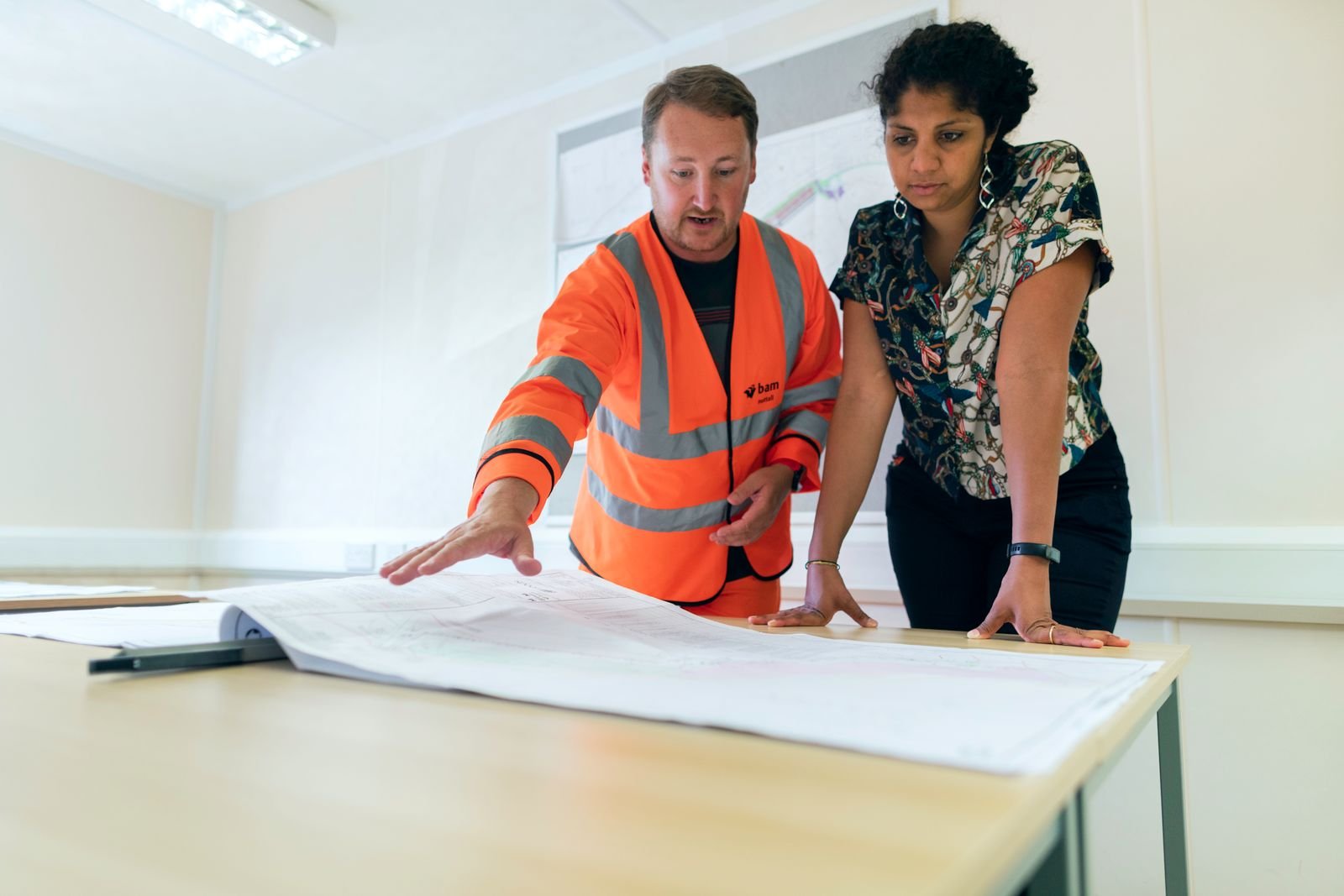
Engineers reviewing highway tunnel aerodynamic drawings and jet fan ventilation schedules
Tunnel Application Engineering
ISO 13350 thrust calculations, 100% reversible aerodynamics & 280°C high-temperature fire verification.