
YONGFAN HVAC - Premium Header
Engineered HVAC & Industrial Air Systems
YONGFAN HVACYOFAN HVAC Home
Museums & Archives Preservation HVAC | YONGFAN
Cultural Heritage & Archival Preservation

Museums & Archives: Gas-Phase Acid Scrubbing & Microclimate IAQ

Preserving historic artifacts, rare manuscripts, and archival records requires removing corrosive gaseous acids, fine soot, and relative humidity fluctuations.

Compare YONGFAN PSA treated fresh air chemical scrubbers, CA whisper-quiet in-room recirculation purifiers (<65 dB(A)), staged particulate & carbon filtration (ZF7/8), GCFK 150 mm shallow ceiling diffusers, and YFVAV microclimate airflow controls.

Preservation Codes NARA 1571 · ISO 10121
In-Room Polishing CA Series (<65 dB Quiet)
Treated Fresh Air PSA Units (850–34,000 m³/h)
Historic Retrofits 150 mm GCFK Shallow Diffusers
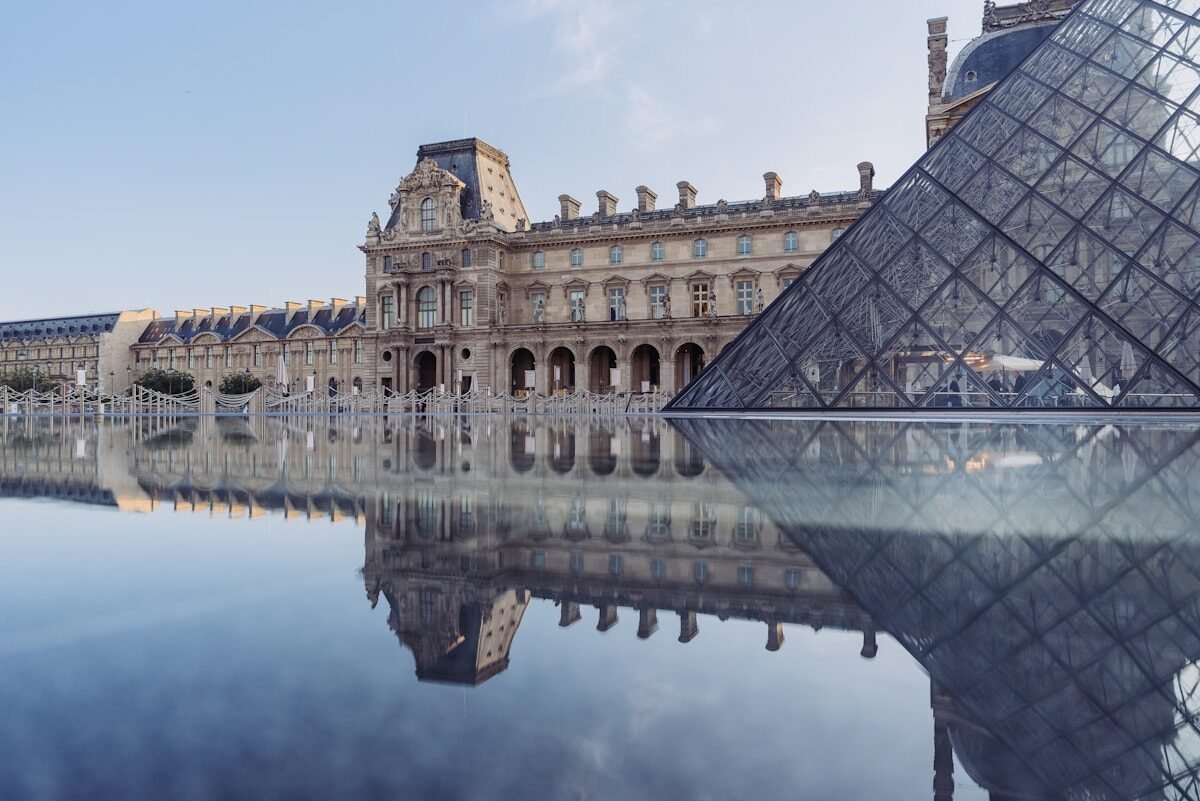
National museum art gallery with precision climate control and quiet air distribution
Cultural Heritage Preservation ISO 10121 Molecular Acid Scrubbing, NARA 1571 Archival Standards & Whisper-Quiet Airflow
01 / Failure Mechanisms

Chemical Degradation Occurs Behind Stable Thermostats

An archival vault holds 20°C and 50% RH perfectly, yet historic documents turn brittle and silver artifacts tarnish because molecular organic acids (acetic/formic) and urban gases pass freely through ordinary particulate filters.
Historic rare book and document archival repository requiring molecular gas filtration
Archival Degradation Risk

Why Particulate Filters Cannot Stop Acid Attack

Per NARA Directive 1571 and ISO 10121, preserving heritage paper, parchment, and textiles requires target-gas chemisorption beds to neutralize ambient acids.

Off-Gassing Acid Accumulation

Display case wood, sealants, and varnishes continuously release acetic and formic acid vapors that concentrate inside sealed galleries and damage textiles.

Impact: Irreversible paper acid-hydrolysis & canvas decay

Sulfur Dioxide & Ozone Infiltration

Urban traffic emissions ($SO_2$, $NO_x$, $O_3$) enter via untreated fresh air, oxidizing historic pigments and tarnishing delicate silver artifacts.

Impact: Severe pigment discoloration & metal corrosion

Historic Ceiling Void Spatial Clashes

In historic retrofits with protected decorative plaster ceilings, forcing standard 450 mm diffuser boxes requires cutting heritage fabrics.

Impact: Architectural heritage damage & installation halt

Acoustic Rumble in Reading Rooms

High-velocity supply fans create acoustic background noise that destroys the contemplative silence required in museum galleries and library reading halls.

Impact: Visitor dissatisfaction & NC-30 criteria violations

The Four Preservation Requirements of Cultural HVAC

Preservation engineering coordinates molecular acid removal, whisper-quiet acoustics, staged soot capture, and shallow historic retrofits.

01 ISO 10121 Gas-Phase Acid Chemisorption
02 Whisper-Quiet (<65 dB) In-Room CA Units
03 Staged PM2.5 & Soot Interception (ZF7/8)
04 150 mm GCFK Shallow Heritage Ceiling Drops
02 / Equipment Lineup

Engineered Equipment for Museums, Archives & Libraries

Preservation-grade product families for outdoor acid gas scrubbing, whisper-quiet gallery recirculation, shallow heritage ceiling delivery, and microclimate VAV balancing.
Architecture 01 · PSA Series Make-Up Air Acid Scrubbing · NARA 1571 Compliant

PSA Chemical Filtration Units (Treated Fresh Air)

The primary defense against ambient urban air pollution. PSA Units (850 to 34,000 m³/h) treat incoming make-up air to remove sulfur dioxide ($SO_2$), nitrogen oxides ($NO_x$), and ground-level ozone ($O_3$) before air enters archival collection vaults.

Documented train: G4 particulate pre-filter → deep chemical media bed (PCB / CPB chemisorption) → F8 particulate final filter. Double-skin casing rated for 2,000 Pa with <1% leakage at 1,000 Pa to prevent untreated bypass, and motorized airtight intake isolation dampers.

Capacity Range
850 – 34,000 m³/h make-up airflow
Target Acid Gases
SO2, NO2, O3, H2S, Formic/Acetic acids
Archival Standard
NARA 1571 & ISO 10121 Acid Gas Limits
Casing Standard
Double-skin insulated · <1% leakage @ 1,000 Pa
Media Chemistry Selection: PCB media captures $SO_2$, $H_2S$, $Cl_2$, and organic acids; CPB media extends chemisorption toward $NO_x$ and ozone. Select media from local ambient air quality monitoring.
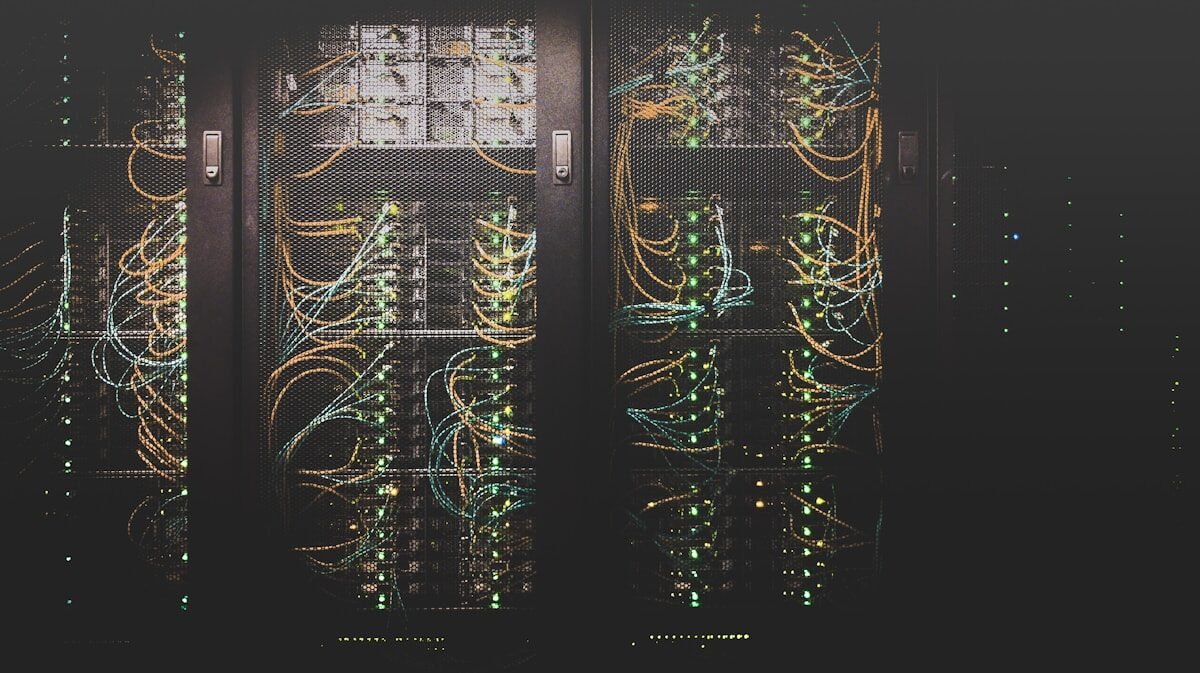
PSA fresh air chemical filtration unit protecting museum archive repository
PSA Multi-Stage Chemical Filtration Unit
Key Preservation Roles:
  • Urban ambient air pollution neutralization
  • Positive-pressure archival room protection
  • Motorized airtight intake isolation damper
  • Modbus/BACnet BMS status & alarm outputs

Architecture 03 · GCFK / ZF / GCDZ 150 mm Ultra-Thin · Fine Soot Interception

GCFK 150 mm Shallow Diffusers & Staged Particulate Filtration

Historic museum buildings often feature low ceiling clearances or protected architectural moldings that cannot accommodate deep standard diffuser boxes.

GCFK Ultra-Thin Diffusers: Overall depth of just 150 mm (600, 900, 1,200 m³/h), ≤120 Pa clean ΔP, ≥99.99% MPPS terminal filtration, and flexible round spigots.
Staged AHU Filters: Primary CG panel filters (25–45 Pa) → fine ZF7(8) F7/F8 bag filters (96/100 Pa) or compact ZZH V-banks capture PM2.5 and atmospheric carbon soot before reaching artifacts.

GCFK Clearance
150 mm overall depth (Fits tight historic voids)
GCFK Capacities
600, 900, 1,200 m³/h · ≤120 Pa initial
Medium Staging
ZF7(8) F7/F8 (96/100 Pa) · ZZH V-Bank
Archival HEPA
GCDZ (≥99.99% MPPS) for rare manuscript vaults
Historic Fabric Protection: GCFK terminals mount flush with false ceilings or soffits, preserving historic cornices and decorative woodwork during mechanical upgrades.
GCFK ultra thin 150mm ceiling diffuser terminal in historic museum gallery
GCFK 150 mm Ultra-Thin Diffuser Drop
Terminal Selection Protocol:
  • GCFK for shallow voids under 250 mm
  • GFK standard diffusers with DOP testing ports
  • DTXF quiet cabinet fans for gallery ventilation
  • DFX fan boxes for standalone conservation labs
Architecture 04 · YFVAV & Hydronics Microclimate Stability · Dynamic PICV Balancing

Microclimate Zone VAV Terminals & Hydronic Loop Isolation

Different collection types require distinct microclimates: oil paintings, parchment scrolls, metallic armor, and archival film all require specific temperature and relative humidity setpoints.

YFVAV-S-T100 Terminals (122–6,232 m³/h): Deliver pressure-independent precision airflow modulation to individual gallery microclimates.
Gasketed Plate Heat Exchangers (4–900 m³/h, up to 2.5 MPa): Provide thermal loop separation from municipal district energy networks.
Dynamic PICV Balancing Valves: Maintain constant chilled/hot water delta-T to prevent rapid RH oscillations across AHU cooling coils.

VAV Scope
122 – 6,232 m³/h · Ø125 to Ø400 mm
Control Mechanism
Pressure-independent dynamic flow sensor
Hydronic Loop
PHE 4–900 m³/h · District cooling isolation
Dynamic Valves
PICV valves for tight ±2% RH control stability
RH Stability Rule: Cultural artifacts degrade faster from rapid daily relative humidity cycling (±10% RH) than from seasonal average drift. Dynamic PICV valves prevent sudden coil temperature spikes.
Museum plant room plate heat exchanger and precision PICV balancing valves
Museum Mechanical Room Hydronic Controls
Microclimate Control Scope:
  • Individual zone microclimate VAV tracking
  • Tight ±0.5°C and ±2% RH precision control
  • JFWP expansion units for constant hydronic pressure
  • Modbus RTU / BACnet integration with museum BMS
03 / Selection Matrix

Museums & Archives Component Routing Table

Cross-reference YONGFAN components by heritage preservation requirement, supplier boundaries, and the first technical confirmation input.
Preservation Requirement First YONGFAN Route Supplier-Supported Boundary First Input to Confirm Specification Action
Outdoor acid gas scrubbing 850–34,000 m³/h · NARA 1571 / ISO 10121 Fresh-air CFM + outdoor $SO_2$/$NO_x$/$O_3$ ppb Configure PSA
Whisper-quiet gallery in-room purifier 850–6,800 m³/h · 500V to 4000V · <65 dB(A) Gallery room volume & off-gassing acid load Configure CA
Dual-mode positive pressure / purge 2,000 Pa casing; <1% leakage; ~249 Pa ESP Operating mode + target gas species Configure DBS
Shallow historic ceiling terminal 600–1,200 m³/h · 150 mm depth · ≤120 Pa Clear ceiling void depth & spigot orientation Configure GCFK
Deep diffuser box with DOP port 500–3,000 m³/h · Integrated PAO port + ΔP taps Housing material & ceiling grid geometry Configure GFK
AHU fine soot & PM2.5 filter ZF7/F8 (96/100 Pa); Standard models 1,300–3,200 m³/h Target test grade & allowable static pressure Configure Medium
Rare manuscript archival HEPA ≥99.99% MPPS · ≤160 Pa initial Airflow, HEPA class & gasket/gel seal Configure GCDZ
Gallery microclimate zone VAV 122–6,232 m³/h · Ø125–Ø400 mm inlet Microclimate airflow & low-noise criteria Configure VAV
Quiet gallery ventilation fan box 6–12 dB(A) quieter than standard axials Design CFM & NC-30 acoustic limit Configure DTXF
District cooling loop isolation 4–900 m³/h · 1.0 / 1.6 / 2.5 MPa ratings Thermal duty & 4 fluid temperatures Configure PHE
04 / Procurement Protocol

Information Required for a Preservation HVAC Quotation

Providing collection artifact types, target gas species, acoustic noise criteria, and ceiling void clearance data ensures exact equipment sizing.
STEP 01

Collection Type & Standards

State collection type (paintings, archival paper, metals, textiles), required preservation standard (NARA 1571 / ISO 10121), and target air change rate.

STEP 02

Target Acid Chemistry

Provide measured chemical gas concentrations (acetic/formic acid, $SO_2$, $NO_x$, $O_3$, $H_2S$ in ppb) and outdoor air intake conditions.

STEP 03

Acoustics & Void Clearance

State gallery NC/dBA acoustic target (≤NC-30) and clear ceiling void depth to determine whether GCFK 150 mm ultra-thin diffusers are needed.

STEP 04

Microclimate Sizing

State individual zone airflow rates, temperature (±0.5°C) and RH (±2%) precision bands, and BMS communication protocol (BACnet/Modbus).

Engineering Handoff

Required Parameters for Preservation Quotes

Submit your archival schedules and architectural drawings. YONGFAN application engineers will verify media mass, acoustic noise criteria, and shallow void fitment.

1. Collection Target & NARA 1571 Standard
2. Gas Species: Acetic, Formic, SO₂, NOx, O₃ (ppb)
3. CA Series In-Room Whisper-Quiet Units
4. GCFK 150 mm Ultra-Thin Shallow Diffusers
5. Gallery Acoustic Limit (NC-25 / NC-30)
6. Staged PM2.5 & Soot Filtration (MERV 8 + 14)
7. YFVAV Microclimate Precision Zone Controls
8. Dynamic PICV Hydronic Loop RH Stability
05 / Manufacturing Verification

Quality Assurance for Heritage Conservation

Tool-free MediaPAK module rails, acoustic chamber verification, and casing airtightness testing for zero bypass in cultural institutions.
MediaPAK PK-12

Pre-Filled Module Rails

CA in-room purifiers use modular, pre-filled MediaPAK canisters on slide-in guide rails, allowing rapid maintenance without loose carbon dust spillage.

Acoustic QA

<65 dB(A) In-Room Testing

Every CA internal fan is dynamically balanced and acoustically verified in sound chambers to maintain whisper-quiet gallery and library environments.

Casing Integrity

Pressure & Leak Testing

PSA double-skin casings are tested to 2,000 Pa structural integrity with verified leakage below <1% at 1,000 Pa to eliminate raw air bypass.

Media QA

ISO 10121 Batch Testing

Chemical chemisorption media batches are tested for carbon CTC value (≥60%), iodine number (≥1,000 mg/g), and target acid breakthrough capacity.

06 / Engineering Knowledge

Museums & Archives Frequently Asked Questions

Technical answers to key selection questions regarding gas-phase acid removal, in-room CA purifiers, NARA 1571 standards, and historic retrofits.

Why do museums require chemical filtration in addition to particulate filters?

Particulate filters capture dust and soot, but molecular gases (acetic acid, formic acid, $SO_2$, $NO_x$, ozone) pass freely through particulate media. Gas-phase chemical chemisorption media is required to prevent acid hydrolysis of paper and pigment oxidation.

What is the difference between PSA and CA units?

PSA treats incoming fresh outdoor air, establishing positive room pressure to prevent ambient pollutant infiltration. CA is a whisper-quiet in-room recirculation purifier (<65 dB(A)) that continuously polishes internal off-gassing from exhibit cases.

Why is GCFK ideal for historic building retrofits?

Historic museums and libraries often feature low ceiling clearances or protected heritage moldings. GCFK ultra-thin diffusers require only 150 mm overall depth, fitting into shallow ceiling voids without modifying historic architectural fabric.

How does staged filtration extend chemical media life?

By installing CG primary pre-filters and ZF7(8) medium bag filters upstream, over 90% of coarse and fine dust is removed, preventing particulate from clogging the micropores of expensive chemical carbon media.

Are CA in-room purifiers quiet enough for library reading rooms?

Yes. The CA series incorporates sound-treated double-skin acoustic insulation, vibration-isolated backward-curved fans, and internal VFD speed control to achieve sound levels below 65 dB(A), meeting NC-30 gallery standards.

How do YFVAV terminals protect individual microclimates?

YFVAV-S-T100 pressure-independent terminals modulate airflow dynamically based on individual gallery thermal loads, preventing temperature and relative humidity oscillations across different collection storage zones.

What media is used for exhibit case organic acid off-gassing?

YONGFAN MediaPAK PK-12 modules utilize specialized impregnated activated carbon and alumina chemisorption media engineered specifically to neutralize acetic and formic acids emitted by display cases and wooden cabinetry.

Does YONGFAN supply precision museum humidifiers and dehumidifiers?

YONGFAN manufactures gas-phase scrubbers, in-room purifiers, staged particulate filters, shallow diffusers, and hydronic valves. Central precision steam humidifiers and desiccant dehumidifiers are supplied by specialized humidity equipment manufacturers.

07 / Application Boundaries

Museum HVAC Scope Ends at the Component Interface

Understanding system boundaries ensures clear delineation of engineering responsibilities across cultural institution MEP contracting.
Boundary 01 / Microclimate Enclosures

Not Exhibit Display Cases

YONGFAN manufactures room-level filtration and air terminals; sealed hermetic display cases and micro-climate silica gel cassettes belong to exhibit fitout trades.

Boundary 02 / Conservation Science

Conservation Scientist Scope

Target chemical threshold limits (ppb), permissible relative humidity drift bands, and artifact vulnerability assessments belong to the museum conservation team.

Boundary 03 / Central Humidification

Not Desiccant Dehumidifiers

YONGFAN supplies air filtration and hydronic valves; specialized isothermal steam humidifiers and desiccant wheel dehumidifiers belong to central plant trade scope.

Boundary 04 / Media Life Tracking

Routine Coupon Monitoring

Chemical media life must be monitored using silver/copper reactivity coupons or laboratory gas testing; pressure drop gauges alone do not indicate gas saturation.

08 / Engineering Handoff

Plan Museum & Archival Preservation HVAC Components

Send your archival collection requirements, measured gas analysis data, acoustic noise limits, and ceiling void dimensions — YONGFAN preservation engineers will configure compliant chemical scrubbers, in-room purifiers, and shallow diffusers.

NARA 1571 · ISO 10121 Compliance PSA Treated Fresh Air Scrubbers CA Whisper-Quiet (<65 dB) Purifiers GCFK 150 mm Shallow Diffusers MediaPAK PK-12 Tool-Free Canisters YFVAV Microclimate Zone Controls
Engineers reviewing museum gallery HVAC drawings and gas phase chemical filtration schedules
Preservation Application Engineering
ISO 10121 chemical acid media calculations, whisper-quiet acoustic sizing & shallow ceiling integration.