YONGFAN HVAC - Premium Header
Engineered HVAC & Industrial Air Systems
YONGFAN HVACYOFAN HVAC Home
HEPA & ULPA Filters | YONGFAN
High-Efficiency Particulate Air (ISO 29463 · EN 1822 · MPPS ≥99.99%)

HEPA & ULPA Filters: Zero-Bypass Sealing & Ultra-Low Resistance

Choosing the wrong high-efficiency filter can consume fan pressure, create bypass at the terminal seal, or leave the installed cleanroom short of its particle-control target.

Compare YONGFAN GCDZ ultra-low-resistance HEPA filters across MPPS efficiency (≥99.99%), initial resistance (≤160 Pa), depths (50 mm, 69 mm, 90 mm, 100 mm), and knife-edge liquid gel-seal (GCDZ-26Y) vs. seamless gasket configurations.

Efficiency Class ≥99.99% @ MPPS
Initial ΔP ≤160 Pa (Clean)
Depths 50 / 69 / 90 / 100 mm
Seal Interfaces Gasket · Gel-Seal (GCDZ-26Y)
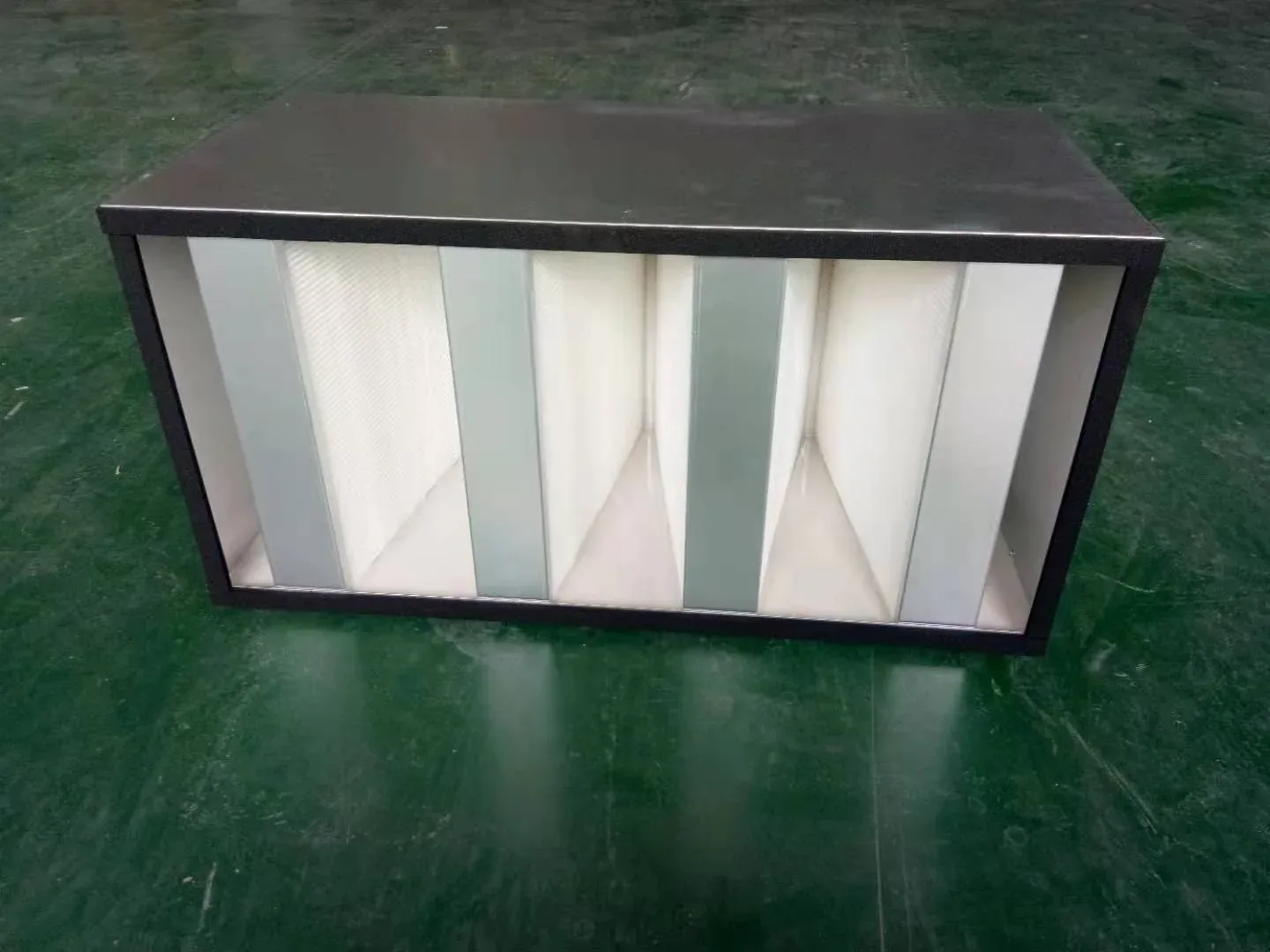
YONGFAN separatorless HEPA filter
Terminal Cleanroom Protection MPPS-Rated Efficiency, Pinhole Leak Scanning & Frame Integrity
01 / Root-Cause Analysis

HEPA Filter Failures Usually Appear After Installation

The room is cleaned, AHU running, and commissioning begins particle-count testing. Replacing the element does not solve the leak because air is bypassing the frame seal, or excessive clean resistance exhausts fan static margin.
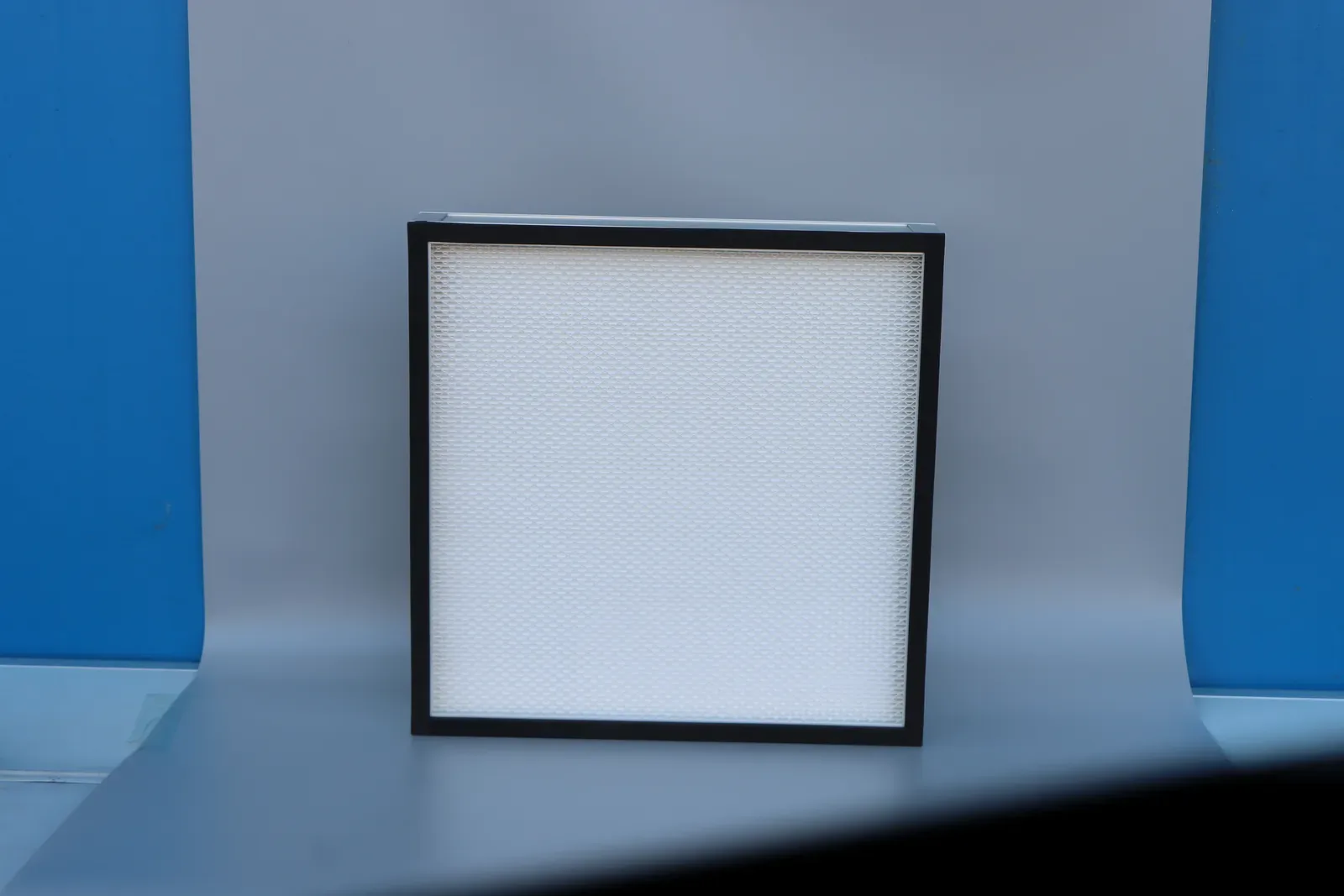
YONGFAN gel-seal HEPA filter
Critical Installed Interface

Why Media Efficiency Is Only Half the Barrier

A HEPA filter can pass factory tests and still fail installed qualification if housing clamps, gasket compression, or knife-edge gel penetration are mismatched.

Frame Seal & Gasket Bypass

Uneven gasket compression, unaligned retaining clamps, or a distorted housing frame create microscopic perimeter bypass gaps that fail particle counts.

Impact: Particle contamination leaks around media

Static Pressure Exhaustion

Upgrading to higher grade without checking fan budgets causes the AHU to reach pressure limits while clean, choking design air-change rates.

Impact: Loss of room pressurization & airflow

Test-Method & Particle Mismatch

Confusing 99.99% @ 0.3 µm with ≥99.99% @ MPPS (ISO 29463-5) creates compliance failures during stringent pharmaceutical or fab audits.

Impact: Submittal rejection during validation

Lack of Upstream Staging

Sending untreated coarse dust straight to HEPA elements causes rapid dust blinding, shortening final filter life from years to months.

Impact: Costly premature replacement cycles

Four Engineering Questions Determine HEPA Selection

High-efficiency filtration succeeds when media capture, static pressure, depth geometry, and housing sealing are harmonized.

01 MPPS Test Basis (≥99.99% @ MPPS)
02 Initial Clean ΔP (≤160 Pa Budget)
03 Terminal Depth (50, 69, 90, 100 mm)
04 Sealing Interface (Gasket vs Gel-Seal)
02 / Technical Parameters

MPPS Efficiency, Resistance and Depth Control

High-efficiency filters are specified across three separate dimensions: capture efficiency at most penetrating particle size, initial pressure penalty on the fan, and physical frame depth.
Parameter 01 / Fractional Capture

MPPS Efficiency (≥99.99%)

MPPS (Most Penetrating Particle Size) is the particle diameter at which the filter media exhibits its minimum capture efficiency. Testing at MPPS per ISO 29463-1 and ISO 29463-5 ensures worst-case penetration is controlled.

Parameter 02 / Aerodynamic Loss

Clean Resistance (≤160 Pa)

YONGFAN’s GCDZ family delivers clean initial resistance of ≤160 Pa. This preserves available fan static head for downstream diffusers and extends operational runtime before reaching the 400 Pa maintenance boundary.

Parameter 03 / Mechanical Housing

Depth & Sealing System

Frame depths of 50 mm & 69 mm accommodate low-profile terminal boxes, while 90 mm & 100 mm provide deep media packs. For knife-edge ceiling grids, the 100 mm GCDZ-26Y gel-seal provides liquid-tank bypass immunity.

GCDZ Family Specification & Depth Boundaries

Published performance baselines from YONGFAN high-efficiency engineering data.

ISO 29463 / EN 1822 Reference
GCDZ-50 (50 mm)
≤160 Pa
Ultra-compact depth · Shallow diffusers · Gasket seal
GCDZ-69 (69 mm)
≤160 Pa
Standard mini-pleat depth · Cleanroom ceiling grids
GCDZ-90 (90 mm)
≤160 Pa
Extended media area · Lower face velocity · Deep box
GCDZ-26Y (100 mm)
≤160 Pa
Gel-Seal Liquid Tank · Knife-edge ceiling interfaces
03 / Product Lineup

GCDZ HEPA Filters: Standard Gasket & Gel-Seal Versions

YONGFAN manufactures GCDZ ultra-low-resistance HEPA filters in two distinct mounting interfaces to match both dry-gasket compression boxes and knife-edge fluid-seal cleanroom ceilings.
Family 01 · GCDZ Standard Series 50 / 69 / 90 / 100 mm · Gasket Seal

GCDZ Ultra-Low-Resistance HEPA Filter (Gasket-Seal)

The GCDZ standard series is YONGFAN’s primary final particulate filtration element for cleanrooms, pharmaceutical suites, electronics fabs, and hospital operating theatres. It features automated mini-pleat glass-fibre media, hot-melt separators, and extruded anodized aluminium framing with continuous perimeter gasket seals.

Published with ≥99.99% efficiency at MPPS and clean initial resistance of ≤160 Pa, it delivers high particle capture with minimal fan power penalties. Depth options of 50 mm, 69 mm, 90 mm, and 100 mm allow precision matching to terminal diffuser housings.

Efficiency Rating
≥99.99% at MPPS (Most Penetrating Particle Size)
Initial / Final ΔP
≤160 Pa (Initial) · 400 Pa (Final Limit)
Depth Options
50 mm, 69 mm, 90 mm, 100 mm
Frame & Media
Anodized Aluminium · Sub-micron Glass Fibre
Upstream Staging Requirement: GCDZ elements must always be protected by primary (CG/CCB/CJS) and medium-efficiency (ZF/ZZH/ZDZ) filters to prevent premature dust loading and preserve the 400 Pa service life.
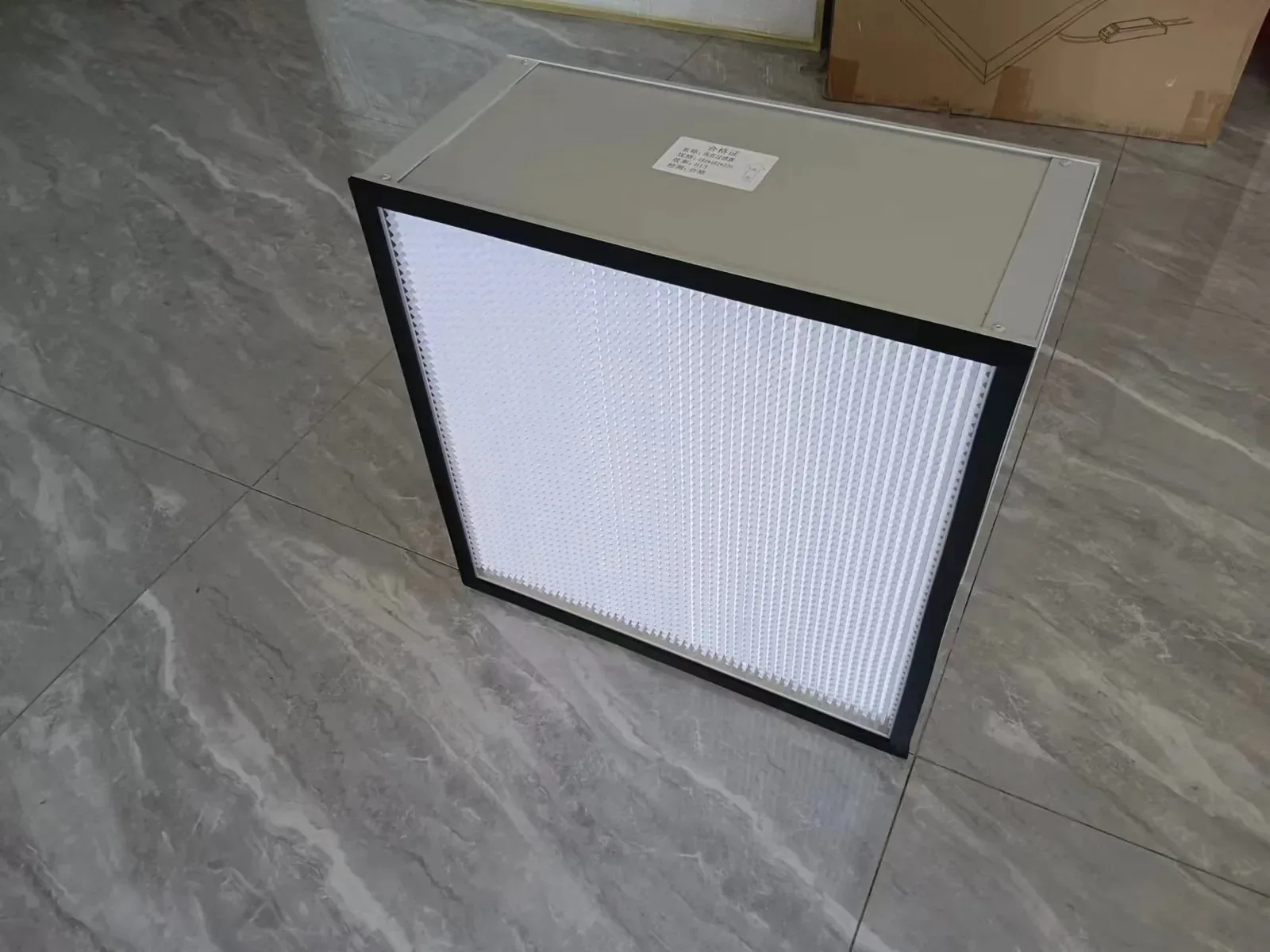
YONGFAN aluminum-frame separator HEPA filter
GCDZ Mini-Pleat Gasket-Seal Module
Key Applications:
  • ISO Class 5–8 Cleanroom Ceilings
  • Pharmaceutical Fill-Finish Suites
  • Hospital Operating Theatres & Isolation Rooms
  • Precision Microelectronics Production Lines
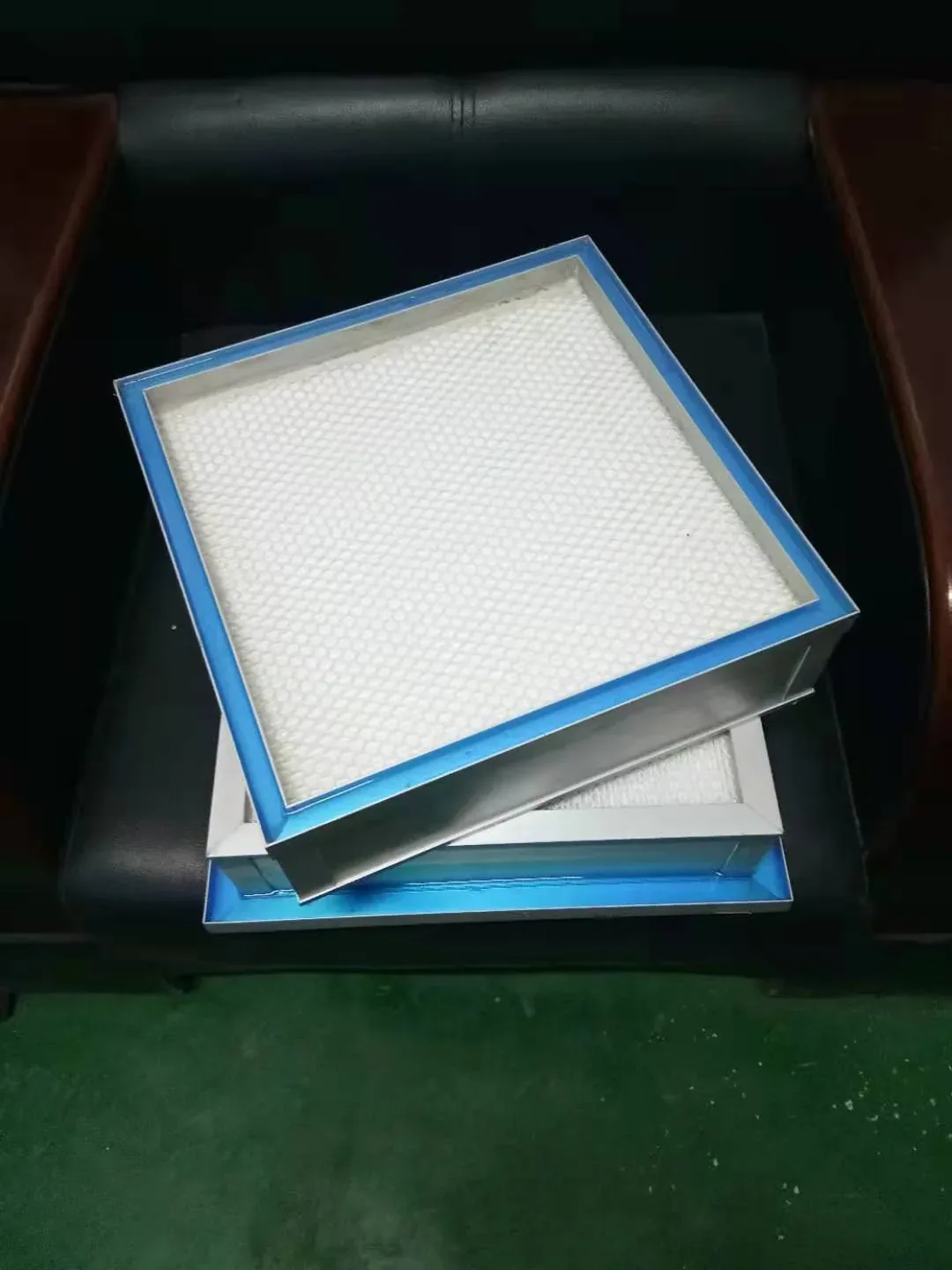
Family 02 · GCDZ-26Y Series 100 mm · Knife-Edge Gel-Seal

GCDZ-26Y Gel-Seal / Liquid-Tank HEPA Filter

The GCDZ-26Y configuration is a specialized 100 mm-deep gel-seal / liquid-tank version designed specifically for terminal ceiling grids and housings equipped with a knife-edge interface.

Instead of relying on mechanical gasket compression, the perimeter channel is filled with non-Newtonian polyurethane gel. When installed, the housing knife edge immerses into the gel channel, creating a continuous, self-healing, hermetic seal that completely eliminates perimeter bypass leakage.

Seal Architecture
Continuous Liquid Gel Tank (Polyurethane Gel)
Depth
100 mm Frame Depth with Gel Channel
MPPS Efficiency
≥99.99% @ MPPS (Factory Scan-Tested)
Housing Interface
Knife-Edge / Blade Ceiling Grid & Terminal Boxes
Knife-Edge Fit Verification: Confirm knife-edge penetration depth and blade thickness on housing drawings prior to order to ensure proper immersion without bottoming out.
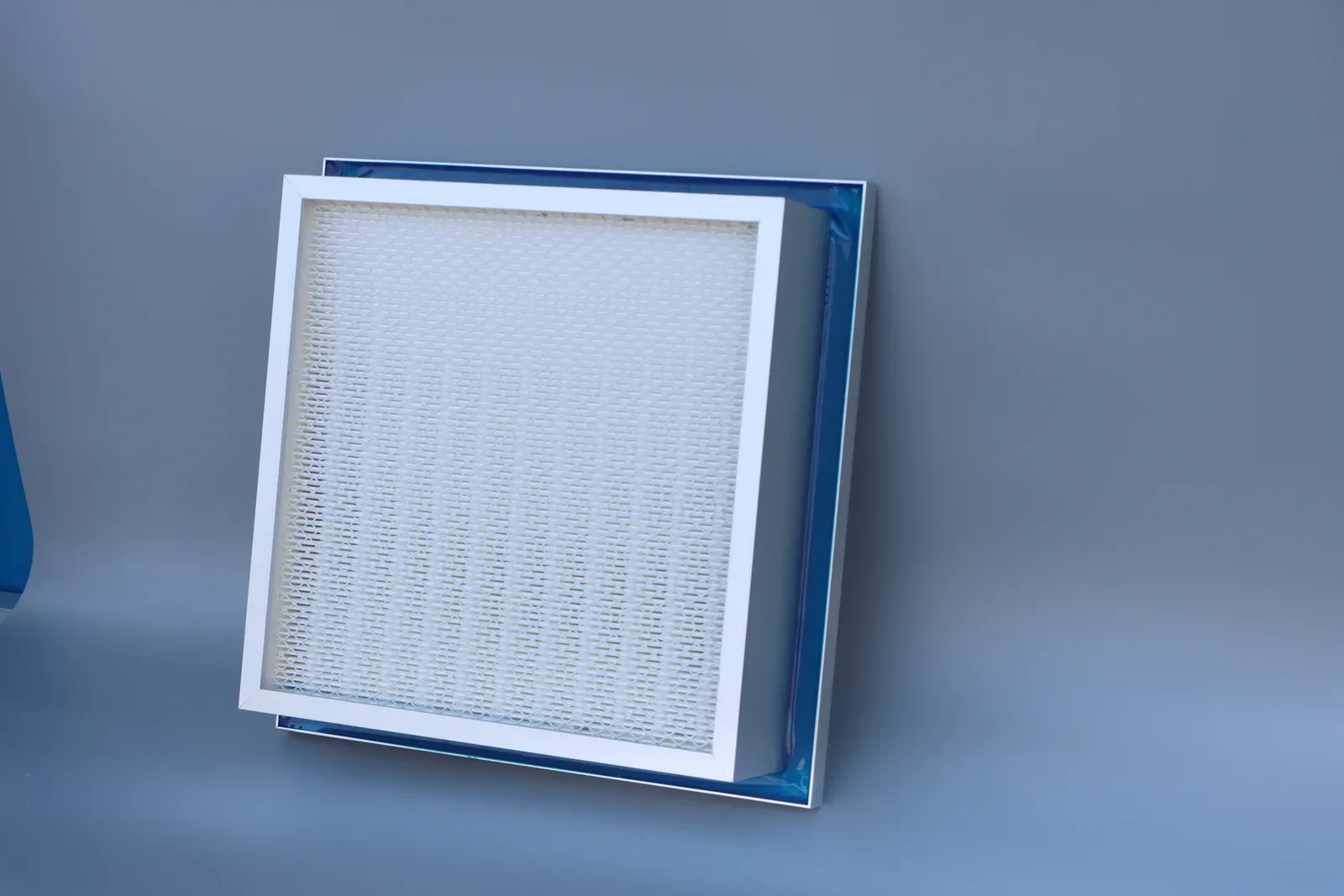
YONGFAN liquid-groove HEPA filter module
GCDZ-26Y Liquid Gel Channel Interface
Gel-Seal Advantages:
  • Zero mechanical clamping torque required
  • Self-healing fluid seal under pressure differentials
  • 100% installed leak-test compliance in aseptic suites
  • Drop-in replacement for knife-edge ceiling grids
04 / Selection Matrix

HEPA Filter Family Routing Table

Cross-reference YONGFAN high-efficiency particulate filter options by performance boundaries, depth requirements, and sealing systems.
Product Family What It Solves Range Boundary (YONGFAN Data) First Input to Confirm Specification Action
GCDZ HEPA (Gasket) 50/69/90/100 mm
Final particulate filtration in conventional cleanroom diffusers & AHUs
≥99.99% MPPS · ≤160 Pa initial · 400 Pa final
Required test class, airflow per cell, and housing track depth Configure GCDZ
GCDZ-26Y Gel-Seal 100 mm Gel
Zero-bypass liquid-tank sealing for knife-edge ceiling grids
≥99.99% MPPS · ≤160 Pa · Polyurethane Gel Channel
Knife-edge terminal housing specification & blade geometry Configure Gel-Seal
Criterion 01

Housing Sealing Type

If the ceiling or terminal uses clamping bars, select standard gasket GCDZ. If equipped with a knife-edge blade, specify GCDZ-26Y gel-seal.

Criterion 02

Available Housing Depth

For shallow diffusers (e.g. 150 mm GCFK), choose 50 mm or 69 mm elements. For standard deep boxes, specify 90 mm or 100 mm.

Criterion 03

Fan Static Pressure Allowance

Ensure the AHU fan curve can accommodate clean ≤160 Pa resistance plus planned dirty-filter operation up to 400 Pa.

Criterion 04

Installed Test Protocol

Confirm whether site qualification requires DOP/PAO aerosol installed leak testing or factory MPPS scan-test compliance reports.

05 / Procurement Protocol

Information Required for a HEPA Filter Quotation

Do not submit only “99.99% HEPA filter, 610×610.” Providing clear housing interface, airflow, and test standards ensures exact dimensional fit and valid qualification.
STEP 01

Required Standard & Class

Specify the required standard (ISO 29463 / EN 1822 / IEST) and efficiency test basis (MPPS vs 0.3 µm aerosol).

STEP 02

Rated Airflow per Cell

Provide the design airflow (m³/h or CFM) per filter to check rated face velocity and verify clean initial resistance.

STEP 03

Face Size & Depth (W×H×D)

State exact frame dimensions (e.g. 610×610×69 mm) and clear internal housing opening.

STEP 04

Seal Interface & Gasket Location

Specify gasket position (upstream, downstream, both) or knife-edge gel-seal (GCDZ-26Y) channel.

Engineering Handoff

10 Parameters for Accurate HEPA Quotes

Send your available schedule data. YONGFAN filtration engineers will verify face velocity, clean static pressure, and seal compatibility.

1. Required Class & Test Standard
2. Design Airflow per Element (m³/h)
3. Exact Outer Dimensions: W × H × D
4. Seal Type: Gasket vs. Liquid Gel-Seal
5. Maximum Allowable Initial ΔP (≤160 Pa)
6. Cleanroom Target ISO Class (ISO 5–8)
7. Upstream Pre & Medium Filter Types
8. Operating Temperature & Humidity
9. Factory Scan-Test Report Requirement
10. Frame Material: Anodized Alum / GI
06 / Manufacturing Verification

YONGFAN HEPA Production & Leak-Scan Controls

YONGFAN manufactures high-efficiency filters on dedicated automated lines featuring hot-melt pleating, robotic gel potting, and 100% individual scan-testing for pinhole leaks before release.
Automated Pleating

Mini-Pleat Precision

Automated mini-pleat lines control pleat height, pleat density, and hot-melt separator bead continuous alignment, ensuring uniform airflow velocity across media.

Individual Leak Scan

100% Pinhole Scan Testing

Every HEPA/ULPA element is scan-tested across the entire media face and frame-to-media potting seal using calibrated photometers to guarantee zero pinhole bypass.

Fluid Seal Integrity

Robotic Gel Potting

Two-part polyurethane gel potting is metered with automated dispensing heads to ensure void-free, self-healing channels in GCDZ-26Y liquid tank models.

Traceability

Batch & Serial Labelling

Each filter receives a unique identification label recording tested initial resistance, MPPS efficiency percentage, rated airflow, and manufacturing batch.

7–15 Days Fast Dispatch: Standard catalog dimensions (610×610, 305×610, etc.) are manufactured on rapid turnaround for export packing. Bespoke Engineering: Non-standard W × H × D dimensions, faceguards, and specialized flange frames custom-fabricated to project drawings.
07 / Engineering Knowledge

HEPA & ULPA Filter Frequently Asked Questions

Direct engineering answers to common questions regarding high-efficiency filter selection, MPPS test basis, gel-seals, and cleanroom qualification.

Which YONGFAN filter should I use for final cleanroom filtration?

The GCDZ Ultra-Low-Resistance HEPA Filter is the documented YONGFAN high-efficiency family for final particulate filtration. Confirm required class, airflow per filter, housing depth, and seal interface before selecting the variant.

Which GCDZ depth fits a shallow terminal box?

The GCDZ source data includes 50 mm and 69 mm depths as the shallowest documented options, with 90 mm and 100 mm also available. The choice depends on the terminal’s internal depth and airflow rating.

Which GCDZ version uses a gel seal?

The supplied data identifies GCDZ-26Y as a 100 mm gel-seal / liquid-tank configuration. Use that route when the ceiling grid or terminal housing uses a knife-edge sealing interface.

Can GCDZ replace a medium-efficiency filter?

No. GCDZ is a final high-efficiency filter. YONGFAN’s ZF5(6), ZF7(8), ZF9, ZZH, ZDZ, and ZYG families are the intermediate products used upstream to prevent HEPA dust blinding.

Can I choose GCDZ only from a 99.99% efficiency requirement?

No. The ≥99.99% MPPS figure must stay tied to its test basis. The project should also specify airflow, allowable resistance, depth, seal type, and exact acceptance classification.

Which product should I choose for a complete cleanroom terminal?

A filter element alone is not the complete terminal. Review GFK HEPA Diffuser Boxes, GCFK Ultra-Thin Diffusers, or FFU Fan Filter Units when housings or fan power are required.

When should a GCDZ filter be replaced?

YONGFAN publishes 400 Pa as the GCDZ final resistance boundary. However, set your maintenance threshold based on fan pressure allowance and cleanroom airflow requirements rather than waiting for maximum resistance.

Does every GCDZ filter require an installed leak test?

Where the cleanroom validation protocol mandates terminal testing, the GCDZ filter and its housing are tested together on site (e.g. ISO 14644-3 installed filter integrity test).

Is GCDZ an ULPA filter by definition?

The published family figure available is ≥99.99% at MPPS (H14 class). Exact ULPA classifications (U15–U17) are confirmed on project submittals with test reports matching the specified standard.

08 / Application Boundaries

HEPA Filters Cannot Correct Upstream or Housing Problems

High-efficiency filters are designed for fine particulate capture in sealed housings. Understanding their boundaries prevents operational failure.
Boundary 01 / Coarse Dust

Not for Untreated Air

If heavy dust enters the AHU, upgrade the primary stage (CG/CCB/CJS) rather than loading GCDZ with coarse particles.

Boundary 02 / Molecular Gases

Do Not Remove VOCs

HEPA media captures airborne particles, not gaseous molecules. Odors, chemical fumes, H2S, and SO2 require activated-carbon filters.

Boundary 03 / Mechanical Housing

Not a Terminal Box

A filter element does not include diffusers or fans. When ceiling housings or distributed fans are needed, select GFK, GCFK, or FFU units.

Boundary 04 / Bypass Leakage

Zero Bypass Immunity

Higher efficiency ratings cannot compensate for leaking frame clamps or damaged gaskets. Filter, seal, and housing must form one unbroken barrier.

09 / Engineering Handoff

Select the Compliant HEPA/ULPA Filter for Your Facility

Send your cleanroom ISO class, terminal housing dimensions, airflow per element, and sealing preference — YONGFAN application engineers will provide certified submittals and factory test reports.

Face Dimensions: W × H × D (mm) Design Airflow (m³/h or CFM) Target Class: ≥99.99% MPPS Initial ΔP (≤160 Pa) Seal: Gasket vs Gel-Seal (GCDZ-26Y) Factory Leak Scan Certificate
YONGFAN box-type HEPA filter
Cleanroom Filtration Engineering Support
Factory MPPS scan reports, housing seal validation & custom dimensional confirmation.