YONGFAN HVAC - Premium Header
Engineered HVAC & Industrial Air Systems
YONGFAN HVACYOFAN HVAC Home
Menu
Ventilation Fans | Axial, Mixed-Flow & Centrifugal | YONGFAN
Engineered Ventilation · Airside Dynamics

Ventilation Fans: Matched to Operating Point & System Resistance

The right fan is not the one with the highest airflow. It is the fan that reaches the required duty point at the installed system resistance, while meeting the project’s noise, temperature, space, fire and hazardous-area requirements.

Compare YONGFAN axial, mixed-flow, centrifugal, roof, tunnel and explosion-proof ventilation fans across airflow (380 to 144,260 m³/h), pressure (11 to 3,200 Pa static & total), thrust (up to 3,046 N), high-temperature fire duty (280 °C / 30 min & 400 °C / 2h), and Ex hazardous-area protection.

6 Fan Families Axial · Mixed · Centrifugal · Roof · Jet · Ex
Airflow Range 380 – 144,260 m³/h
Pressure Range 11 – 3,200 Pa (Static & Total)
Fire & Ex Duty 280 °C / 30 min · GB 3836 T4
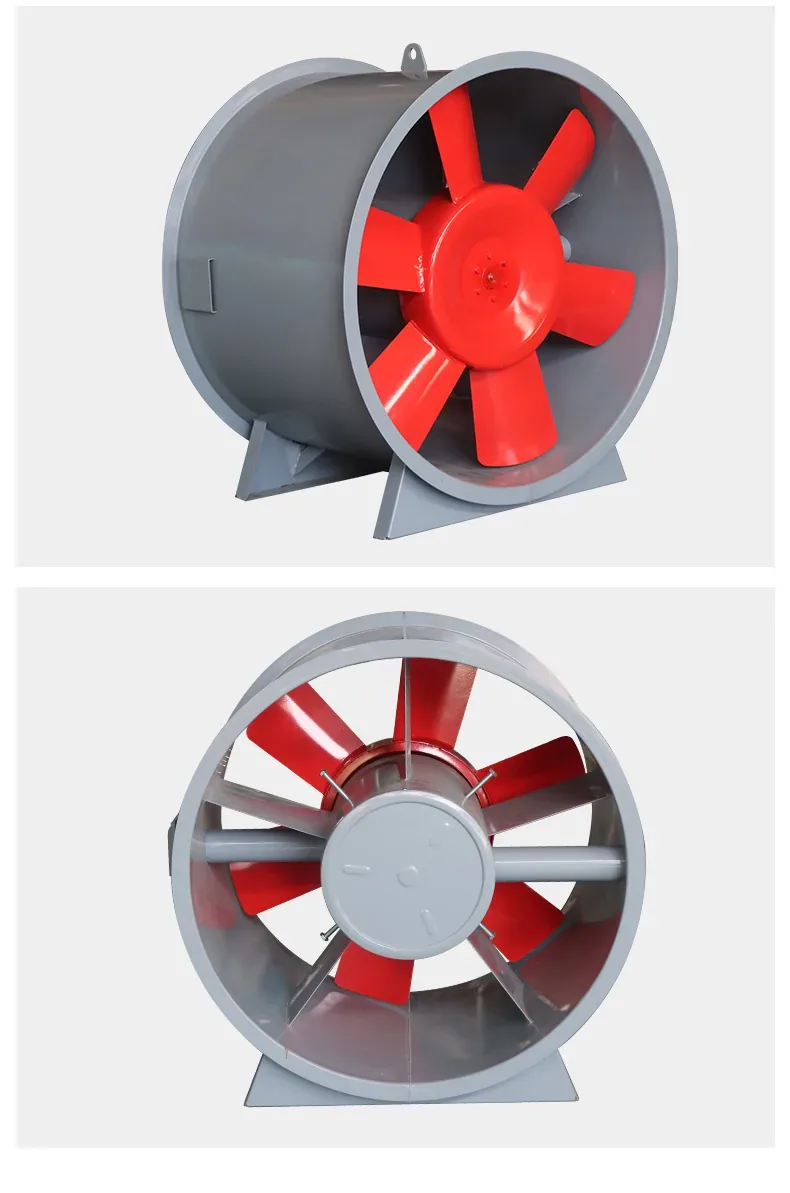
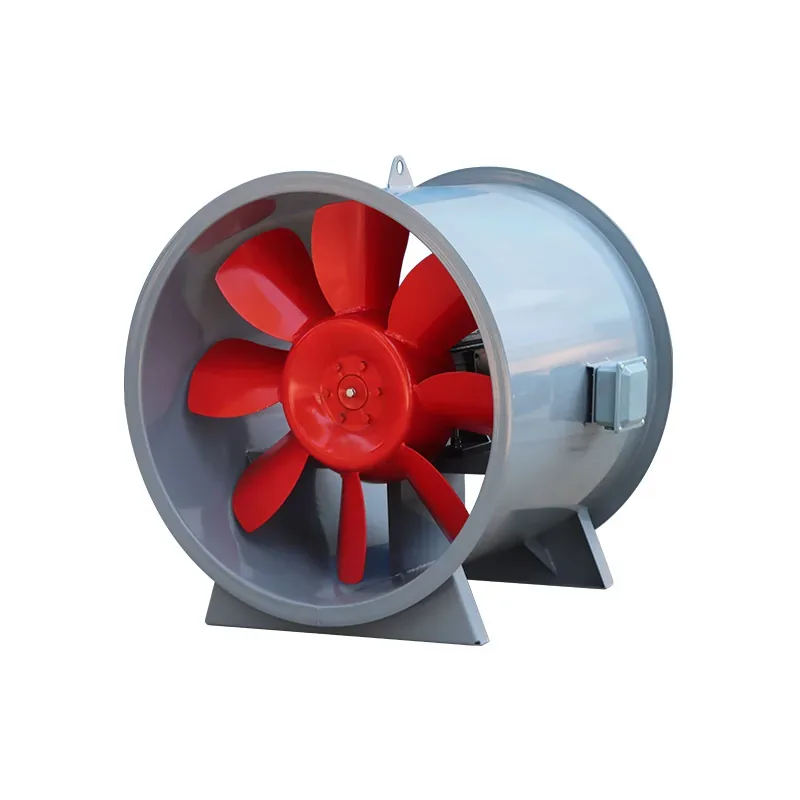
YONGFAN smoke-exhaust fan product set
Operating Point Selection Airflow · Total & Static Pressure · Duty Point · Acoustic Control
01 / Selection Methodology

Fan Selection Starts With the Operating Point, Not the Fan Type

A ventilation schedule may show only one headline number: airflow. That is not enough to select a fan. A fan moves air only where its pressure capability intersects the resistance of the connected system.

Duct length, elbows, filters, coils, dampers, silencers, grilles and terminal devices all add resistance. Two fans rated for the same maximum airflow can therefore behave very differently after they are connected to the actual ductwork. This is why an axial fan, mixed-flow fan and centrifugal fan should not be compared by airflow alone.

An axial fan is usually compact and well suited to high-flow, lower-pressure duties. A mixed-flow fan occupies the middle ground, combining an in-line body with more pressure capability than a conventional low-pressure axial arrangement. A centrifugal fan changes the flow direction through a scroll or cabinet and is often selected when the duct system requires higher pressure.

Installation conditions can change the family again. If the fan sits on the roof, weather protection and discharge arrangement matter. If it handles hot, humid, dusty or mildly corrosive air, keeping the motor outside the main airstream can become more important than compactness. If the installation is in a classified hazardous area, an explosion-proof motor and non-sparking construction are selection requirements rather than optional upgrades.

Tunnel ventilation uses another metric altogether. A tunnel jet fan is selected primarily from thrust, tunnel geometry and the required longitudinal airflow strategy rather than from conventional duct static pressure alone.

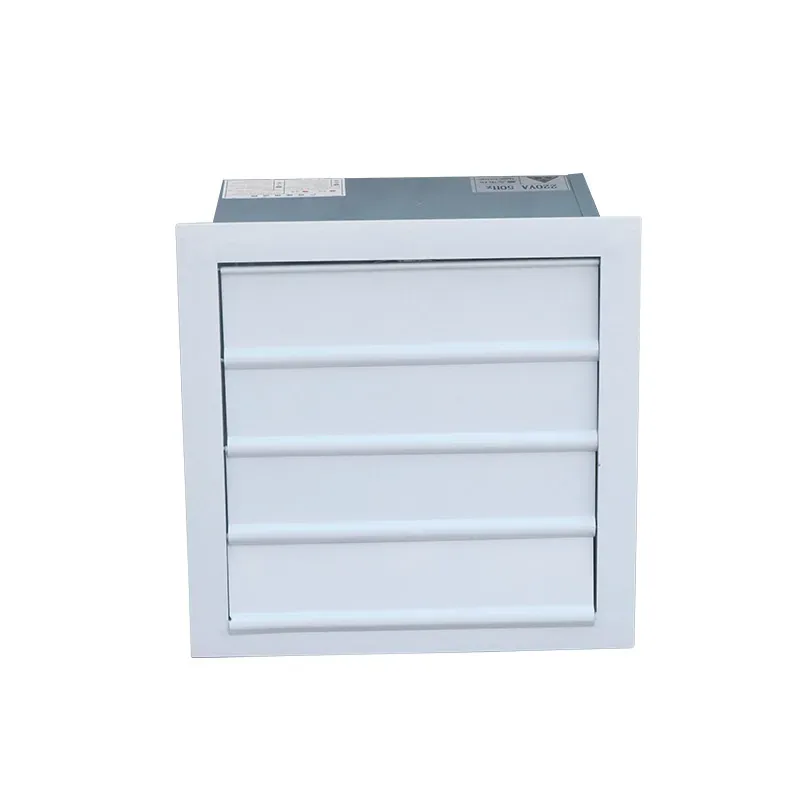
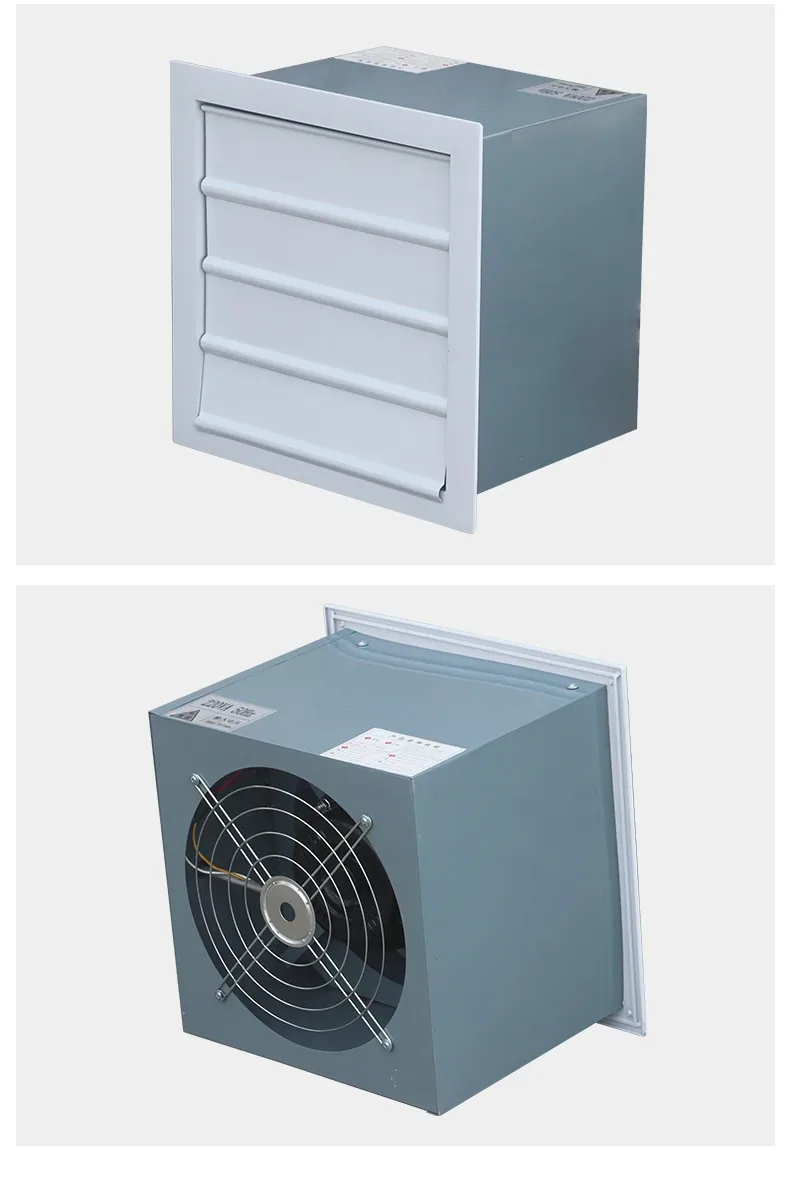
YONGFAN square wall-mounted axial fan
Connected duct resistance determines the real delivered airflow.

The Operating Point Intersection

Airflow cannot be guaranteed without knowing system resistance. As components load or ducts extend, the intersection point on the fan curve determines real airflow delivery.

Curve Intersection · Not Endpoint CFM

Architectural Fit

Straight-through axial for tight ducts, mixed-flow for moderate pressure, centrifugal scrolls for high static loss, and cabinet boxes for flexible discharge angles.

Form Factor · Discharge Orientation

Environmental & Safety Duty

Weather-tight roof mounting, bypass motors for hot/greasy air, certified Ex builds for hazardous gas zones, and high-temp smoke-exhaust ratings for life safety.

Life Safety · Hazardous Compliance
YONGFAN’s ventilation portfolio is organized by air-moving principle and duty:

Choose the category first. Then compare individual models inside that category.

02 / Aerodynamic Fundamentals

Airflow and Pressure Are the First Two Numbers to Compare

A scheduled airflow has value only when paired with the pressure the fan must overcome. Understanding published ranges, static vs. total pressure definitions, and portfolio coverage prevents specifying the wrong equipment.

Airflow tells you how much air must move

Airflow is normally expressed in m³/h for building and industrial ventilation. It comes from the project requirement: room air changes, process exhaust volume, heat removal, smoke-control strategy or other ventilation calculation.

YONGFAN’s documented ventilation range spans from small cabinet and wall-fan duties to very large axial and mixed-flow systems:

Published Portfolio Coverage Documented Airflow Spectrum
SJG Cabinet Centrifugal Fan 380 – 15,070 m³/h
DTF Axial-Flow Tube Fan 1,886 – 114,829 m³/h
DTXF Low-Noise Tube Axial Fan 2,472 – 114,829 m³/h
SWF Mixed-Flow Tube Fan 1,430 – 144,260 m³/h
CDZ Mixed-Flow Duct Fan 2,176 – 33,158 m³/h
DWT Roof Fan 1,560 – 50,000 m³/h
4-72 Centrifugal Fan 1,131 – 46,988 m³/h
T35-11 / BT35-11 Bifurcated Axial Fan 552 – 58,343 m³/h
DFBZ / BDFBZ Explosion-Proof Bifurcated Fan 552 – 58,343 m³/h
HL3-2A / PYHL-14A family 561 – 105,988 m³/h

*These ranges show portfolio coverage, not a reason to select a model at the edge of its curve.

Pressure tells you whether the fan can move that airflow

A scheduled airflow has value only when paired with the pressure the fan must overcome. YONGFAN’s current ranges show clear differences between fan architectures.

The T35-11 / BT35-11 family covers approximately 32–420 Pa, while the 4-72 centrifugal fan reaches approximately 372–3,200 Pa. The SWF mixed-flow range sits between typical axial and centrifugal duties at approximately 125–1,314 Pa.

That is why changing fan family can be necessary even when the required airflow stays unchanged. A low-resistance straight duct may suit an axial fan. Add long duct runs, several filters, coils and silencers, and the required pressure can move the project toward mixed-flow or centrifugal equipment.

Total pressure and static pressure should not be mixed casually

Some YONGFAN product documents publish total pressure, while others publish static pressure.

For example: DTF: total pressure · SWF: total pressure · 4-72: total pressure · SJG: static pressure · DWT: static pressure.

Those terms are related but not identical. When comparing two suppliers or two fan families, confirm whether the scheduled pressure is static or total and keep the same basis throughout the selection. A numerical pressure value without its definition can create an incorrect comparison.

Standard Pressure Basis Classification
Total Pressure Basis (ΔPt) DTF, DTXF, SWF, 4-72 Series
Static Pressure Basis (ΔPs) SJG Cabinet, DWT Roof Series
03 / Equipment Breakdown

Choose the Ventilation Fan Category by the System Constraint

Detailed overview of YONGFAN’s six ventilation fan categories: mechanical configurations, documented aerodynamic boundaries, operational reasons to choose each route, and specific product models.
Category 01 · Axial Flow In-Line · High Flow · Compact Depth

Axial Fans for In-Line Airflow & Compact Installation

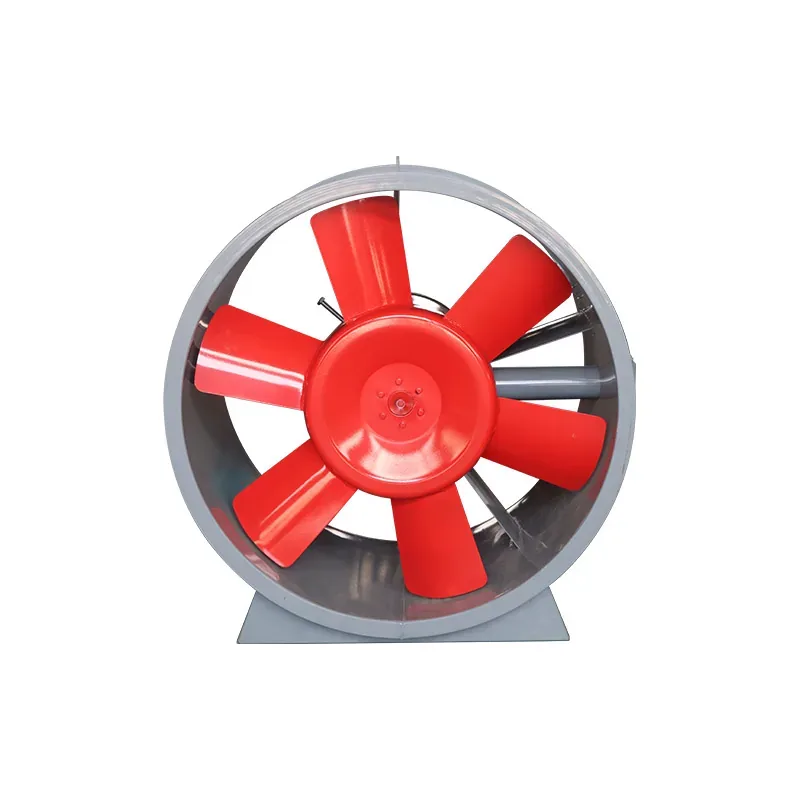
Axial fans move air generally parallel to the fan shaft. Their straight-through geometry makes them attractive where installation length and duct alignment matter. YONGFAN’s axial range includes several different constructions rather than one universal axial fan:

DTF Series Axial-Flow Tube Exhaust Fan is the broad in-duct family. Published performance covers 1,886–114,829 m³/h and 115–2,266 Pa, with impeller diameters from Ø350 to Ø1600 mm. Relevant configurations include normal ventilation, smoke-exhaust and explosion-proof variants. Fire-rated DTF configurations are documented for 280 °C / 30 min smoke-exhaust duty.

DTXF Series Low-Noise Tube Axial Exhaust Fan is the lower-noise route when the basic in-line axial architecture is correct but acoustic performance is more demanding. Its published range is 2,472–114,829 m³/h and 132–2,166 Pa. The supplied material states that DTXF is approximately 6–12 dB(A) quieter than standard DTF at comparable duty, and it uses compatible flange geometry for replacement applications.

T35-11 / BT35-11 Bifurcated Axial Fan solves a different operating problem. The motor sits in a separate bypass section rather than directly in the handled airstream. The documented range is 552–58,343 m³/h and 32–420 Pa, with five factory-set blade angles from 15° to 35°. Standard T35-11 construction is documented for airstream temperatures up to approximately 80 °C. BT35-11 adds explosion-protected construction.

WEX / BWEX External-Rotor Wall Fan is the compact wall or terminal solution. Published nominal diameters run from Ø250 to Ø1000 mm. Its external-rotor motor gives the fan a very short axial depth, making it useful at wall openings, ceiling apertures and duct terminations. BWEX is the explosion-proof variant.
DTF Series 1,886–114,829 m³/h · 115–2,266 Pa · 280 °C / 30 min
DTXF Series 2,472–114,829 m³/h · 6–12 dB(A) Noise Reduction
T35-11 / BT35-11 552–58,343 m³/h · Motor Outside Stream · Up to 80 °C
WEX / BWEX Ø250–Ø1000 mm · External Rotor Wall / Terminal
YONGFAN wall-mounted axial fan and louver set
Axial Flow Aerodynamics Straight-Through Tube Packaging · High Volume Air Movement
Category 02 · Mixed Flow In-Line Body · Extended Static Pressure

Mixed-Flow Fans When Axial Geometry Needs More Pressure

Mixed-flow fans are useful when the installation benefits from an in-line body but the pressure requirement is higher than a conventional low-pressure axial arrangement can comfortably provide.

The main YONGFAN family is SWF Series Mixed-Flow Tube Fan. SWF covers 1,430–144,260 m³/h and 125–1,314 Pa, with impeller diameters from Ø300 to Ø1500 mm. The supplied product data divides the family into I, II and III configurations for different pressure and speed duties.

The important buyer advantage is geometry. SWF keeps a compact tube-style installation while extending pressure capability into duties that may otherwise push the design toward a larger centrifugal arrangement.

The CDZ Series Mixed-Flow Duct Fan provides another in-line route, with 2,176–33,158 m³/h, 97–701 Pa and impeller diameters from Ø355 to Ø800 mm. Its motor is positioned outside the handled airstream, which makes it relevant where the air condition makes a motor-in-stream arrangement undesirable.

HL3-2A belongs in this mixed-flow group for ducted basement and car-park exhaust applications. It is paired in the supplied product documentation with PYHL-14A, a jet-induction fan used where the ventilation strategy reduces or removes large exhaust duct networks.

SWF Series (I / II / III) 1,430–144,260 m³/h · Up to 1,314 Pa · Dual-Speed Options
CDZ Series 2,176–33,158 m³/h · Motor Outside Main Airstream
HL3-2A Series Ducted Mixed-Flow Underground & Basement Exhaust
PYHL-14A Series Jet Induction for Ductless Car Parks · 280 °C / 30 min
YONGFAN mixed-flow ventilation fan
Mixed-Flow Propulsion Axial + Radial Velocity Vectors · Overcoming High Duct Loss
Category 03 · Centrifugal High Static Resistance · Scroll & Cabinet

Centrifugal Fans for Higher-Resistance Duct Systems

A centrifugal fan turns the airflow through an impeller and casing, giving the designer more pressure capability for systems with significant resistance.

YONGFAN’s principal general-purpose family is the 4-72 Series Centrifugal Fan. Published performance covers 1,131–46,988 m³/h and 372–3,200 Pa, with documented impeller diameters from Ø280 to Ø800 mm in the listed range. The source data identifies approximately 75–87% efficiency near preferred operating points and supports direct drive on smaller units and belt drive on larger configurations. That makes 4-72 relevant to HVAC air handling, industrial process ventilation and other applications where the fan must overcome more system resistance than a low-pressure axial arrangement.

The SJG Series Cabinet-Type Centrifugal Ventilation Fan serves a different installation need. It covers 380–15,070 m³/h and 65–820 Pa static pressure. The forward-curved centrifugal wheel sits inside a cabinet while the motor remains outside the handled airstream. The discharge can be adjusted in 10° increments up to −90°, which helps route ducts through constrained plant rooms and service spaces.

SJG is therefore not simply a smaller 4-72. It is a cabinet-style solution for building exhaust, kitchens, laboratories, car parks and mildly challenging air conditions where serviceability and duct routing matter.

4-72 Series Scroll Fan 1,131–46,988 m³/h · Up to 3,200 Pa Total · Direct / Belt
SJG Cabinet Centrifugal 380–15,070 m³/h · 65–820 Pa Static · 0° to −90° Rotation
Industrial centrifugal scroll fan with high static pressure capability
Scroll & Cabinet Centrifugal High Static Head · 75–87% Operating Efficiency Points
Category 04 · Roof Envelope Direct Envelope Exhaust · Weather Protection

Roof Fans for Direct Roof-Level Exhaust

Roof fans remove air directly through the building envelope and eliminate the need to route every exhaust stream to a remote plant-room fan. The DWT Series Roof Ventilation Fan combines two roof-fan architectures:

DWT-I is the centrifugal version. DWT-II is the axial version.

The combined documented range is 1,560–50,000 m³/h with 11–407 Pa static pressure. The source lists centrifugal diameters from Ø300 to Ø900 mm, axial sizes No.3–10, IP54 motor protection and 220 V or 380 V / 50 Hz supply depending on size.

The choice between DWT-I and DWT-II follows the pressure requirement. The axial route favors high airflow at lower resistance; the centrifugal route is the stronger fit when the roof exhaust path needs more pressure capability. Weather cap, roof curb, discharge direction, maintenance access and water ingress control should be resolved at the same time as the airflow selection.

DWT-I Centrifugal Ø300–Ø900 mm · Horizontal Discharge · Low Sound
DWT-II Axial No.3–10 Sizes · Vertical Discharge Through Weather Cap
Rooftop industrial exhaust ventilation fans
Building Envelope Integration Weatherproof Curb Sealing · Discharge Plume Anti-Recirculation
Category 05 · Thrust & Induction Longitudinal Tunnel Thrust · Jet Induction

Tunnel & Jet Fans for Thrust-Based Ventilation

Tunnel ventilation should not be selected from a conventional duct-fan table alone. The SDS / SDS(R) Tunnel Jet Fan family is designed for longitudinal ventilation, where the fan transfers momentum to the tunnel air and generates thrust rather than serving a closed duct network.

The supplied SDS data covers approximately 7.9–71.8 m³/s airflow, 191–3,046 N static thrust, impeller diameters from approximately Ø630 to Ø1600 mm, and motor power from 4 to 90 kW.

SDS is the unidirectional version. SDS(R) uses a reversible blade arrangement for bidirectional ventilation and emergency smoke-control strategies. The source states that reversal from forward to reverse at rated speed occurs within 30 seconds. The reversible model produces approximately 4–6% lower thrust than the corresponding unidirectional version.

Optional 1D and 2D silencers are documented, with approximately 9–14 dB(A) sound reduction compared with the bare fan arrangement. Fan quantity is not selected only from nominal thrust. Tunnel length, cross section, traffic, vehicle emissions, CO/NOx limits, natural airflow, installation spacing and emergency fire strategy all affect the installed effective thrust.

PYHL-14A is also a jet-induction product, but its role should be distinguished from SDS. PYHL-14A is documented within underground car-park and similar ductless induction applications. SDS/SDS(R) is the dedicated tunnel longitudinal-ventilation family.

SDS / SDS(R) Tunnel Fans 191–3,046 N Thrust · Ø630–Ø1600 mm · 30s Reversal
PYHL-14A Jet-Induction Car Park Air Induction · 280 °C / 30 min Smoke Rated
Road tunnel longitudinal jet fan ventilation system
Longitudinal Momentum Transfer Up to 3,046 N Static Thrust · ISO 13350 Performance Rig Testing
Category 06 · Hazardous Area Ex d / Ex db · Non-Sparking · GB 3836 T4

Explosion-Proof Fans for Classified Hazardous Areas

Explosion-proof selection begins with the site classification, not the fan airflow. YONGFAN’s ventilation portfolio includes explosion-protected versions of several architectures:

BT35-11 is the explosion-proof version of the T35-11 bifurcated axial fan. BWEX is the explosion-proof version of the compact WEX external-rotor wall fan.

DFBZ / BDFBZ is the dedicated explosion-proof bifurcated family documented for Zone 1/2 applications under GB 3836. Its performance range is 552–58,343 m³/h and 32–420 Pa, with factory-set blade angles from 15° to 35°. The product uses a non-sparking, non-magnetic, non-ferrous impeller and keeps the explosion-proof motor outside the main hazardous airstream.

Relevant DTF configurations also include ExdbIIBT4 / ExdbIICT4 options in the supplied documentation.

An explosion-proof fan should never be selected merely because “Ex” appears in the model name. The project must define the hazardous zone, gas or dust group, required temperature class, motor protection, electrical entry and local certification requirement.

DFBZ / BDFBZ Bifurcated 552–58,343 m³/h · Zone 1/2 · Non-Sparking Alloy
Ex-Rated DTF In-Line 1,886–114,829 m³/h · ExdbIIBT4 / ExdbIICT4 Options
BT35-11 Ex Bifurcated 552–58,343 m³/h · Matching T35 Dimensions · Ex Motor
BWEX-EX4 Wall Fan ExdIIBT4 Marking · Aluminium Non-Sparking Impeller
YONGFAN smoke-exhaust axial fan
Hazardous Area Protection Zone 1 / Zone 2 Gas Groups · GB 3836 T4 Temperature Limits
04 / Selection Matrix

Ventilation Fan Category Comparison & Routing Table

Cross-reference all six ventilation fan categories by representative families, published aerodynamic boundaries, and the first selection question to resolve.
Fan Category Representative YONGFAN Families Published Capability Examples First Selection Question Action
DTF, DTXF, T35-11 / BT35-11, WEX / BWEX
DTF 1,886–114,829 m³/h, 115–2,266 Pa; T35 552–58,343 m³/h, 32–420 Pa
Is an in-line high-flow architecture suitable for the required pressure? Configure Axial
SWF, CDZ, HL3-2A
SWF 1,430–144,260 m³/h, 125–1,314 Pa; CDZ 2,176–33,158 m³/h, 97–701 Pa
Do I need more pressure while retaining an in-line fan body? Configure Mixed-Flow
4-72, SJG
4-72 1,131–46,988 m³/h, 372–3,200 Pa; SJG 380–15,070 m³/h, 65–820 Pa static
Is system resistance driving the selection toward centrifugal pressure capability? Configure Centrifugal
DWT-I, DWT-II
1,560–50,000 m³/h, 11–407 Pa static pressure
Is the fan exhausting directly through the roof? Configure Roof
SDS, SDS(R), PYHL-14A
SDS/SDS(R) 191–3,046 N static thrust; reversible within 30 s
Is the system selected from thrust and longitudinal airflow rather than duct pressure? Configure Tunnel
DFBZ / BDFBZ, BT35-11, BWEX, Ex-rated DTF
DFBZ/BDFBZ 552–58,343 m³/h, 32–420 Pa; GB 3836, T4 minimum in supplied data
What hazardous zone, gas group and temperature class apply? Configure Ex-Proof
Pillar 01

Pressure Normalization

The table is a routing guide. Published family endpoints are not recommended duty points for every size, and static-pressure values should not be compared directly with total-pressure values without normalizing the basis.

Pillar 02

In-Line vs Scroll Geometry

Axial and mixed-flow fans keep straight duct runs. Centrifugal fans route discharge at 90° angles or within rotating cabinets for constrained mechanical plant rooms.

Pillar 03

Motor-in-Stream Limits

For hot (up to 80 °C), greasy, or humid air, bifurcated fans (T35-11, DFBZ) and external-motor units (CDZ, SJG) keep the drive components out of the contaminant path.

Pillar 04

Thrust vs Ducted Static Head

Longitudinal tunnel and car-park induction systems operate on momentum transfer (N thrust), entirely distinct from enclosed ducted static pressure calculations.

05 / Procurement Protocol

What Project Data Should Be Sent Before Fan Selection?

A useful fan enquiry begins with the required airflow and pressure at the design duty point. Do not send only the room area or fan diameter.
STEP 01

Aerodynamic Duty Point

Specify design airflow (m³/h) and calculated total or static pressure (Pa), noting the exact measurement basis.

STEP 02

Air Condition & Temperature

Identify air temperature, humidity, dust loading, fumes, or mild corrosives to verify motor and casing suitability.

STEP 03

Mounting & Space Geometry

State mounting orientation (horizontal/vertical duct, wall, roof curb, ceiling) and available dimensional clearance.

STEP 04

Electrical, Acoustic & Safety Duty

Confirm power supply, noise limit, single/dual/VFD control, smoke-exhaust time/temperature, or hazardous-area Ex class.

Engineering Checklist

12 Parameters for Ducted HVAC & Industrial Systems

If the system resistance has not yet been calculated, send the duct layout and major components. Fan selection should not be frozen before the resistance of filters, coils, dampers, silencers and major fittings is understood.

For Tunnel & Jet-Fan Projects: Add tunnel geometry, design longitudinal velocity, traffic conditions, emission basis, emergency smoke strategy and the required thrust calculation.
1. Design airflow (m³/h / CFM)
2. Required static or total pressure (Pa)
3. State whether pressure is static or total
4. Operating air temperature (°C)
5. Air composition (clean, dust, grease, gas)
6. Installation position (duct, wall, roof, cabinet)
7. Power supply (220 V / 380 V / 50 Hz)
8. Acoustic noise requirement (dB(A))
9. Normal ventilation vs. emergency smoke duty
10. Hazardous-area Ex classification
11. Space limits & duct/flange dimensions
12. Single-speed, dual-speed, or VFD control
06 · 07 · 08 / Critical Selection Rules

Core Engineering Considerations for Long-Term Stability

Three critical engineering rules: avoiding edge-of-curve operation, resolving acoustic noise at the design stage, and separating high-temperature fire duty from explosion protection.
Section 06 / Curve Efficiency

Do not select the fan at the edge of the published range

A family range shows what the product series covers. It does not mean every point between the minimum and maximum is equally desirable. Each fan size has its own performance curve.

The selected duty should sit in a stable and efficient part of that curve with enough margin for realistic system variation. Selecting too close to the maximum-flow end can leave insufficient pressure margin. Selecting a much larger fan and throttling it heavily can waste energy and increase noise.

The 4-72 documentation explicitly identifies preferred operating points in the central part of the performance range, where published efficiency is approximately 75–87%. The CDZ data similarly identifies preferred selection around its middle operating points rather than the extremes.

For variable systems, confirm whether a VFD is part of the control concept. Reducing fan speed can save energy, but the motor, control method and minimum stable operating condition still have to match the fan.

Engineering calculation of fan curves and aerodynamic efficiency
Section 07 / Acoustic Engineering

Noise should be handled at the fan-selection stage

Noise is easier to prevent than to correct after installation.

DTXF is the clearest example in the current YONGFAN range. It is specifically documented as a low-noise development of the DTF tube-axial architecture and is stated to reduce noise by approximately 6–12 dB(A) at comparable duty.

SWF is documented as approximately 2–3 dB(A) quieter than an equivalent centrifugal fan in the supplier data.

SDS tunnel fans can be supplied with 1D or 2D silencers, with documented reduction of approximately 9–14 dB(A) versus the bare fan.

These figures belong to their specified test or comparison conditions and should not be interpreted as guaranteed room noise after installation. Duct breakout, structure-borne vibration, inlet turbulence, grilles and reflected sound all affect the final acoustic result. Where noise is critical, request the fan sound data and coordinate silencers, flexible connectors and vibration isolation before the mechanical room or ceiling is finalized.

Industrial silencer and acoustic attenuation installation in mechanical room
Section 08 / Dual Duty Separation

Fire-duty and explosion-proof requirements are separate decisions

Smoke-exhaust and explosion-proof construction solve different hazards.

A fire-rated fan must operate for the required time at elevated temperature under the project’s smoke-control strategy. An explosion-proof fan is designed to avoid ignition of a flammable atmosphere under the defined hazardous-area classification. One does not automatically imply the other.

Relevant YONGFAN DTF and PYHL-14A configurations are documented for 280 °C / 30 min smoke-exhaust duty. SDS documentation also includes high-temperature fire testing for tunnel applications.

BT35-11, DFBZ/BDFBZ, BWEX and relevant DTF variants address explosion-protected applications.

If a project requires both high-temperature smoke duty and hazardous-area protection, state both requirements at enquiry. Do not assume a standard fire-duty or Ex model automatically satisfies the combined specification.

YONGFAN smoke-exhaust fan product set
09 / Manufacturing Consistency

YONGFAN Fan Manufacturing and Performance Verification

YONGFAN’s ventilation-fan documents describe fabrication and testing across the fan range rather than simple catalog resale.
Precision Fabrication

Impeller Dynamic Balancing

Impellers are formed, cast or fabricated according to product type and dynamically balanced before assembly. Dynamic balancing prevents excessive vibration, bearing wear and elevated acoustic noise.

Aerodynamic Run-Testing

Full Duty Verification

Completed fans are run-tested against rated operating duty, verifying airflow, static/total pressure, motor current draw, rotation direction, and mechanical clearances.

Specialized Test Rigs

Thrust & Safety Checks

SDS tunnel jet fans undergo dedicated test-rig thrust measurement (GB/T 13351 / ISO 13350). Motor insulation, temperature rise, IP protection, and smoke/Ex compliance are verified where specified.

Traceability

Inspection & Submittals

Appearance, wiring, fasteners and export packaging undergo 100% final inspection with serial-number traceability. Performance curves and dimensional drawings are supplied for submittal review.

Bespoke Project Engineering: Performance curves, dimensioned drawings, fan selection support, installation guidance and project-specific configurations provided upon request. Configured Dispatch: Lead time quoted by fan type, motor build, quantity and project specification rather than a single universal figure.
10 / Engineering Knowledge

Ventilation Fans Frequently Asked Questions

Direct engineering answers regarding general duct ventilation, low-noise variants, motor-out-of-airstream designs, roof exhaust, tunnel jet selection, and explosion-proof compliance.

Which YONGFAN fan should I choose for general duct ventilation?

Start with DTF for broad in-line axial duty, SWF where more pressure is needed in a compact in-line form, or 4-72 where the duct system requires stronger centrifugal pressure capability. Final selection depends on airflow and calculated system resistance.

What is the difference between DTF and DTXF?

Both are tube-axial families. DTXF is the low-noise alternative and is documented as approximately 6–12 dB(A) quieter than DTF at comparable duty. DTXF also uses compatible flange geometry for replacement applications.

When should I choose SWF instead of an axial fan?

Choose SWF when you want an in-line body but the required pressure is moving beyond a conventional low-pressure axial duty. Its documented range reaches 1,314 Pa total pressure while maintaining airflow up to 144,260 m³/h.

When should I choose 4-72 instead of SWF?

Choose 4-72 when centrifugal architecture and higher pressure are appropriate. The published 4-72 range reaches approximately 3,200 Pa total pressure, compared with 1,314 Pa for SWF. Installation geometry and efficiency point should also be considered.

Which YONGFAN fan keeps the motor outside the airstream?

Several products do. T35-11 / BT35-11 uses a bifurcated bypass-motor arrangement, CDZ keeps the motor outside the handled air, and SJG mounts the motor outside the centrifugal casing. The correct choice depends on airflow, pressure and installation geometry.

Which fan should I use for roof exhaust?

Review the DWT Series. DWT-I is centrifugal and DWT-II is axial, with a combined published range of 1,560–50,000 m³/h and 11–407 Pa static pressure.

Which fan should I use in a tunnel?

For dedicated longitudinal tunnel ventilation, review SDS / SDS(R). Selection is based on required thrust, tunnel geometry and operating strategy. SDS(R) is reversible within 30 seconds according to the supplied documentation.

Which fan should I use in an explosion-hazard area?

Start from the hazardous-area classification. YONGFAN options include BT35-11, DFBZ/BDFBZ, BWEX and relevant Ex-rated DTF variants. The product and motor must match the required zone, gas group and temperature class.

Is a smoke-exhaust fan automatically explosion-proof?

No. Fire-temperature duty and explosion protection are separate requirements. Specify both when the project needs both.

Can YONGFAN provide performance curves before ordering?

The supplied fan documentation states that full per-size performance data and installation dimensions are available and that YONGFAN provides airflow/static-pressure selection support and technical drawings for project review.

11 / Complete System Integration

The Fan Is Only One Part of the Ventilation System

A fan cannot correct an undersized duct, blocked filter or badly arranged inlet. Connecting the complete system requires four clear design inputs before finalizing the equipment.

If actual system resistance is higher than the design value, the installed airflow can fall even when the fan itself is operating correctly. If the inlet is too close to an elbow, wall or obstruction, distorted airflow can reduce performance and increase noise.

If filters are added after the fan is selected, their pressure drop must be added to the system calculation. If a fire damper or control damper is introduced, its resistance and operating position must also be included. For tunnel systems, poor fan spacing or adverse local airflow reduces effective installed thrust even when the fan produces its rated test thrust.

STEP 1 Required Airflow (m³/h)
STEP 2 System Resistance or Thrust (Pa / N)
STEP 3 Operating Conditions (Temp, Gas, Ex)
STEP 4 Installation Interface (Duct, Roof, Wall)

Once those four are fixed, the correct fan family becomes much easier to identify.

12 / Engineering Handoff

Find the Right Ventilation Fan for Your Project

You do not need to choose between axial, mixed-flow or centrifugal fans in isolation. Send your design airflow, calculated static or total pressure, air temperature, duct drawings and acoustic targets — our application engineering team will verify the optimal duty point and provide complete technical submittals.

Design Airflow (m³/h / CFM) Static or Total Pressure (Pa) Operating Air Temperature (°C) Mounting: Duct · Roof · Wall · Cabinet Fire Smoke Duty (280 °C / 30 min) Hazardous Area (GB 3836 Ex T4) Acoustic Sound Level (dB(A))
YONGFAN application engineers reviewing industrial ventilation fan drawings
Direct Application Engineering Selection Support
Fan schedules, system resistance curves, BIM drawings & acoustic calculations.