
YONGFAN HVAC - Premium Header
Engineered HVAC & Industrial Air Systems
YONGFAN HVACYOFAN HVAC Home
Axial Fans | DTF, DTXF, T35 & WEX | YONGFAN
Air Movement · Axial Flow Systems

Axial Fans: Matched to Resistance, Noise & Operating Envelope

Axial fans are compact and efficient when the system needs large airflow in a straight-through path, but they only work well when pressure, noise, airstream condition and installation geometry match the fan design.

Compare YONGFAN DTF, DTXF, T35-11/BT35-11 and WEX/BWEX axial fan families across airflow (552 to 114,829 m³/h), total pressure (32 to 2,266 Pa), noise reduction (-6 to -12 dB(A)), elevated airstream temperatures (up to 80 °C continuous / 280 °C fire-rated), and Ex hazardous-area protection.

4 Families DTF · DTXF · T35/BT35 · WEX
Airflow Range 552 – 114,829 m³/h
Pressure Range 32 – 2,266 Pa Total
Safety Duty 280 °C / 30 min · ExdbIICT4
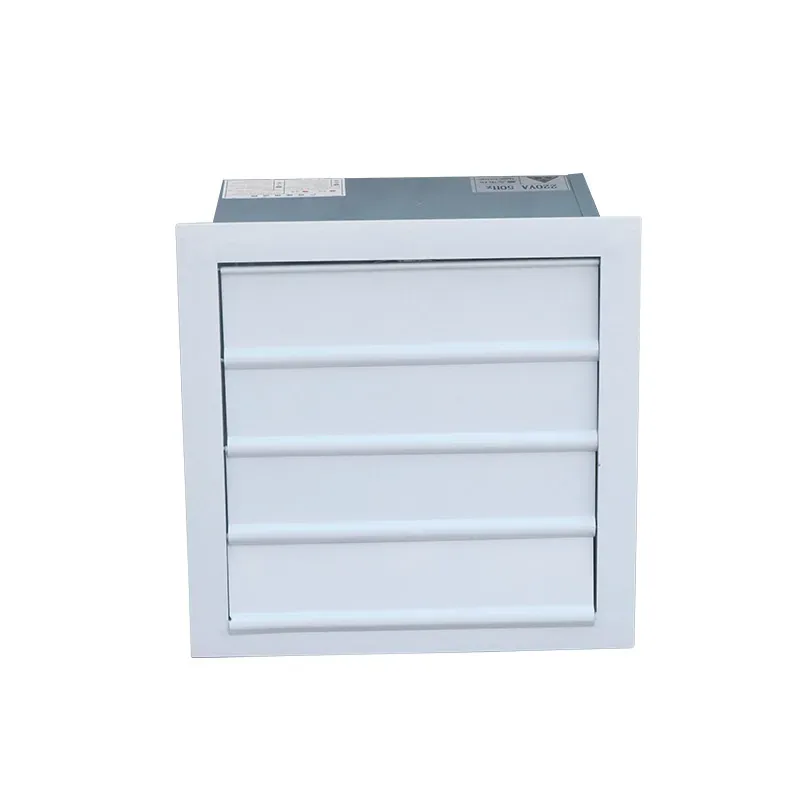
YONGFAN square wall-mounted axial fan
Axial Flow Aerodynamics In-Line Cylindrical Duct Packaging · High Volume Air Movement
01 / System Effect & Selection Risk

Axial Fan Selection Fails When Airflow Is Treated as the Only Spec

An axial fan can look ideal on a schedule because it offers high airflow in a compact cylindrical body. The problem appears after installation when the actual duct resistance is higher than expected.

The fan reaches its operating point where the fan curve intersects the system curve. If filters, dampers, elbows, silencers or long duct runs add more resistance than the design assumed, the installed airflow falls. Increasing speed may recover airflow, but it can also increase power, noise and mechanical loading.

AMCA describes this installed-performance gap as system effect: non-uniform or swirling airflow near the fan inlet or outlet can reduce the performance achieved in the field compared with laboratory ratings. That means a technically correct fan can still underperform when it is installed too close to an elbow, transition or obstruction.

For axial fans, the next decision is not simply size. It is which axial architecture matches the operating condition.

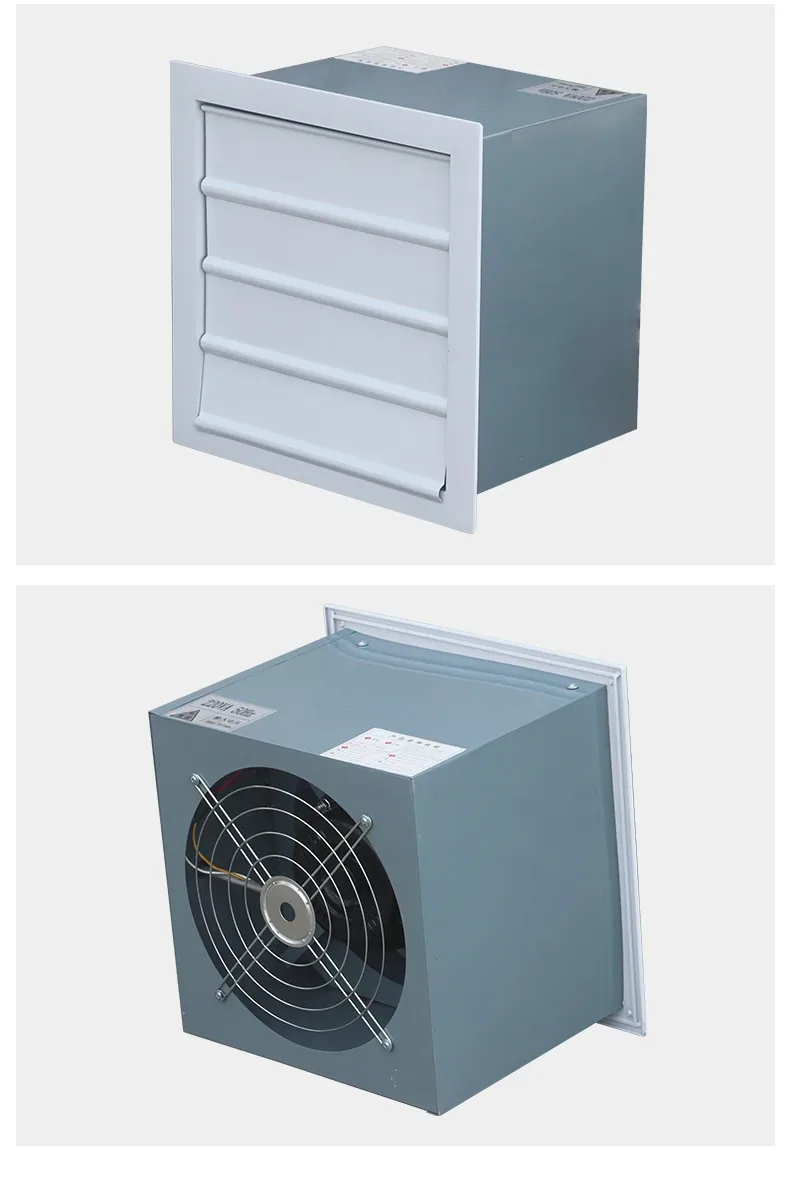
YONGFAN wall-mounted axial fan and louver set
System resistance and inlet/outlet conditions dictate real delivered CFM.

System Resistance Underestimation

Underestimating resistance from downstream filters, silencers, or long ducts shifts the operating point leftward on the fan curve, resulting in severe flow deficit.

Impact: Flow starvation & stall-region instability

Disturbed Inlet Velocity (System Effect)

Placing an abrupt elbow or non-symmetric transition immediately at the fan inlet induces swirl and turbulence, stripping the blades of aerodynamic efficiency.

Impact: 15–30% capacity loss + elevated noise

Motor in Harsh Airstream

Subjecting a standard motor-in-airstream fan to hot (>50 °C), dusty, greasy or moisture-laden exhaust causes motor insulation failure and bearing burnout.

Impact: Motor burnout; requires T35 bifurcated design

Inappropriate Noise Correction

Attempting to fix loud fan noise by heavy throttling wastes energy. Choosing low-noise DTXF or proper acoustic sizing at the design stage provides permanent sound attenuation.

Impact: Continuous dB(A) penalty in occupied zones

Match the Axial Architecture to the Operating Constraint

YONGFAN’s axial range is divided into four distinct engineering architectures rather than one universal fan body.

01 DTF: Broad In-Duct & Fire Duty
02 DTXF: Low-Noise Tube Axial (-6 to -12 dB)
03 T35-11: Motor Outside Stream (Bypass)
04 WEX: External-Rotor Shallow Depth
02 / Technical Parameters

Airflow and Total Pressure Define the Basic Duty Point

YONGFAN’s axial families cover very different aerodynamic ranges. Comparing the required operating point rather than the maximum catalog endpoint ensures stable selection.
Parameter 01 / Flow Rate

Airflow Range (m³/h)

DTF and DTXF cover 1,886 to 114,829 m³/h for major building and industrial ventilation. T35-11 covers 552 to 58,343 m³/h, while WEX covers compact aperture duties from Ø250 to Ø1000 mm.

Parameter 02 / Head

Total Pressure Range (Pa)

DTF and DTXF reach up to 2,266 Pa and 2,166 Pa total pressure respectively, handling medium-to-long duct networks. T35-11 operates at 32 to 420 Pa total pressure, focusing on low-resistance bypass duties.

Parameter 03 / Acoustics & Motor

Noise & Stream Protection

DTXF achieves 6–12 dB(A) noise reduction at comparable duty. T35-11 isolates the motor in a bypass tunnel for up to 80 °C continuous airstream. WEX uses external-rotor packaging for shallow wall depth.

Published Aerodynamic Boundaries Across Axial Families

These figures reflect different impeller profiles, casing geometries and motor locations — not interchangeable models.

Aerodynamic Performance Envelopes
DTF Tube Axial
115 – 2,266 Pa
1,886–114,829 m³/h · Ø350–1600 mm · 280 °C / 30 min
DTXF Low-Noise
132 – 2,166 Pa
2,472–114,829 m³/h · Ø400–1400 mm · -6 to -12 dB(A)
T35-11 / BT35-11
32 – 420 Pa
552–58,343 m³/h · Ø280–1050 mm · Motor in Bypass
WEX / BWEX Wall
Frame Verified
Ø250–Ø1000 mm · External Rotor · Short Axial Depth
1. Required Flow & Head m³/h airflow & total pressure (Pa)
2. Airstream Condition Clean vs. Hot / Dusty / Corrosive (Bypass)
3. Acoustic Limit Standard DTF vs. Low-Noise DTXF
4. Mounting Interface In-line duct vs. Wall / Aperture (WEX)
03 / Product Lineup

Choose the Axial Fan Family by the Operating Constraint

Detailed engineering breakdown of DTF, DTXF, T35-11/BT35-11 and WEX/BWEX product families, covering mechanical construction, documented envelopes and application guidance.
Family 01 · DTF Series Broad In-Duct · High Pressure

DTF Series Axial-Flow Tube Exhaust Fan

The DTF Series is the broadest YONGFAN axial family for conventional in-line duct installations. Published performance spans 1,886 to 114,829 m³/h and 115 to 2,266 Pa total pressure, with impeller diameters from Ø350 to Ø1600 mm and motor powers from 0.5 to 45 kW.

The series is divided into functional speed and pressure variants: Configuration I for lower-pressure general ventilation, Configuration II for medium-pressure duct networks, and Configuration D for reduced-speed lower-noise operations. Standard units operate continuously at 100 °C, while fire-rated builds are documented for 280 °C / 30 min smoke-exhaust duty. Explosion-proof options include ExdbIIBT4 and ExdbIICT4 under GB 3836.


Airflow & Total Pressure
1,886 – 114,829 m³/h · 115 – 2,266 Pa
Impeller Diameters
Ø350 – Ø1600 mm (0.5 – 45 kW)
Operating Temperatures
100 °C Continuous · 280 °C / 30 min Fire Option
Ex-Proof Options
ExdbIIBT4 / ExdbIICT4 (GB 3836)
Configuration Note: Fire-rated 280 °C / 30 min and Exdb ratings are configuration-specific. A standard DTF should not automatically be assumed to carry fire or Ex certification unless explicitly ordered and verified.
DTF Standard Capability Scope
DTF-3.5 ~ 5.0 Ø350 – Ø500 mm 1,886 – 12,000 m³/h
DTF-6.0 ~ 8.0 Ø600 – Ø800 mm 8,500 – 32,000 m³/h
DTF-9.0 ~ 12 Ø900 – Ø1200 mm 25,000 – 65,000 m³/h
DTF-14 ~ 16 Ø1400 – Ø1600 mm 55,000 – 114,829 m³/h

*Broadest pressure ceiling up to 2,266 Pa total pressure.

Family 02 · DTXF Series Acoustic Optimization · 6–12 dB Quieter

DTXF Series Low-Noise Tube Axial Exhaust Fan

The DTXF Series is the route to review when the in-line tube axial layout is appropriate but acoustic performance needs major improvement. It covers 2,472 to 114,829 m³/h and 132 to 2,166 Pa total pressure with diameters from Ø400 to Ø1400 mm.

Published data documents approximately 6–12 dB(A) noise reduction compared to standard DTF at comparable duty. Furthermore, DTXF utilizes compatible flange and casing dimensions with DTF, allowing direct replacement in existing duct connections without structural duct alterations. Duty variants include A (general), B (medium), and C (higher resistance).

Airflow & Total Pressure
2,472 – 114,829 m³/h · 132 – 2,166 Pa
Acoustic Reduction
6 – 12 dB(A) below standard DTF
Flange Compatibility
Direct drop-in replacement for DTF
Duty Grades
A (low), B (medium), C (high ΔP)
Retrofit & Fire Rating: While DTXF shares flange geometry with DTF, smoke-extraction ratings for DTXF are configuration-specific and must be confirmed separately for the ordered model.
DTXF Acoustic Range Scope
DTXF-4.0 ~ 5.0 Ø400 – Ø500 mm 2,472 – 11,500 m³/h
DTXF-6.0 ~ 8.0 Ø600 – Ø800 mm 9,000 – 30,000 m³/h
DTXF-9.0 ~ 12 Ø900 – Ø1200 mm 26,000 – 68,000 m³/h
DTXF-14 Ø1400 mm 58,000 – 114,829 m³/h

*Engineered for noise-sensitive commercial buildings & hospitals.

Family 03 · T35-11 / BT35-11 Bifurcated Bypass · Motor Isolated

T35-11 / BT35-11 Bifurcated Axial Fan

The T35-11 / BT35-11 family addresses an operating-condition problem rather than high pressure. By placing the motor inside an isolated bypass tunnel, the handled air contacts only the impeller, protecting the motor from hot, dusty, humid, or harsh process air.

Published performance spans 552 to 58,343 m³/h and 32 to 420 Pa total pressure with diameters from Ø280 to Ø1050 mm. Five factory-set blade angles (15°, 20°, 25°, 30°, 35°) allow precise duty calibration. Standard T35 handles airstreams up to 80 °C. BT35-11 adds an explosion-proof motor and non-sparking impeller under GB 3836 / T4 with matching flange dimensions.

Airflow & Total Pressure
552 – 58,343 m³/h · 32 – 420 Pa
Motor Configuration
Isolated Bypass Tunnel (TEFC, Class F, IP44)
Blade Pitch Angles
15° / 20° / 25° / 30° / 35° Factory Preset
Airstream Limits
Up to 80 °C · Hot / Dusty / Humid Exhaust
Corrosion & Ex Boundary: Motor isolation alone does not make the standard fan chemically resistant. Corrosive air requires special coatings or 316L materials. BT35-11 explosion proofing requires confirmed gas group and temperature class.
T35-11 Standard Model Scope
T35-2.8 ~ 3.55 Ø280 – Ø355 mm 552 – 4,200 m³/h
T35-4.0 ~ 5.6 Ø400 – Ø560 mm 3,000 – 14,500 m³/h
T35-6.3 ~ 8.0 Ø630 – Ø800 mm 10,000 – 32,000 m³/h
T35-9.0 ~ 10.5 Ø900 – Ø1050 mm 25,000 – 58,343 m³/h

*Ideal for boiler rooms, foundries, grain drying & process exhaust.

Family 04 · WEX / BWEX External Rotor · Ultra-Short Depth

WEX / BWEX External-Rotor Wall Fan

The WEX / BWEX Series solves spatial depth constraints. Its external-rotor motor integrates the impeller directly on the rotating motor shell, eliminating separate shafts, couplings and bearing housings to achieve minimal axial installation depth.

Covering nominal diameters from Ø250 to Ø1000 mm (models WEX-250 to WEX-1000), it is tailored for direct wall penetrations, ceiling apertures, and short duct terminations. Power options include 220 V single-phase and 380 V three-phase (IP44). BWEX-EX4 provides ExdIIBT4 explosion-proof construction with non-sparking aluminium blades.

Diameter Sizes
Ø250 – Ø1000 mm (WEX-250 to WEX-1000)
Motor Technology
External Rotor (Ultra-Short Axial Depth)
Power Supply
220 V 1-Phase / 380 V 3-Phase, 50 Hz, IP44
Ex-Proof Build
BWEX-EX4 (ExdIIBT4 · Alum Impeller)
Selection Warning: Performance for WEX must be confirmed by selected frame size rather than inferred from diameter alone. Ensure opening dimensions and mounting frames match before ordering.
WEX Standard Frame Sizes
WEX-250 ~ 350 Ø250 – Ø350 mm Wall / Light Duty
WEX-400 ~ 500 Ø400 – Ø500 mm Aperture / Plant
WEX-600 ~ 800 Ø600 – Ø800 mm Medium Warehouse
WEX-900 ~ 1000 Ø900 – Ø1000 mm High Volume Wall

*Shallowest axial depth for side-wall building exhaust.

04 / Selection Matrix

Axial Fan Family Routing & Comparison Table

Cross-reference all four YONGFAN axial fan families by primary reason to select, published capability boundary, and key engineering constraint to confirm.
Product Family Primary Reason to Select It Published Range / Boundary Key Constraint to Confirm Specification Action
Broad in-line axial ventilation and special-duty configurations
1,886–114,829 m³/h · 115–2,266 Pa · Ø350–1600 mm
Required airflow, total pressure and duty variant (I, II, D, 280 °C) Configure DTF
Lower-noise alternative to DTF-style installation
2,472–114,829 m³/h · 132–2,166 Pa · Ø400–1400 mm
Acoustic noise target and pressure grade (A, B, C) Configure DTXF
Motor kept outside hot, dusty, humid or challenging airstream
552–58,343 m³/h · 32–420 Pa · up to 80 °C standard
Airstream temperature/dust and required preset blade angle (15°–35°) Configure T35
WEX / BWEX Wall Fan Shallow Depth
Very compact wall / aperture / duct-end mounting
Ø250–Ø1000 mm · 220/380 V · IP44 · ExdIIBT4
Exact frame airflow/pressure and installation wall opening Configure WEX
Decision Rule 01

DTF vs. DTXF: Noise Priority

If acoustic limits govern occupied spaces, DTXF delivers 6–12 dB(A) reduction with identical flange geometry for drop-in replacement.

Decision Rule 02

DTF vs. T35-11: Head vs. Stream

DTF reaches 2,266 Pa for clean duct runs. T35-11 provides 420 Pa but isolates the motor from hot (80 °C), greasy, or dusty exhaust.

Decision Rule 03

WEX: Short Axial Depth

External-rotor construction removes separate couplings and bearings, delivering the shallowest profile for direct building wall penetrations.

Decision Rule 04

Standard vs. Ex-Rated Duty

BT35-11, BWEX-EX4 and Ex-rated DTF (ExdbIICT4) provide certified explosion protection; always specify exact gas group and T4 class.

05 / Procurement Protocol

Information Required for an Axial Fan Quotation

For accurate selection, send operating duty point, airstream conditions and physical duct interfaces rather than only asking for a nominal model number.
STEP 01

Aerodynamic Duty Point

Provide design airflow (m³/h) and required total or static pressure (Pa) calculated from duct resistance.

STEP 02

Airstream & Temperature

State operating air temperature, humidity, dust, grease, or chemical fumes to select motor arrangement.

STEP 03

Geometry & Mounting

Specify duct diameter, horizontal/vertical orientation, wall aperture, or existing flange dimensions for retrofits.

STEP 04

Acoustics, Power & Safety

Confirm power supply (220/380V), noise limit (dB(A)), 280 °C smoke exhaust, or GB 3836 Ex classification.

Engineering Checklist

12 Parameters for Axial Fan Selection

Send your available project data. YONGFAN application engineers will verify fan curve intersection, system effect margins, and acoustic submittals.

1. Required Airflow (m³/h or CFM)
2. Total or Static Pressure (Pa)
3. Pressure Calculation / Duct Layout
4. Operating Air Temperature (°C)
5. Dust, Moisture, Fumes or Corrosives
6. Duct Diameter or Wall Opening (mm)
7. Mounting Orientation (Horiz / Vert / Wall)
8. Power Supply (220 V / 380 V / 50 Hz)
9. Acoustic Noise Limit (dB(A))
10. Normal vs. 280 °C / 30 min Smoke Duty
11. Hazardous-Area Ex Classification
12. Single-Speed, Dual-Speed or VFD
06 / Manufacturing Consistency

YONGFAN Axial Fan Production and Verification Controls

YONGFAN’s axial fan manufacturing includes dedicated casing fabrication, impeller casting, high-precision dynamic balancing and comprehensive aerodynamic run-testing.
Precision Fabrication

Impeller Dynamic Balancing

Rotating assemblies undergo high-precision dynamic balancing before final casing assembly, preventing destructive vibration transfer to bearings, motors and ductwork.

Aerodynamic Run-Testing

Full Operating Run-Tests

Completed fans are run-tested against rated duty, verifying design airflow, total pressure, motor current draw, rotation direction, vibration and mechanical clearances.

Electrical & Safety

Motor QA & Ex Compliance

Motor insulation, temperature rise, and ingress protection (IP44/IP55) are verified. High-temperature fire duty (280 °C/30 min) and GB 3836 Ex compliance are verified where specified.

Traceability

100% Inspection & Submittals

Final inspection covers casing paintwork, flange drilling, wiring, fasteners and export packaging. Serial-number tracking and complete CAD/BIM submittals are provided.

Bespoke Engineering: Fan performance curves, dimensioned submittal drawings, custom flange drilling, and high-temp/Ex builds configured on order. Configured Dispatch: Lead times quoted based on model, frame size, motor build, quantity and project specifications.
07 / Engineering Knowledge

Axial Fans Frequently Asked Questions

Direct engineering answers regarding pressure capability, low-noise variants, bypass-motor selection, wall mounting and smoke-exhaust certifications.

Which YONGFAN axial fan has the broadest pressure range?

DTF has the highest published total-pressure ceiling among the main axial families, reaching approximately 2,266 Pa. DTXF is close at approximately 2,166 Pa, while T35-11 reaches approximately 420 Pa.

What is the main difference between DTF and DTXF?

DTXF is the lower-noise development of the tube-axial concept. It is documented as approximately 6–12 dB(A) quieter than DTF at comparable duty and uses compatible flange/casing geometry for direct drop-in replacement.

When should I use T35-11 instead of DTF?

Use T35-11 when keeping the motor outside the handled air is important because of heat (up to 80 °C), dust, moisture or challenging airstream conditions, and the required pressure falls within its lower-pressure operating range (up to 420 Pa).

What is the difference between T35-11 and BT35-11?

T35-11 is the standard bifurcated fan. BT35-11 adds explosion-proof construction under GB 3836 / T4 and uses the same casing and flange dimensions.

Which YONGFAN axial fan is best for a shallow wall opening?

Review WEX first. Its external-rotor motor produces a very short axial depth and the family is designed specifically for wall, ceiling-aperture and duct-termination mounting.

Is WEX available in an explosion-proof version?

Yes. The supplied source identifies BWEX-EX4 with ExdIIBT4 construction under GB 3836 and a non-sparking aluminium impeller.

Can WEX be compared with DTF by diameter alone?

No. WEX is an external-rotor wall fan while DTF is a heavy in-duct tube axial fan. Performance must be confirmed per selected frame before substitution.

Which axial fan should I use for smoke exhaust?

Relevant DTF builds are documented for 280 °C / 30 min smoke-exhaust duty. DTXF also has high-temperature smoke-extraction options in the source, but exact ratings must be confirmed for the ordered configuration.

Is an explosion-proof axial fan automatically suitable for smoke exhaust?

No. Explosion protection controls electrical/spark ignition in flammable gas, while fire duty controls high-temperature structural survival. Specify both if the project requires both.

08 / Application Boundaries

When Axial Fans Are No Longer the Right Architecture

An axial fan should not be forced into a system simply because the duct is round. Knowing when to transition to mixed-flow, centrifugal or roof fans prevents severe aerodynamic misapplication.
Boundary 01 / High Static Loss

Mixed-Flow & Centrifugal

If required static pressure rises beyond stable axial limits (>1,000–2,000 Pa with high resistance), transition to SWF Mixed-Flow or 4-72 Centrifugal fans.

Boundary 02 / Rooftop Weather

Roof-Specific DWT Series

If the project requires weatherproof rooftop exhaust with integrated curbs and anti-recirculation caps, use DWT Roof Fans rather than adapting indoor tube fans.

Boundary 03 / Tunnel Momentum

Longitudinal Tunnel Jet Fans

If ventilation operates via open longitudinal jet thrust (N) rather than closed duct static pressure, transition to SDS / SDS(R) Tunnel Jet Fans.

Boundary 04 / Severe Ex Gas

Dedicated Explosion-Proof

For dedicated Zone 1 hazardous chemical process environments, review dedicated DFBZ / BDFBZ bifurcated explosion-proof fan series.

09 / Engineering Handoff

Select the Right Axial Fan for Your Ventilation System

You do not need to determine the final model number alone. Send your design airflow, calculated static or total pressure, acoustic limits and duct layout — our application engineering team will verify the optimal fan curve point and provide complete technical submittals.

Design Airflow (m³/h / CFM) Total / Static Pressure (Pa) Duct Diameter Ø (mm) Standard vs. Low-Noise (DTXF) Airstream Temp (up to 80 °C Bypass) 280 °C / 30 min Smoke Duty Ex-Proof: ExdbIICT4
HVAC application engineers reviewing axial fan schedules
Direct Application Engineering Support
Duty-matched fan curves, system-effect analysis, acoustic submittals & CAD drawings.