YONGFAN HVAC - Premium Header
Engineered HVAC & Industrial Air Systems
YONGFAN HVACYOFAN HVAC Home
HVAC Dampers & Air Distribution | YONGFAN
7 Dedicated Airside Product Families · Precision Flow & Fire Safety

HVAC Dampers & Air Distribution: Engineered Airside Control Systems

Airside control equipment must match fire logic, leakage, airflow control, pressure loss and zone layout; the wrong component can disrupt commissioning or compromise the intended safety sequence.

YONGFAN separates seven specialized airside product families: fire and smoke isolation (FHF/PFHF/PYF), general volume control, insulated low-leakage control (F-BW), explosion-protected dampers (BFHF/BFD), pressure-independent VAV regulation (YFVAV-S-T100), multi-outlet distribution plenums (YF-MOA), and acoustic silencers/louvers.

7 Airside LinesFire · Volume · Insulated · Ex · VAV · Plenum · Silencer
Thermal Action70 °C · 280 °C · Motorized
Airtight Leakage≤1.2 m³/(m²·h) @ 2000 Pa
VAV Airflow122 – 6,232 m³/h (Ø125–400)
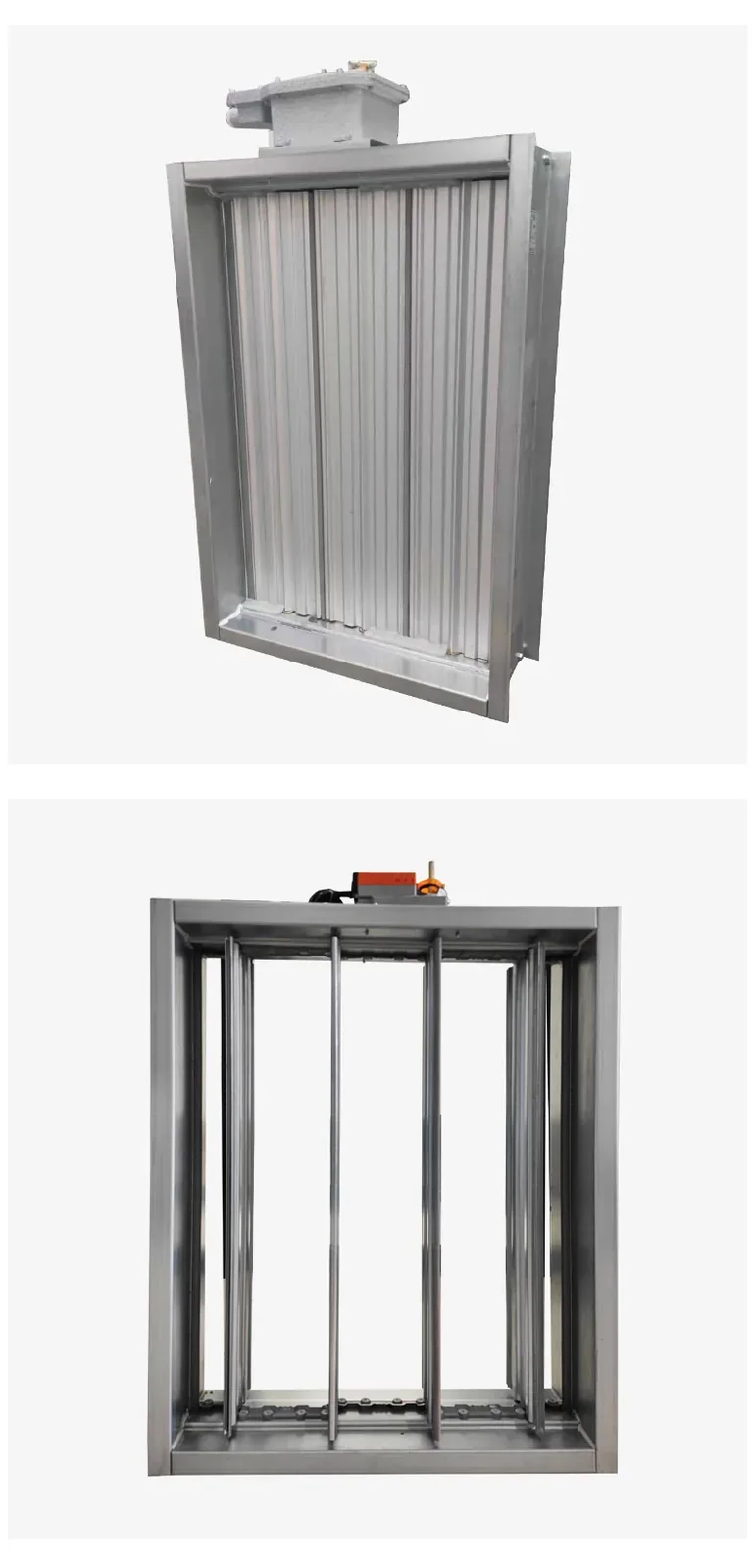
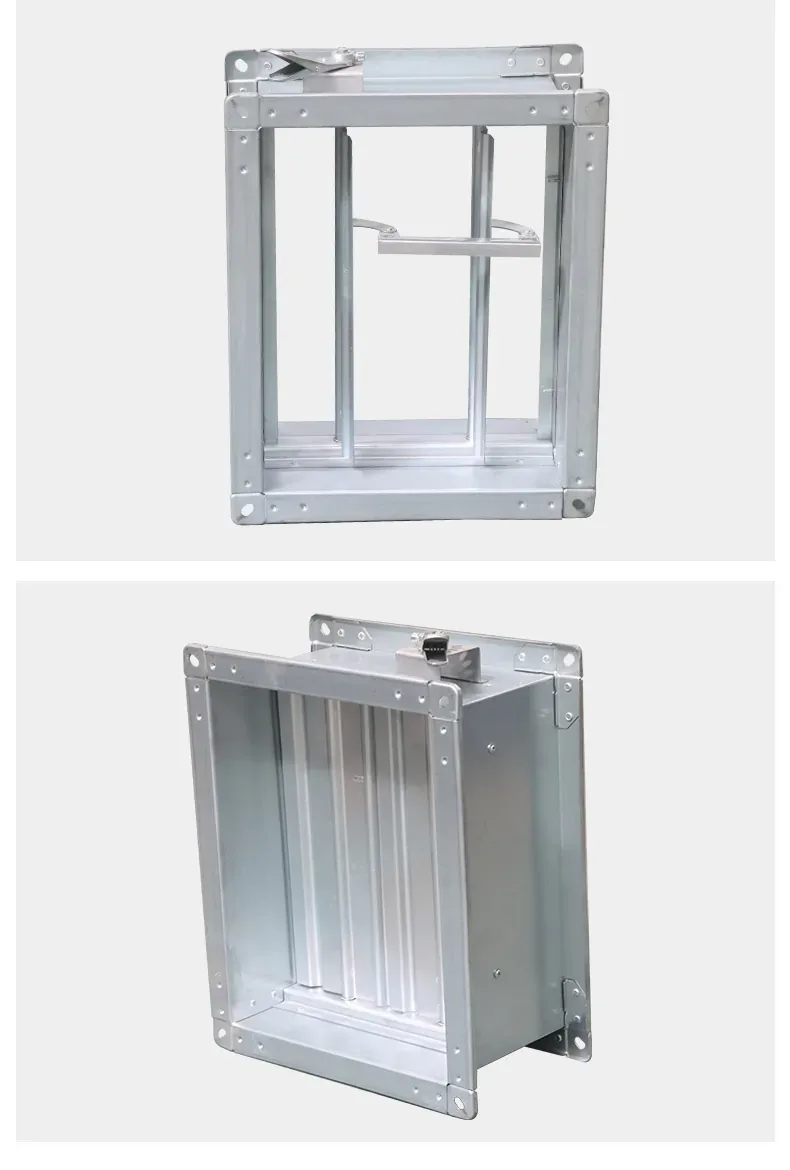
YONGFAN manual control damper product set
Airside Control Portfolio Fire Isolation · Low-Leakage Balancing · Pressure-Independent VAV · Acoustic Treatment
01 / Airside Failure Modes

Airside Failures Often Begin With the Wrong Component Function

A duct system can be mechanically complete and still fail commissioning because a damper was selected by nominal duct size rather than system state and safety sequence.

A balancing damper may throttle airflow correctly but cannot replace a fire damper. A normally open fire damper and a normally closed smoke-exhaust damper can occupy similar duct openings yet perform opposite actions during an alarm.

Outside fire protection, an ordinary control damper cannot provide the thermal insulation and condensation resistance needed in low-temperature fresh-air or cold-chain service. A low-leakage insulated damper does not replace a pressure-independent VAV terminal that continuously measures and regulates zone airflow as duct static pressure moves.

Similarly, a silencer can reduce fan noise, but adding it after fan selection without factoring in its 8 to 78 Pa pressure loss can starve downstream branches of required airflow.

YONGFAN manual air-volume control damper

The buyer’s first decision must be: what the component must do when the system changes state.
Duct size, actuator, and material come after that.

Fire & Smoke Sequencing

FHF closes thermally at 70 °C; PFHF closes at 280 °C; PYF is normally closed and opens on a fire command to clear smoke.

GB 15930-2007 · Normal State vs Action

Thermal Sealing & Anti-Condensation

F-BW insulated dampers prevent sweating on cold-air ducts with ≤1.2 m³/(m²·h) leakage at 2,000 Pa static-pressure difference.

JG/T 436-2014 · EPDM Blade Seals

Pressure-Independent VAV

YFVAV-S-T100 holds zone CFM steady across shifting upstream duct pressures, pairing with YF-MOA multi-outlet plenums.

122–6,232 m³/h · Modbus / BACnet
02 / Airside Lineup

Seven Airside Product Families for Coordinated Building Airflow

Detailed technical capabilities across fire/smoke dampers, volume control, airtight insulated, Ex dampers, VAV, plenums, and silencers.
Family 01 · Compartmentation & Smoke Sequencing FHF (70 °C) · PFHF (280 °C) · PYF (NC)

Fire & Smoke Dampers

FHF is normally open in ventilation ductwork and closes thermally at 70 °C. PFHF is normally open in smoke exhaust systems and closes at 280 °C to protect downstream exhaust fans. PYF is normally closed and opens on a fire command to establish an exhaust path.

FHF Fire DamperNormally open · 70 °C thermal closure · Fire barrier penetrations
PFHF Smoke-ExhaustNormally open · 280 °C thermal closure · Mechanical smoke extract
PYF Smoke ValveNormally closed · Opens on fire alarm · Open-position feedback
Control ModesManual (WS), DC 24V solenoid (WSDc), Motorized reset (WSDj)

Fire and smoke dampers in mechanical ductwork
Fire & Smoke Damper Series GB 15930-2007 · 70 °C & 280 °C Fusible Links · DC 24V Actuation
Family 02 · Balancing, Mixing & Backflow Manual · Electric · Pneumatic · JG/T 436

Air Volume Control Dampers

Covers routine HVAC branch balancing, fresh/return air mixing, and specialized aerodynamic functions under JG/T 436-2014. Includes butterfly, opposed-blade (DK), constant-volume (F-DL), residual-pressure relief (F-YY), and check valves (F-ZH).

Opposed-Blade (DK)Linear flow characteristics for modulating mixing and balancing
Constant Volume (F-DL)Passive mechanical blade/spring/cam regulation without power
Relief Valve (F-YY)Opens at preset static differential for cleanroom positive pressure
Check Valve (F-ZH)Prevents backflow after fan shutdown (8–15 m/s duct velocity)
YONGFAN motorized airtight ventilation damper
Volume Control Series JG/T 436-2014 · Manual & Modulating Actuators · Constant Volume F-DL
Family 03 · Cold-Air & Anti-Condensation ≤1.2 m³/(m²·h) @ 2,000 Pa · F-BW Series

Airtight & Insulated Dampers

Built for fresh-air intakes, low-temperature systems, and cold-chain ducts where ordinary dampers cause thermal bridging, sweating, or excessive leakage. Features insulated body casing and EPDM blade perimeter seals.

Verified Low Leakage≤1.2 m³/(m²·h) at 2,000 Pa differential (Electric/Pneumatic)
EPDM Blade SealsContinuous elastic sealing interface between opposed blades
Insulated BodyThermal barrier prevents external casing condensation
Body Length OptionsStandard length ≥210 mm; custom length 180 < L < 500 mm
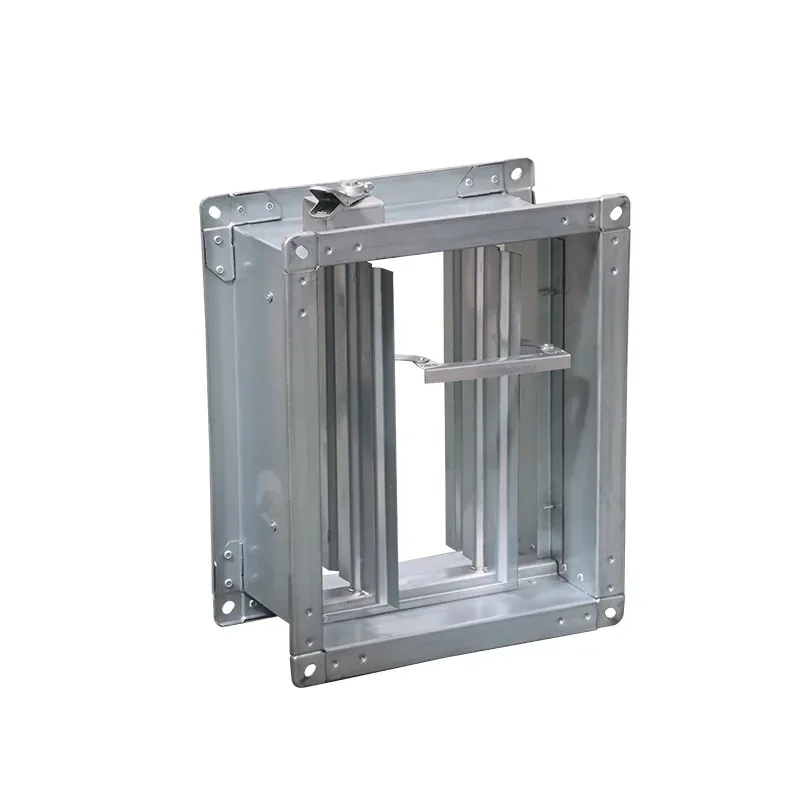
YONGFAN motorized airtight damper product set
F-BW Insulated Series EPDM Blade Seals · Insulated Body · Low-Leakage Anti-Condensation
Family 04 · Classified Area Fire & Volume Control Ex d IIC T6 Gb · IP65 · Certificate CE21.1729

Explosion-Proof Dampers

Dedicated explosion-proof fire isolation (BFHF) closing thermally at 70 °C, and remote/automatic electric airflow control (BFD) with IP65 flameproof actuators carrying Ex d IIC T6 Gb marking.

BFHF Fire Damper70 °C thermal closure · DC 24V 0.7A · Manual reset · Signal feedback
BFD Control Damper220V 12W · Ambient −20 °C to +40 °C · External DL-φ-1 / Internal DL-φ-4
IIC Gas GroupCertified for Group II gases up to IIC (hydrogen class), T6 (85 °C)
IP65 ProtectionDust-tight and water-jet protected flameproof actuator enclosure
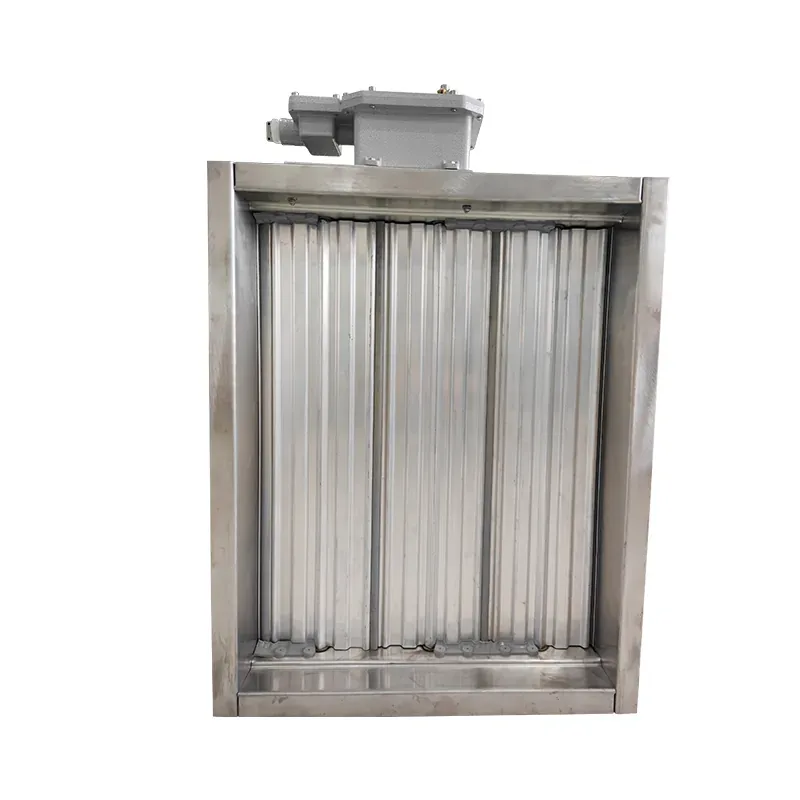
YONGFAN explosion-resistant damper product set
BFHF & BFD Series Ex d IIC T6 Gb · Certificate CE21.1729 · IP65 Flameproof Actuator
Family 05 · Pressure-Independent Zone Control 122 – 6,232 m³/h · Ø125 – Ø400 mm Inlets

VAV Terminals (YFVAV-S-T100)

Single-duct pressure-independent variable air volume terminal units with integrated multi-point airflow sensors and DDC actuators. Modulates internal damper to maintain commanded zone setpoint regardless of duct pressure fluctuations.

9 Standard Sizes-05 (Ø125) to -16 (Ø400) · Static loss as low as 2 Pa
Hot-Water ReheatOptional 1-row (1.6–17.5 kW) or 2-row (2.7–34.6 kW) hot-water coils
Acoustic AttenuatorOptional 914 mm factory-lined sound attenuator section
BMS IntegrationModbus and BACnet network protocol integration support
YFVAV-S-T100 single duct VAV terminal unit
YFVAV-S-T100 Series Pressure-Independent · 122–6,232 m³/h · Reheat Coils & Attenuators
Family 06 · Multi-Outlet VAV Diffuser Supply YF-MOA Types A–F · Internally Lined

Air Distribution Plenums (YF-MOA)

Downstream distribution plenum designed to mate directly to YFVAV-S-T100 terminals. Splits one controlled airstream across multiple ceiling diffusers with configurable outlet quantity, position, and diameter.

Direct Terminal FitMates to YFVAV-S-T100 without separate transitions or adaptors
Internally LinedAcoustic damping and thermal break to prevent surface sweating
Custom GeometryRound spigot positions configured around reflected ceiling plans
Supply FormsStandalone matched plenum or integrated terminal-plus-plenum assembly
YF-MOA multi-outlet distribution plenum assembly
YF-MOA Series Types A–F · Internally Lined · Custom Spigots Matched to YFVAV-S-T100
Family 07 · Duct & Fan-Room Noise Attenuation Splitter · Micro-Perforated · Acoustic Louvers

Silencers & Acoustic Louvers

Controls airborne noise along the duct path and breakout noise at fan-room wall penetrations. Evaluates insertion loss and added pressure drop together to ensure fan schedules remain balanced.

Splitter SilencersResistive glass-wool splitters (~45 dB @ 1000 Hz, 8–78 Pa @ 4–12 m/s)
Micro-PerforatedSub-1 mm holes without fibrous media (2–21 Pa @ 4–12 m/s) for clean spaces
Metal-Cased & MatrixThick 200–350 mm splitters & matrix layouts for low-frequency noise
Acoustic LouversWall-intake sound attenuation (275.8–1,487.2 Pa @ 4–10 m/s)
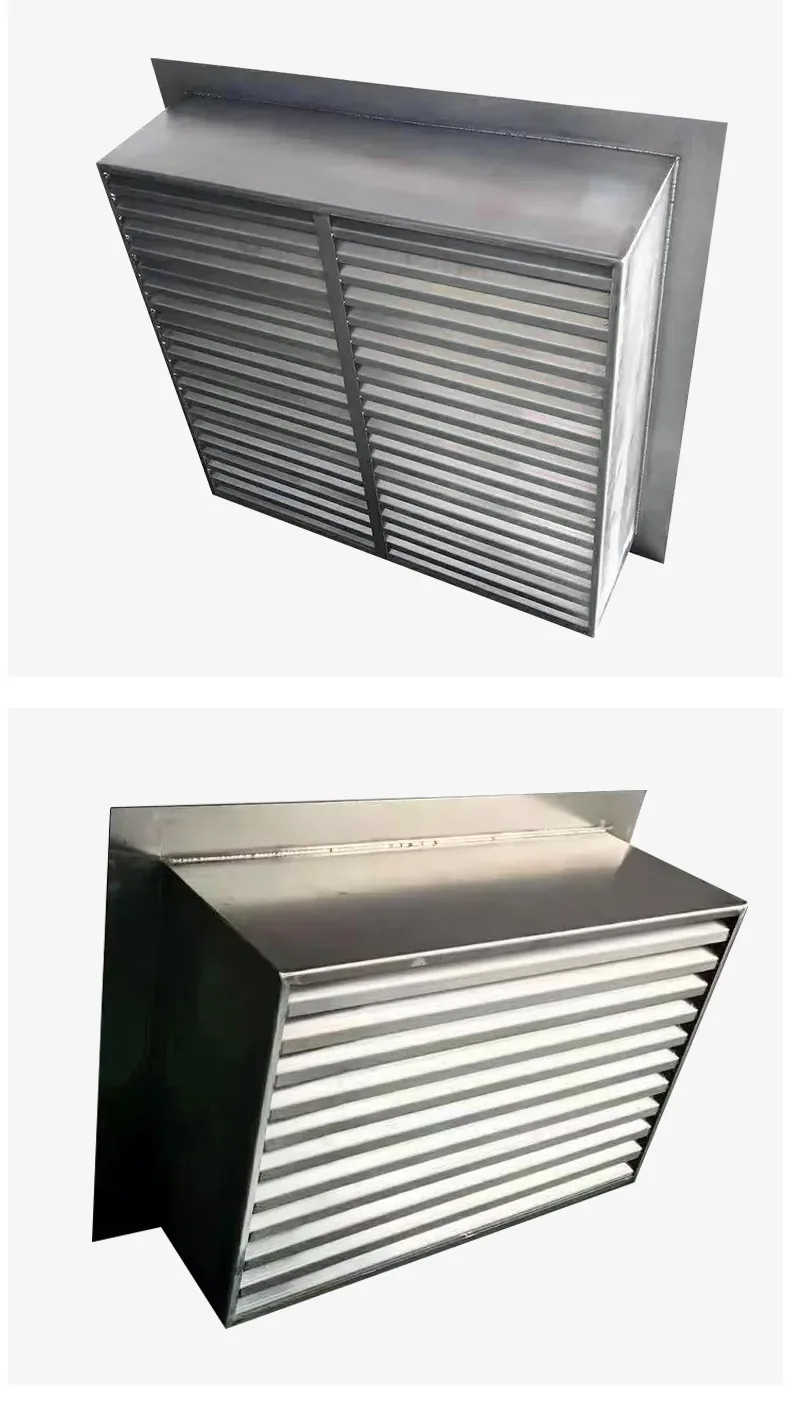
Duct acoustic silencer and sound attenuator
Acoustic Control Series GB/T 20431-2006 · Splitter & Micro-Perforated Silencers · Acoustic Louvers
03 / Selection Matrix

Airside Equipment Routing Table

Direct navigation to the correct product family based on life-safety, balancing, thermal sealing, hazardous zones, zone VAV, or acoustic duty.
Product Family What It Solves Range Boundary from YONGFAN Data First Input to Confirm Action
Fire compartmentation and smoke-exhaust sequencing
FHF closes at 70 °C; PFHF closes at 280 °C; PYF normally closed and opens on fire signal
Required normal position and emergency action Configure Fire Damper
Branch balancing, mixing, constant volume, relief and backflow control
Manual/electric/pneumatic types; check-valve duct velocity 8–15 m/s
Required control function and actuator Configure Control Damper
Low-leakage, anti-condensation control in cold-air ducts
Electric/pneumatic: ≤1.2 m³/(m²·h) at 2,000 Pa; body 180 < L < 500 mm custom
Leakage requirement and air temperature Configure Insulated
Fire isolation or airflow regulation in classified areas
BFHF/BFD: Ex d IIC T6 Gb, IP65, certificate CE21.1729
Hazard classification and damper function Configure Ex Damper
Pressure-independent zone airflow control
YFVAV-S-T100 122–6,232 m³/h, Ø125–400 mm, nine sizes
Zone minimum/maximum airflow Configure VAV
One VAV terminal feeding multiple diffusers
YF-MOA Types A–F; outlet quantity, position and diameter made to order
Diffuser count and ceiling layout Configure Plenum
Duct or fan-room noise attenuation
Multiple W×H-L types; splitter example 8–78 Pa pressure loss at 4–12 m/s
Required octave-band attenuation and allowable pressure drop Configure Acoustic
04 / Procurement Protocol

Enquiries Should Describe the System State, Not Only Duct Size

Essential parameters to confirm before finalizing airside equipment selections across all 7 families.
Airside Engineering Checklist

Information Required by Family

Submitting your duct layout, thermal criteria, control protocols, and acoustic targets enables our engineering team to verify selection authority and supply certified submittals.

1. Fire/Smoke: Normal State (NO/NC) & Thermal Trigger (70/280 °C)
2. Actuator Supply Voltage & Position Feedback Signal
3. Volume Dampers: Balancing, Constant-Volume or Relief Function
4. Insulated Dampers: Supply-Air Temp & Allowable Leakage Basis
5. Explosion-Proof: Hazard Class (Zone, Gas Group IIB/IIC, T-Class)
6. VAV Terminals: Min/Max Airflow, Inlet Size & Reheat Water Data
7. Plenums: Diffuser Count, Desired CFM per Outlet & Ceiling Map
8. Silencers: Octave-Band Attenuation & Max Allowable ΔP
9. Material Grade: Galvanized Sheet, 304, or 316L Stainless
10. Physical Duct Opening W×H or Diameter ØD
05 / Manufacturing Standards

Manufacturing Standards and Quality Control Evidence

In-house manufacturing for YFVAV-S-T100 and YF-MOA in a 10,000 m² production facility with CNC machining, coil pressure testing, and serial traceability.
VAV & Plenums

10,000 m² Production Facility

YONGFAN manufactures YFVAV-S-T100 and YF-MOA plenums in-house with CNC machining, automated bending, and serial-code traceability.

Release Inspection

Airflow, Noise & Coil Tests

VAV units are checked for airflow and acoustic performance, reheat coils receive hydrostatic pressure testing, and plenums are inspected for outlet accuracy.

Execution Standards

Standard Scope by Family

GB 15930-2007 (Fire/Smoke), JG/T 436-2014 (Volume Control/Insulated), GB/T 20431-2006 & HJ 2523-2012 (Silencers), GB 3836 / Ex d IIC T6 Gb (Ex).

Supply Continuity

7–15 Day Regular Lead Time

VAV and plenum lines document regular-order lead times of 7–15 working days, on-site warehousing, export packaging, and EXW/FOB/CIF/DDP terms.

Compliance Disclosure: Commercial terms and manufacturing facility details apply specifically to documented families and should be confirmed per project order. Submittal Documentation: Certified dimension drawings, actuator wiring diagrams, and acoustic insertion-loss tables supplied upon request.
06 / Architectural Boundaries

Airside Components Are Not Interchangeable Because Duct Sizes Match

A fire damper, balancing damper and VAV terminal can all occupy the same nominal opening while doing completely different jobs.

Fire Safety Integrity

Do not use an ordinary control damper where the fire strategy requires FHF (70 °C), PFHF (280 °C), or PYF (normally closed) operation.

Strict Fire Code Boundary

Thermal Isolation & Condensation

Do not use standard sheet-metal dampers in place of the insulated F-BW family where cold air and dew-point condensation govern.

Insulation Continuity

System Sequence First

The correct category route is determined by safety action, airflow-control method, leakage, thermal condition, zone logic, or acoustic duty before physical size is finalized.

Duty-First Sizing Link
ALERTS — NOT PART OF THE PAGE. RESOLVE BEFORE PUBLISHING.
The insulated-damper classification table labels DM as “low-airtight,” while the electric and pneumatic DM models are stated at ≤1.2 m³/(m²·h) leakage under 2,000 Pa. Verify the source terminology and leakage-grade mapping before publishing a formal leakage class.
The explosion-proof damper source states suitability for explosive gas or dust, but the documented marking Ex d IIC T6 Gb is a gas-atmosphere marking. Do not claim combustible-dust certification without dust-specific marking and evidence.
The source references a YF-VTT high-capacity VAV series beyond the YFVAV-S-T100 range, but no detailed YF-VTT specification sheet is present in the retrieved source set. Do not publish YF-VTT performance limits until that sheet is supplied.
YFVAV-S-T100 and YF-MOA documents support a 10,000 m² production facility and 7–15 working day regular-order lead time. Do not apply those facts to every damper or silencer family unless separately confirmed.
07 / Technical Q&A

HVAC Dampers & Air Distribution FAQ

Direct engineering answers covering fire compartmentation, balancing, insulated cold-air valves, Ex ratings, VAV, and acoustic louvers.

Which family should I use where a duct crosses a fire compartment?

Use Fire & Smoke Dampers. Start with FHF for a normally open 70 °C fire-damper function, then verify whether the smoke system instead requires PFHF (280 °C) or PYF (normally closed).

What should I use for normal branch airflow balancing?

Use Air Volume Control Dampers. The family includes manual, electric and pneumatic control, plus F-DL constant-volume, F-YY relief and F-ZH check-valve functions.

Which product is intended for cold-air ducts with condensation risk?

Use Airtight & Insulated Dampers. The F-BW insulated family combines body/blade insulation with EPDM sealing and manual, electric or pneumatic actuation.

Which damper family is documented with Ex d IIC T6 Gb?

Use Explosion-Proof Dampers. The BFHF fire damper and BFD electric control damper are the documented routes carrying that marking in the current source.

What controls airflow automatically for individual rooms or zones?

Use VAV Terminals. The YFVAV-S-T100 is pressure-independent and covers 122–6,232 m³/h across Ø125–400 mm round inlets.

What should sit downstream when one VAV terminal feeds several diffusers?

Use Air Distribution Plenums. YF-MOA pairs with YFVAV-S-T100 and provides Types A–F plus custom outlet layouts.

Which family should I use when fan noise is the problem?

Use Silencers & Acoustic Louvers. Select duct silencers for noise traveling through the air path and acoustic louvers for noise radiating from fan-room intake or exhaust openings.

08 / Application Engineering Handoff

Select Airside Control Equipment

Connect safety action, airflow-control method, leakage, thermal condition, zone logic, or acoustic duty before physical size is finalized. Send your project schedule to our application engineers.

Fire & Smoke (70/280 °C) Volume Control & F-DL F-BW Insulated ≤1.2 m³/(m²·h) Ex d IIC T6 Gb (BFHF/BFD) YFVAV-S-T100 (122–6,232 m³/h) YF-MOA Plenums Silencers & Louvers
YONGFAN application engineers reviewing airside equipment schedules
Direct Technical Selection Support
Damper schedules, fire sequences, VAV selection, and acoustic submittals.